Imagine: your car loses traction on the highway, the "Check Engine" light comes on, and the service center tells you the verdict: the turbo is "dying out," the catalytic converter is clogged, and the diesel particulate filter needs replacing. The bill for new genuine parts easily exceeds 40,000–70,000 hryvnias, especially for modern diesel and turbocharged gasoline vehicles.
At times like these, many people consider auto dismantlers: they can find original catalytic converters, DPFs, and turbochargers at a fraction of the cost of new ones. But along with the chance to save money comes the risk of buying a part with a "surprise" and ending up with a double repair.
In this article, we'll discuss which exhaust components and turbines make sense to look for at a salvage yard, how to weed out "junk" by appearance and simple inspections, what to look for in ads and during inspections, and when it's best to pay extra for a new replacement or repairs to your unit.
Why is this problem so relevant now?
Firstly, modern Euro 5/Euro 6 emission standards mean that even mass-produced models are equipped with complex exhaust systems: catalytic converters, particulate filters, and SCR systems with AdBlue. These components are expensive and sensitive to fuel quality and performance.
Secondly, rising prices for new original parts in Ukraine and exchange rate fluctuations have made purchasing a new catalytic converter or turbocharger economically pointless for many owners: the price can reach 20,000–40,000 hryvnia per unit.
Therefore, interest in original used spare parts from dismantlers is steadily growing – especially for cars older than 5–7 years.
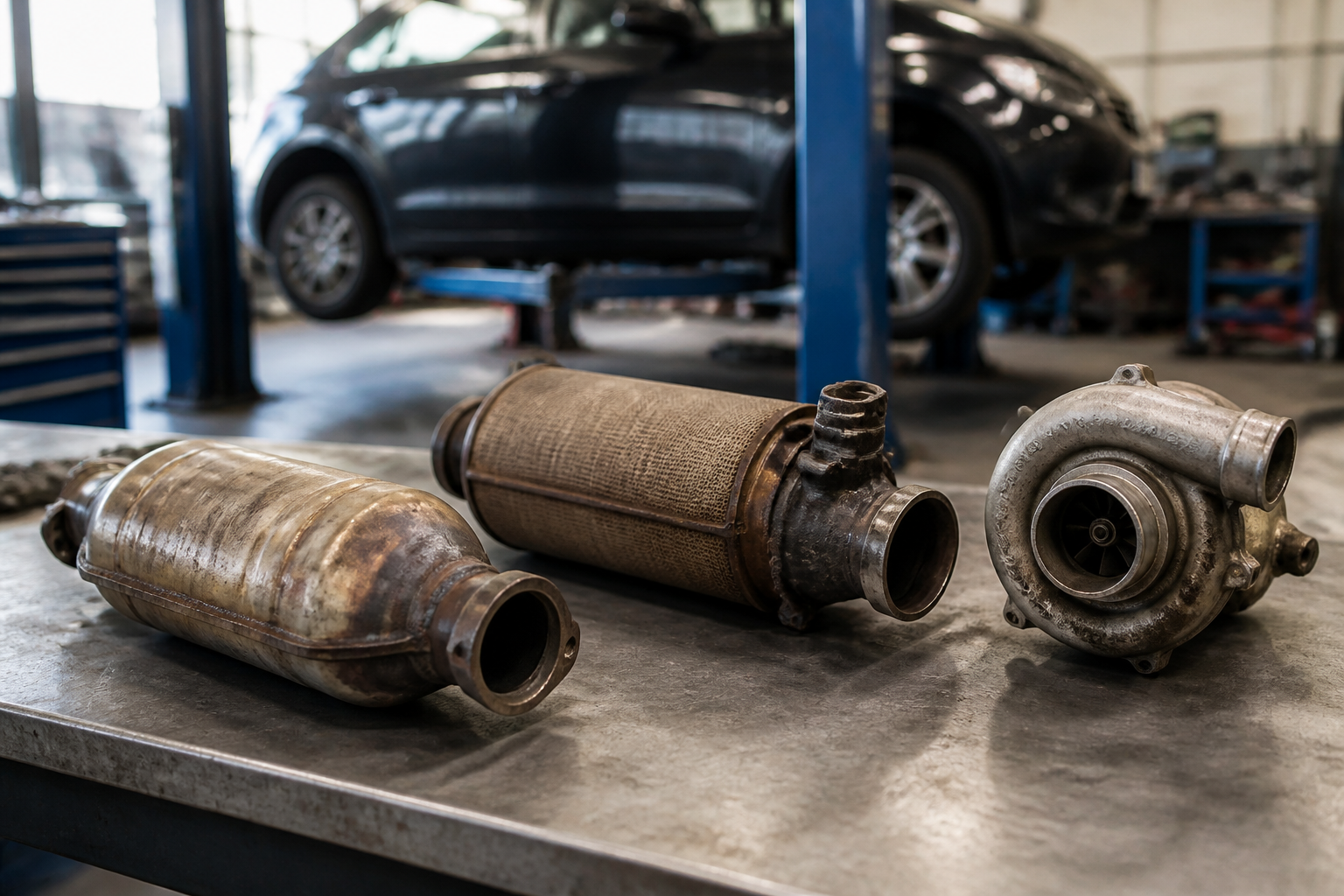
What are the parts: catalytic converter, diesel particulate filter, turbine
Catalyst
A catalytic converter is an exhaust system component that uses chemical reactions to reduce harmful emissions. Inside the casing is a ceramic or metal honeycomb structure coated with precious metals.
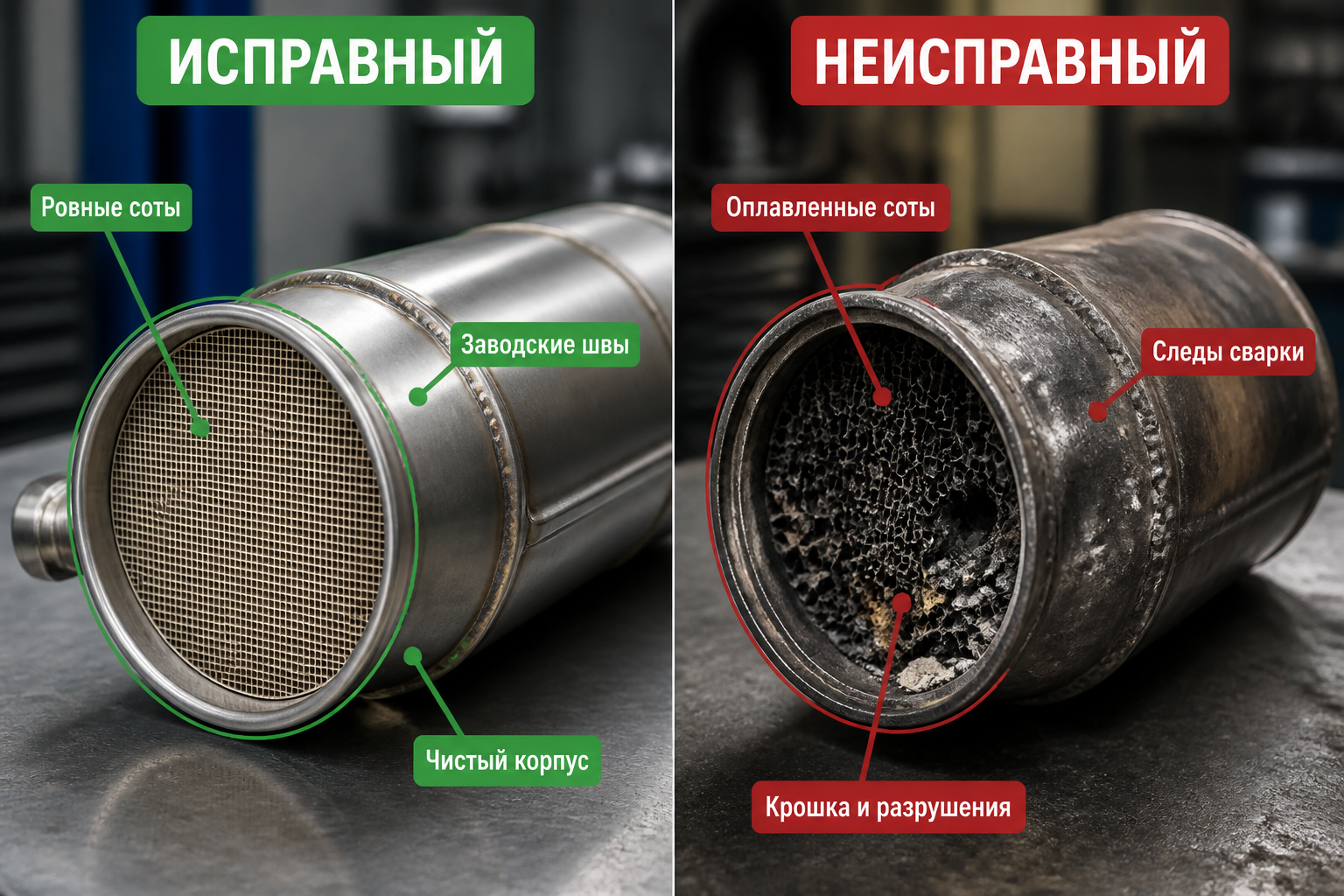
When dismantling a catalytic converter, it's interesting because it's always an original part, perfectly matching the parameters and mounting hardware to a specific vehicle. However, it's important to ensure the honeycombs aren't damaged, melted, or knocked out.
Diesel Particulate Filter (DPF/FAP)
The diesel particulate filter (DPF/FAP) traps solid soot particles in the diesel engine exhaust. It regenerates periodically, burning off accumulated soot under certain driving conditions.
The main problems with used filters are clogging, cracks in the housing, and signs of home-made "burnishing" with a grinder or weld. A clogged DPF increases exhaust backpressure and can damage the turbocharger if installed without checking its condition.
Turbine
A turbocharger uses the energy of exhaust gases to force more air into the cylinders and increase engine power. A turbocharger is a complex and expensive component with precise tolerances.
When purchasing a used turbine, it is important to assess the shaft play, the condition of the impeller, the presence of signs of overheating and foreign objects, and also check whether the housing has been opened tampered with.
What can you find at a car dismantling yard and when is it profitable?
What do showdowns usually offer?
At exhaust and supercharging dismantlers, the most common items are:
Catalysts from different models (original)
DPF diesel particulate filters with a solid housing
Turbocharger assemblies
Cartridges and turbine actuators (sometimes separately)
Combined catalytic converter and DPF units
The cost of a used catalytic converter for a mass-produced foreign car can start from 3,000–5,000 UAH, and a turbine from 6,000–10,000 UAH, depending on the condition and model.
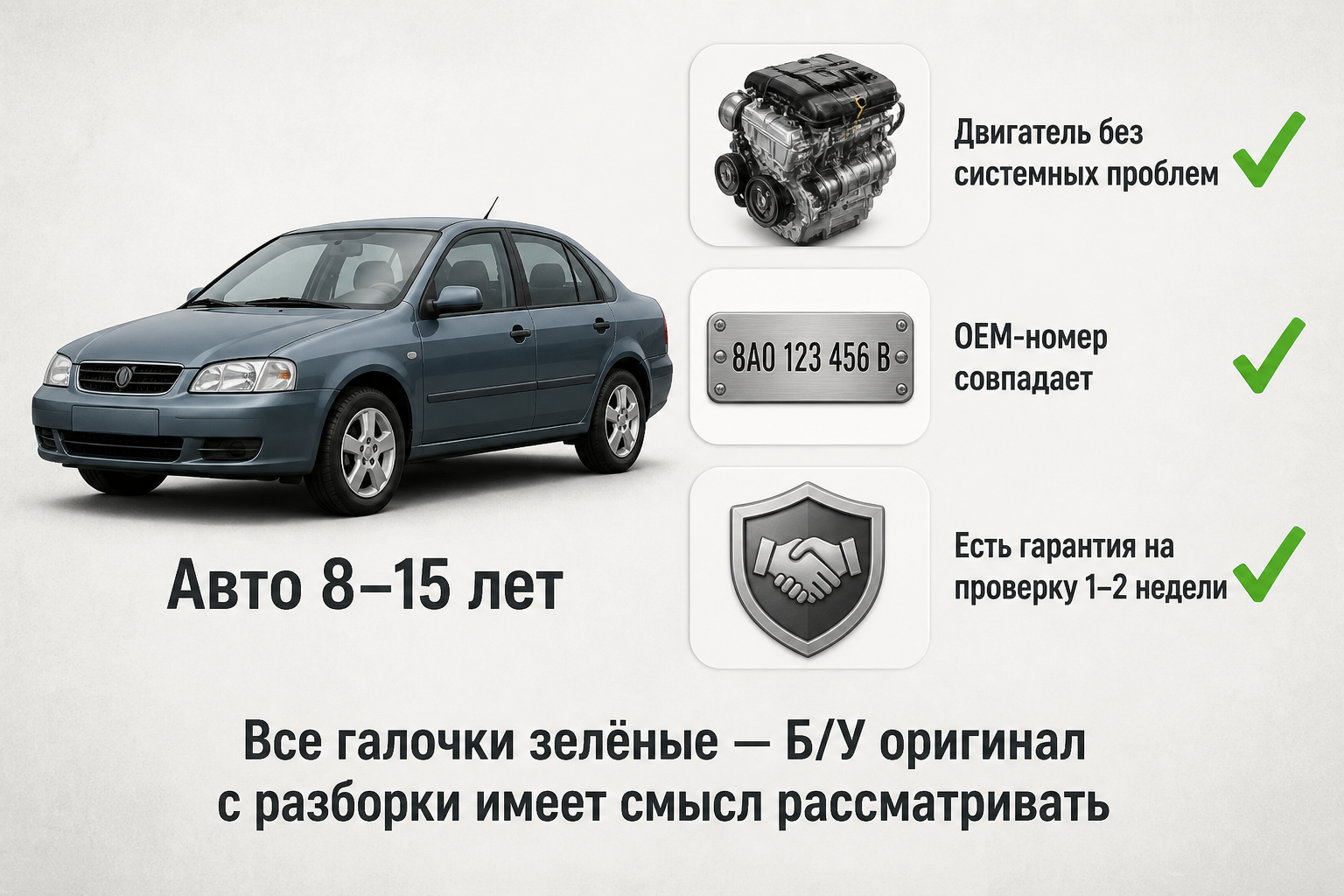
When does it make sense to buy used?
The car is not new (8-15 years old), and installing a new original is not economically viable
The engine is in good condition, there are no systemic problems with oil consumption/overheating.
It is possible to check the OEM number and compatibility
The seller provides at least a minimal inspection guarantee (1–2 weeks)
A real example from a car dismantling yard
Let's say a 2014 Volkswagen Passat B7 2.0 TDI is taken to the yard after a front-end collision.
Damage: The front left corner was struck, the bumper and television were deformed, and the radiator module was partially damaged. The turbocharger and exhaust system may have remained intact if the impact hadn't reached the engine compartment.
Upon disassembly, it turns out that the catalytic converter and DPF are intact, with no cracks in the housing, and the turbine shows no increased play or signs of oil starvation. Such parts are included in the used original parts catalog and cost, for example, 7,000–10,000 UAH for a turbine and 5,000–8,000 UAH for a DPF, while new original components would cost 20,000–30,000 UAH each.
Conclusion: Even after a serious accident, parts of the exhaust system and turbocharger remain fully functional, and with proper inspection, the buyer can save significantly without losing service life.
What to look for when buying a used catalytic converter and diesel particulate filter
Checking the body and traces of tampering
The integrity of the case: are there any dents, cracks, or signs of impact?
Seams and burns: the presence of fresh welds or traces of cutting with a grinder indicates interference.
Flanges and fasteners: are they bent or have any stripped threads?
If it is clear that the case has been opened and closed again, there is a high probability that an “empty” or damaged unit has already been placed inside.
Indoor unit status
The disassembly process won't always involve cutting the case, but you can understand a few things:
Visual inspection through the entrance/exit: the honeycombs should be smooth, without melting.
Dust and chips: The presence of small ceramic particles at the outlet is a bad sign.
For a diesel particulate filter, it is useful to know whether a diagnostic test was performed on pressure and regeneration parameters before removal.
Check OEM number and compatibility
Find the marking or OEM number on the case.
Check it against your car's part number.
Even a slight difference in the number may indicate different environmental standards, dimensions or mounting locations.
How to check a used turbo before buying
1. Body and geometry
We inspect the case for cracks and signs of overheating (bluish tint, discoloration).
We check for signs of rough disassembly: stripped bolts, screwdriver marks, abnormal markings.
2. Shaft play
Radial play (up and down, side to side) in a used turbine is acceptable to be small, but the shaft should not “dangle”.
Longitudinal play (forward and backward) should be minimal; large play is a sign of bearing wear.
3. Impeller
The blades are free of chips, deformations, or traces of foreign objects.
There is no contact of the impeller with the housing (stripes, scuffs).
4. Oil traces
A small amount of oil deposits at the inlet is normal, but a turbine that is “flooded” with oil indicates problems with the seals or lubrication.
5. Geometry drive and actuator
For variable geometry turbines, it is important that the levers move without sticking.
The electronic actuator must be visually intact, without cracks or signs of opening.
At the dismantling site, ask to see a video of the turbocharger running before dismantling, if available. Some auto dismantlers record the car running before dismantling—this builds trust.
What to check when buying a used catalytic converter, diesel particulate filter, or turbocharger
Does the OEM number match your car?
Is the part suitable for the engine, year of manufacture, and environmental standard?
Are fasteners, flanges and threads intended?
Are there any cracks, dents, traces of welding or cutting?
Are there photos of the part from all sides and close-ups of the markings?
For the turbine, have the impeller clearances and condition been checked?
For the diesel particulate filter, are there any signs of home-made removal/burning?
Is there a warranty for testing and return policy?
Drivers' Mistakes When Buying a Catalytic Converter, Diesel Particulate Filter, and Turbocharger
Mistake 1. Purchasing “by photo,” without checking the number and condition
What's dangerous: the part may not fit the mounting hardware or meet environmental standards, or may already be partially clogged or damaged.
The correct way: ask for a photo of the markings, verify the OEM number, clarify the donor car's mileage and the nature of the damage.
Mistake 2. Ignoring evidence of case opening
What is dangerous: the catalytic converter could have been knocked out and welded back, and the DPF could be empty inside.
The right way: carefully look at the seams, cuts, fresh welding, do not be shy about asking questions and requesting additional photos.
Mistake 3: Buying a turbo without checking the clearance
What's dangerous: a worn-out turbine with a lot of play will quickly "die" and can lead to oil getting into the intake or exhaust.
The correct way: check the radial and longitudinal play, the condition of the impeller and the presence of oil traces during disassembly.
Mistake 4: Skimping on diagnostics
What's dangerous: installing even a serviceable used part on an engine with existing problems (oil consumption, overheating) will lead to a repeat breakdown.
The correct way: before replacement, perform a basic diagnosis of the engine and exhaust (errors, pressure, condition of the fuel system).
FAQ
Is it possible to buy a used catalytic converter and diesel particulate filter?
Yes, if it's an original part with an intact housing, no signs of opening, and a confirmed OEM number, and the seller provides a warranty for inspection.
How do I know if a used turbo will fit my car?
You need to check the OEM number, engine type, year of manufacture and configuration, and also clarify which modification the turbine was removed from.
What is better: a new analogue or a used original turbine?
For mass-produced models, a used original turbine in good condition is often more cost-effective, but it is important to carefully check the play and history of the part.
Is it possible to return a used spare part if it doesn’t fit?
This depends on the specific auto dismantling service's rules: many provide a short warranty on installation and inspection, provided that seals and markings are preserved.
Why do seemingly identical parts cost different amounts?
The price is influenced by the brand, rarity of the model, condition, donor mileage, and the presence of a warranty inspection; original parts for popular diesel and turbocharged engines are valued higher.
Conclusion and recommendations
The catalytic converter, diesel particulate filter, and turbocharger are exactly the parts where a used original from a salvage yard can be a reasonable compromise between price and service life, if you choose the right part number and carefully inspect the condition.
In some cases, the price difference compared to new original components can reach tens of thousands of hryvnias, while still maintaining factory quality.
When selecting used parts, it is important not only to find the “correct” part number, but also to assess the actual condition: the integrity of the housing, fasteners, absence of signs of opening, play, and overheating.
At a car dismantler, it's worth clarifying in advance what car the part came from, whether there are photos available before dismantling, what kind of warranty is provided for inspection, and whether a return is possible in case of non-compliance. This will help avoid unnecessary expenses and make buying a used original a truly profitable decision, rather than a gamble.