"Engine misfire" is what drivers call a situation where several cylinders, or just one of them, are malfunctioning or not working at all, causing the engine to vibrate, jerk, and lose power. Essentially, it's a type of misfire, where the fuel mixture inside the cylinder isn't burning properly.
This problem affects both older and modern car owners: most often, it stems from ignition, fuel delivery, air, or engine mechanical issues. The danger is that prolonged driving with misfiring can lead to overheating, catalytic converter failure, and serious engine damage.
Key causes of unstable engine operation with misfiring
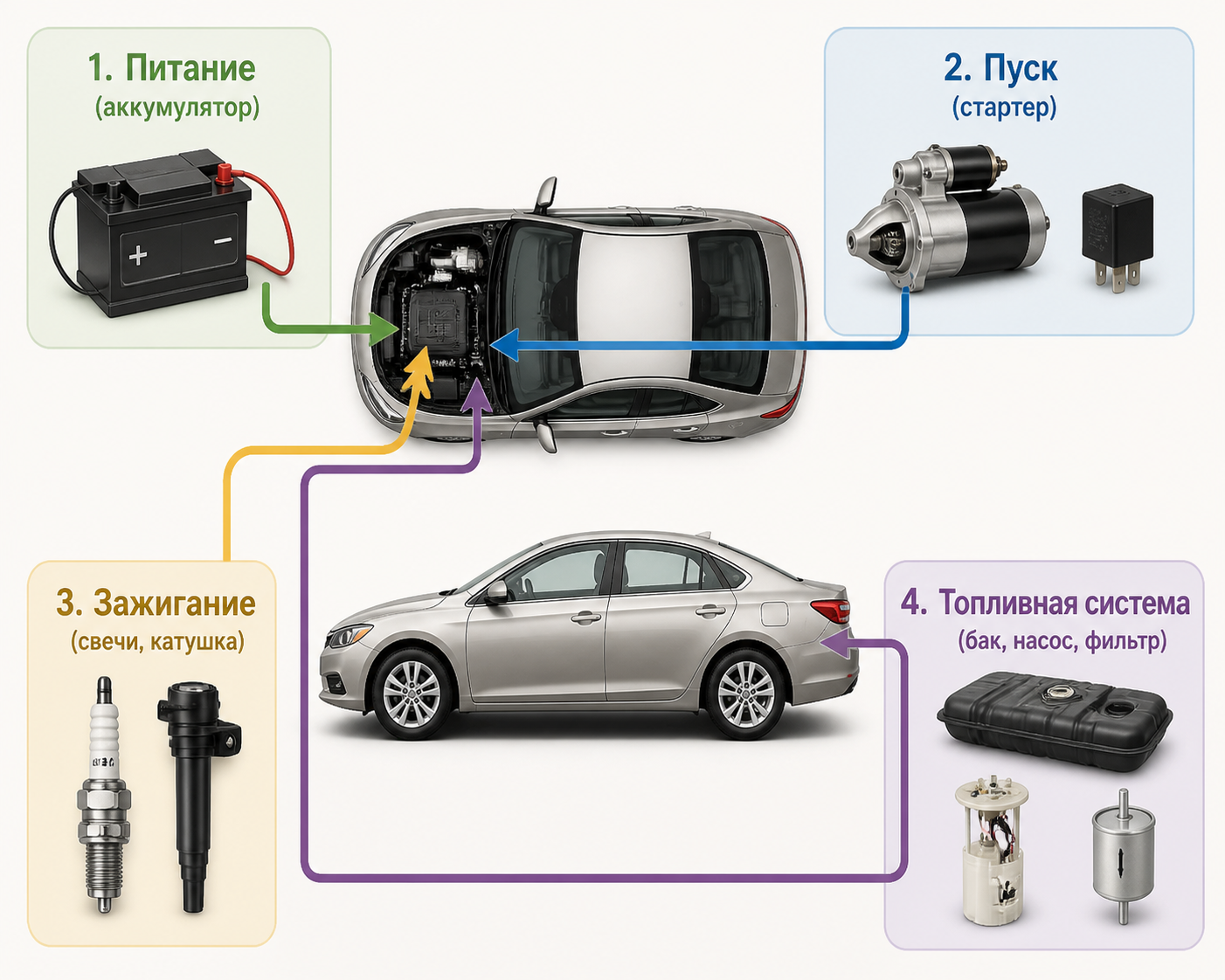
1. Ignition malfunctions
One of the most common causes of misfiring is faulty spark plugs, high-voltage wires, or coils. In this situation, it makes sense to immediately select and order the correct engine parts .
Main options:
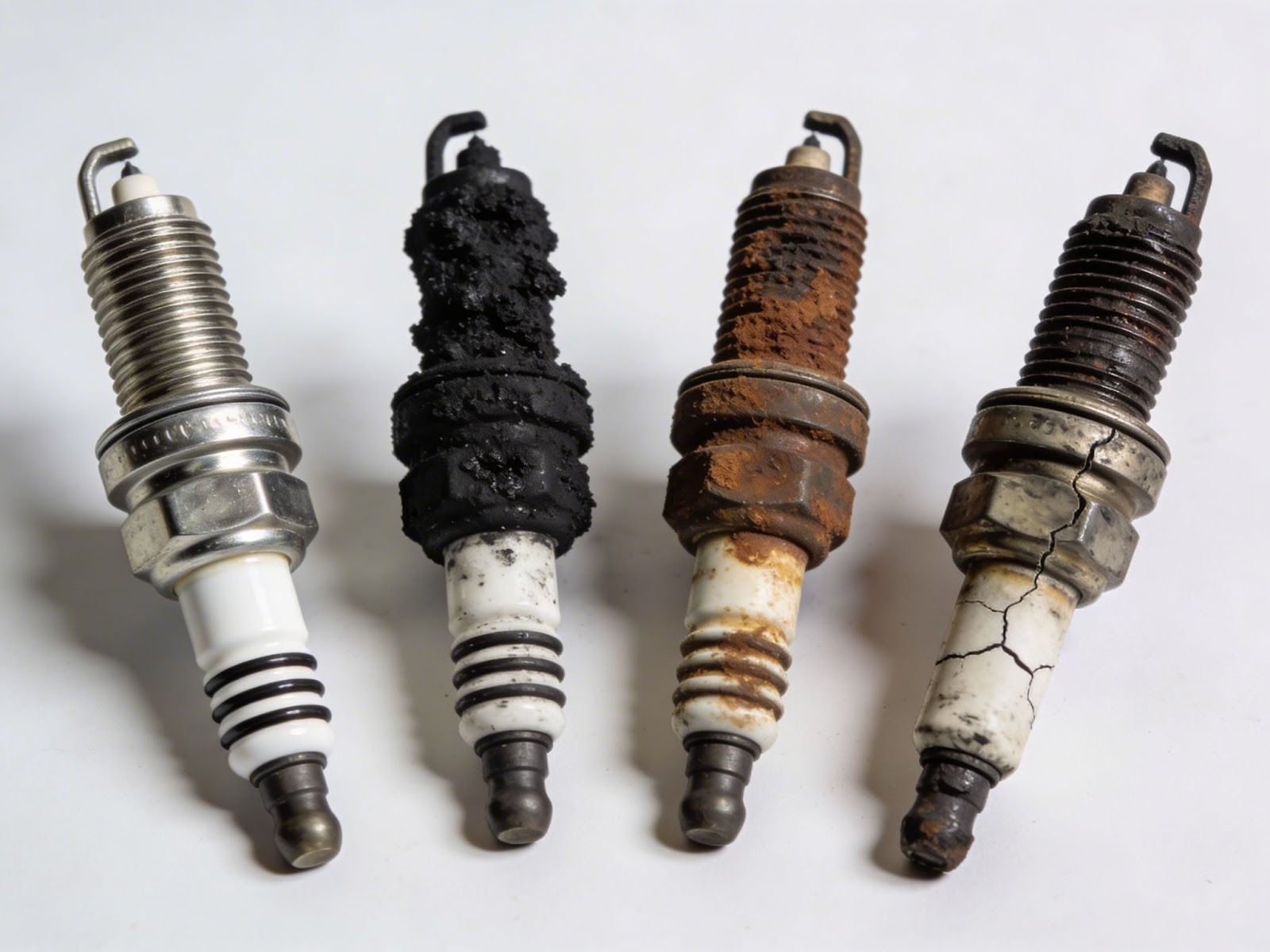
Worn or dirty spark plugs (carbon deposits, worn electrodes, incorrect gap) cause weak or unstable spark and misfires.
Damaged high-voltage wires or coils (microcracks, insulation breakdown, contact corrosion) cause spark interruptions in one or more cylinders.
As a result, the engine runs unevenly, there is vibration at idle, loss of traction and jerking during acceleration.
2. Problems with fuel supply
The second major block of reasons is the fuel system.
Possible malfunctions:
Clogged or faulty injector: the cylinder receives little or no fuel – the mixture is too lean, causing misfires.
Low fuel pressure due to problems with the fuel pump or a clogged fuel filter – the engine “starves” itself, especially under load, and begins to misfire.
Such problems often manifest themselves as increased throttling during acceleration, weak traction on hills, and unstable operation in various modes.
3. Air supply failure and leaks
Proper combustion is only possible with the correct air and fuel ratio. When too much or too little air enters the cylinder, an excessively lean or rich mixture is created, and the cylinder may not operate properly.
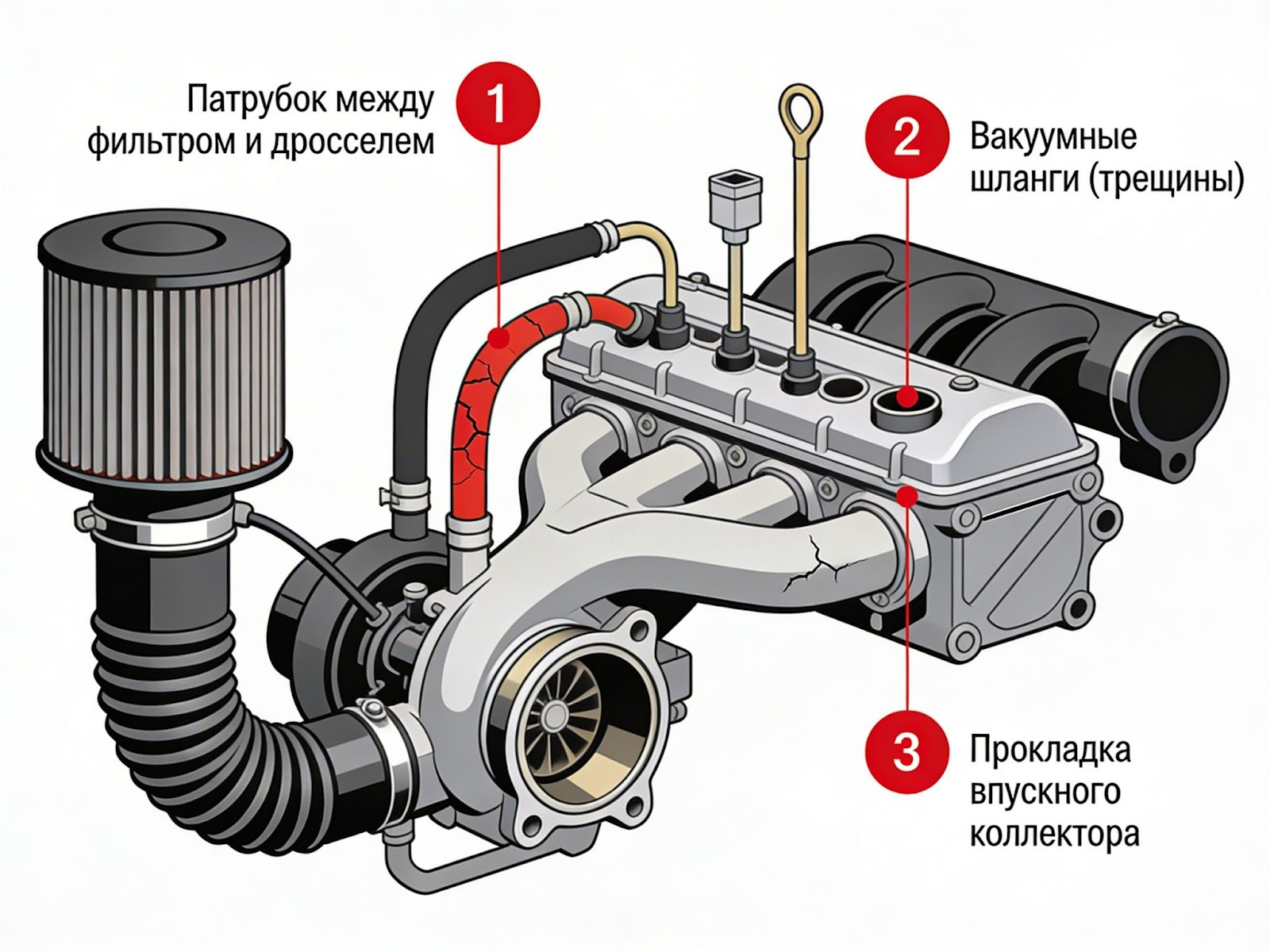
Typical reasons:
Air leaks through cracked intake manifold gaskets, leaky connections, or vacuum hoses.
A heavily soiled air filter restricting air flow.
This leads to unstable idle speed, dips when adding gas, and possible errors in the mixture composition.
4. Compression leaks and engine mechanical problems
If there is insufficient compression in the cylinder, the mixture does not achieve the required compression and does not ignite properly, which leads to a persistent engine misfire.
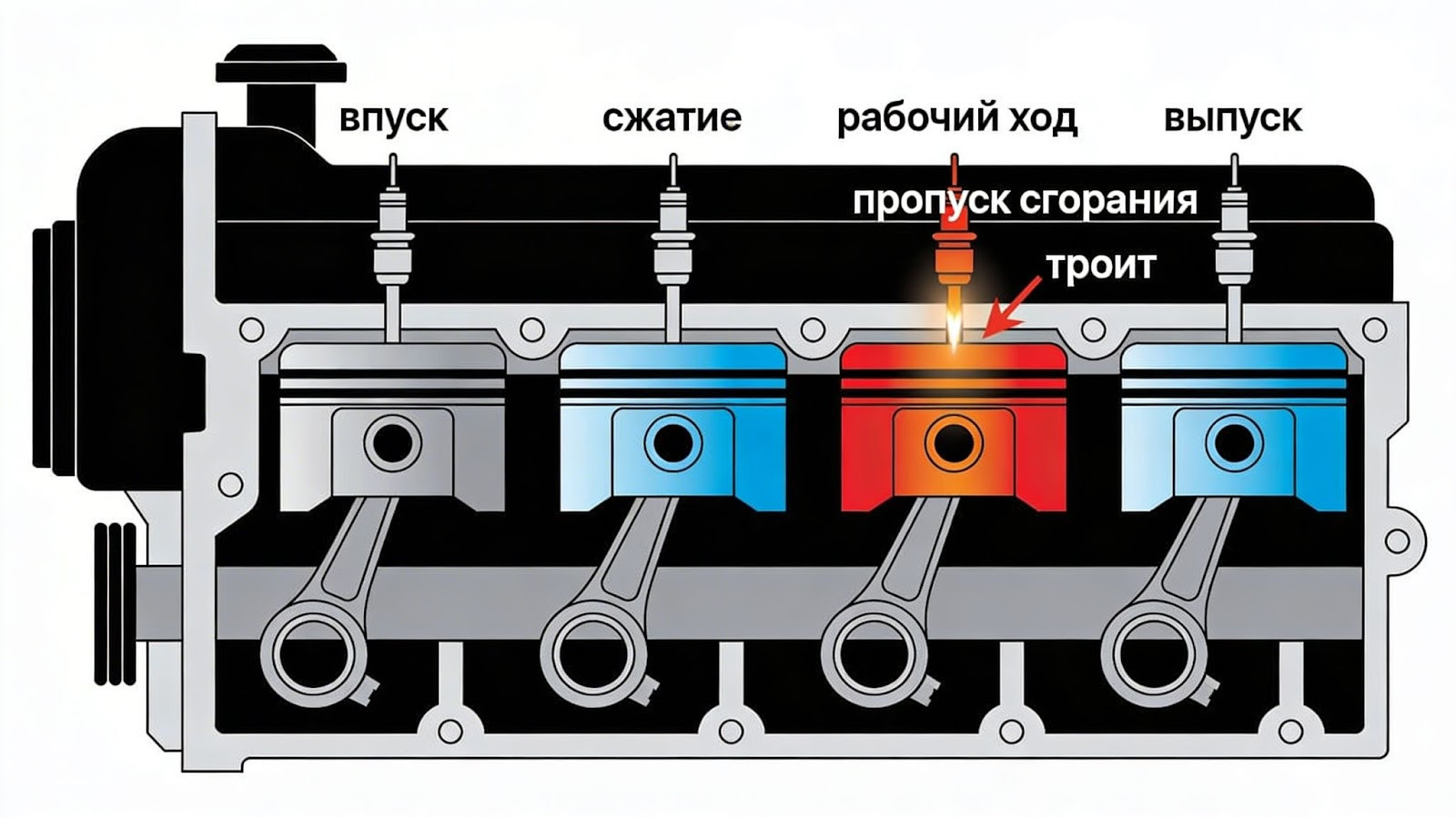
Reasons for low compression:
Worn or damaged piston rings.
Burnt or loose valves.
The cylinder head gasket is broken, there is a compression leak between the cylinders or into the cooling system.
Such faults are usually accompanied by constant vibration, noticeable loss of power and often require major repairs.
5. Faulty sensors and control failures
In modern cars, throttling is often associated with electronics: sensors and the engine control unit regulate fuel supply and ignition timing.
Possible reasons:
Incorrect readings from the oxygen sensor (lambda probe) lead to incorrect mixture correction.
Failures in the crankshaft or camshaft position sensors disrupt the timing of injection and spark, causing misfires in individual cylinders.
Most often, such problems are accompanied by a lit Check Engine light and stored error codes for misfires or sensor operation.
How does a misfiring engine behave?
The main symptoms to look out for are:
Unstable idle: the revs drop and then rise, the engine shakes, and the vibration is transmitted to the body and steering wheel.
Loss of power: the car drives sluggishly, pulls poorly under load, and noticeable dips are felt when adding gas.
Jerking while driving: the car reacts jerkily to acceleration and may jerk even at a steady speed.
Excessive fuel consumption and fuel smell: due to incomplete combustion of gasoline, consumption increases and a fuel smell appears from the exhaust.
Check Engine light comes on: The electronic unit detects misfires and records the corresponding error codes.
What should a driver look for?
Tachometer needle behavior at idle (jerks, dips).
Vibrations in the steering wheel, body, and especially when shifting into/out of gear.
Color and smell of exhaust (a strong gasoline smell may indicate unburned fuel).
Signals on the instrument panel: Check Engine, sometimes – related errors in the stabilization system or gearbox.
The dangers of ignoring engine misfiring
Ignoring the triple fault means deliberately allowing more serious problems to develop.
Main risks:
Damage to the catalytic converter: unburned fuel enters the exhaust, burns in the catalytic converter, overheating and destroying it.
Increased load on the engine and mounts: uneven operation of the cylinders increases vibrations, which accelerates wear of engine mounts and other components.
Overheating of individual components and possible damage to pistons, valves, and spark plugs due to detonation or improper combustion of the mixture.
Potential loss of power at a dangerous moment: when overtaking, entering an intersection, or changing lanes, a sudden loss of power or even engine stalling is possible.
The longer a car is driven with misfiring, the higher the risk that a more expensive and serious repair will be required instead of an inexpensive spark plug or coil replacement.
Table: Main causes, symptoms and basic actions
Cause | Typical symptoms | What can the owner do (initial check) |
Spark plugs, coils, wires | Rough idle, jerking acceleration, Check Engine | Inspect the spark plugs (for carbon deposits, cracks), and check the wires and connectors for corrosion. |
Injectors, pump, filter | Trouble under load, weak traction uphill, increased fuel consumption | Check the fuel quality and replace the fuel filter if possible. |
Air intake, filter | Floating revs, dips when pressing the gas | Check the condition of the air filter, inspect the hoses for cracks and leaks. |
Loss of compression | Constant misfiring, strong vibration, noticeable loss of power | On your own – just rule out simple causes; then – diagnostics at a service center (compression). |
Sensors, ECU | Troenie + Check Engine, sensor errors, unstable operation | Scan the diagnostics (if you have a scanner) and record the codes for service. |
What can you check yourself?
Important: Any independent actions must be carried out safely and with the engine off (except in cases where idling is clearly required), in accordance with the manufacturer's instructions.
Basic checklist for car owners
Visually inspect the engine compartment. Check for disconnected hoses, obvious cracks in the pipes, and signs of damage to the coils and wires.
Spark plugs. If you have access and experience, carefully remove the spark plugs and assess their condition: heavy carbon deposits, cracks, or damaged insulators are all signs that indicate a replacement and that scheduled engine maintenance and oil changes are necessary.
Air filter. Open the filter housing and check for contamination; replace if heavily contaminated.
Fuel. Check to see if you've recently filled up at a questionable gas station; if you're unsure, try a different gas station and, if possible, add the manufacturer's recommended tank cleaner (following the instructions).
Reading OBD-II error codes. If you have a simple scanner, you can read error codes (for example, P0301–P0304 – misfires in a specific cylinder) and record them for further diagnostics.
All more complex tests (compression, injector testing, fuel pressure testing, ignition waveform testing) require specialized equipment and skills and should be performed in a service center.
When is it necessary to go to a service center?
Contacting the service should not be delayed in the following situations:
The engine constantly misfires, the car noticeably jerks or doesn’t pull even when driving calmly.
The Check Engine light is flashing (not just staying on): This often indicates active misfires, which can be dangerous to the catalytic converter.
Extraneous metallic knocks, pops in the intake or exhaust, and a burning smell appeared.
The engine stalls while driving, when changing gears or at traffic lights.
The misfiring is accompanied by an increase in engine temperature or obvious signs of overheating.
In these cases, continued operation of the vehicle may be dangerous and lead to costly repairs, so it is best to take the car to a service center as quickly as possible, using a tow truck if necessary.
FAQ
Is it possible to drive if the engine is misfiring?
A short drive to the service center at low speed is possible, but long-term driving with the engine running rough is not recommended due to the risk of damaging the catalytic converter and engine.
Why does the engine misfire when cold and then even out?
On a cold engine, symptoms are often more pronounced due to a rich mixture and increased ignition load; as the engine warms up, weak spark plugs or wires may temporarily "mask" the problem, but it never goes away.
Could the misfiring be due to bad gasoline?
Yes, contaminated or improper fuel can cause misfires, especially through clogged injectors and filters, which leads to misfires.
Is it dangerous to drive with a flashing Check Engine light?
A flashing light usually indicates active misfires, which can quickly damage the catalytic converter. In this situation, it's best to stop and contact a service center.
Should I change all the spark plugs at once if one cylinder is misfiring?
In many cases, manufacturers recommend replacing the entire spark plug set to ensure smooth operation of all cylinders and to prevent the problem from returning shortly afterward.
Conclusion and recommendations for prevention
Engine misfiring is always a sign that one or more cylinders are malfunctioning, and diagnosis should be done immediately. In the early stages, the problem can often be resolved by replacing spark plugs, coils, or eliminating air leaks, whereas ignoring it leads to costly engine and exhaust system repairs.
For preventative maintenance, it's important to regularly maintain the ignition and fuel system: change spark plugs and filters on time, use high-quality fuel, never ignore the Check Engine light, and have diagnostic checks performed regularly. This will help keep the engine in good working order, reduce the risk of misfiring, and ensure safe and fuel-efficient operation.