Steering wheel vibration at speed is one of the most common complaints from car owners, especially when driving on the highway at 80–110 km/h (50–70 mph). The steering wheel begins to vibrate, shake, or literally "jerk" out of your hands, which immediately reduces comfort and the feeling of control over the car.
This type of vibration almost always indicates a problem with the chassis, wheels, brakes, suspension, or steering , and directly impacts driving safety. Steering wheel vibration should not be ignored: over time, this minor issue can lead to serious breakdowns and accidents.
In this article, we'll explore the main causes of steering wheel vibration at speed, typical symptoms, possible consequences, what you can do yourself, and when you should immediately stop driving your car and take it to a service center.
The main causes of steering wheel vibration
1. Imbalance or problems with wheels and tires
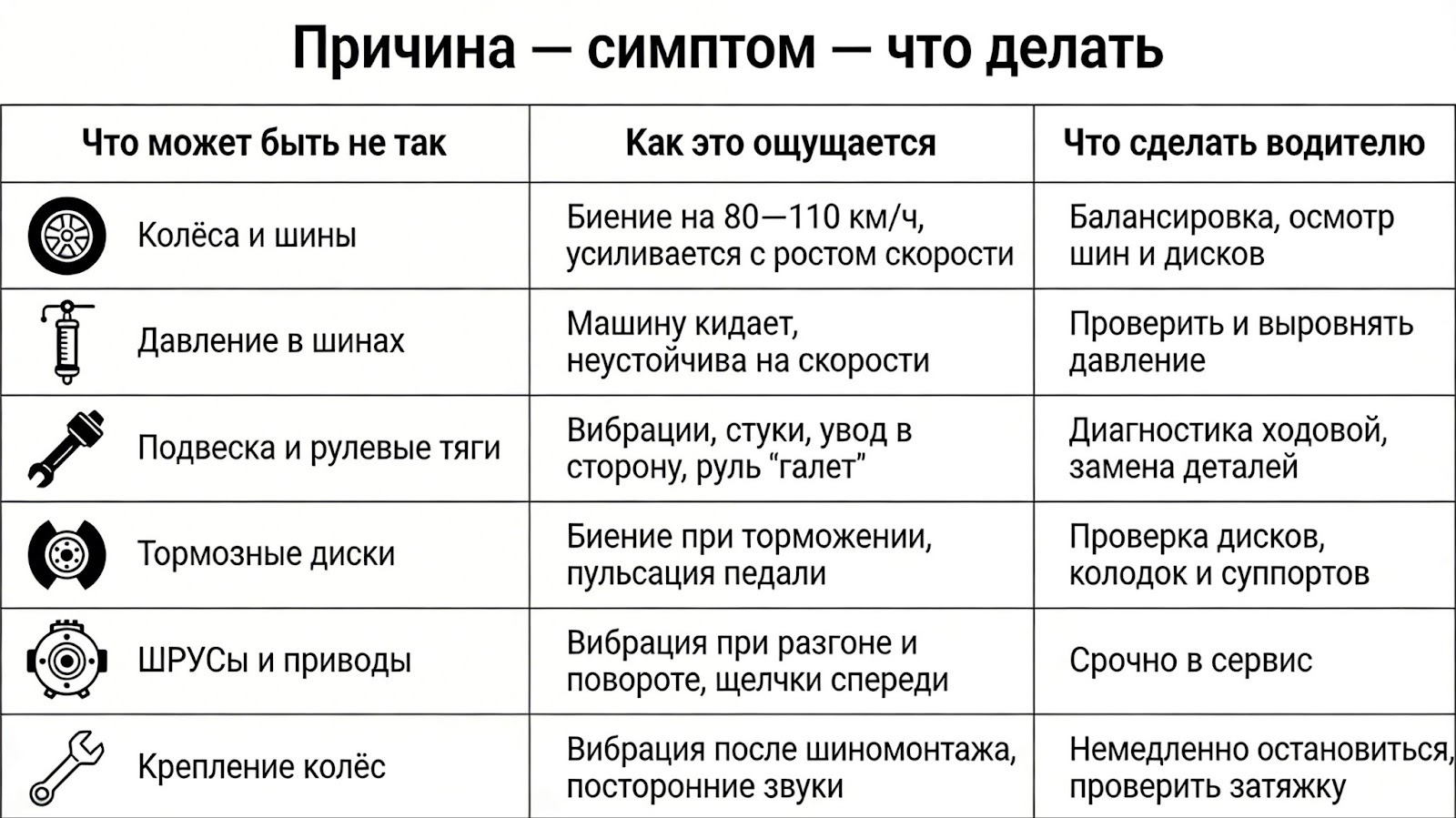
The most common cause of steering wheel vibration at speed is improper wheel balancing or incorrect tire and wheel geometry.
Typical options include wheel imbalance, when the weight is distributed unevenly around the circumference, deformation of the disc after hitting a pothole or curb, the appearance of a "hernia" or internal damage to the tire.
Vibration can also be caused by dirt, snow, or ice stuck to the wheels and inside the rims. Uneven tread wear, which often occurs due to improper wheel alignment, also plays a significant role.
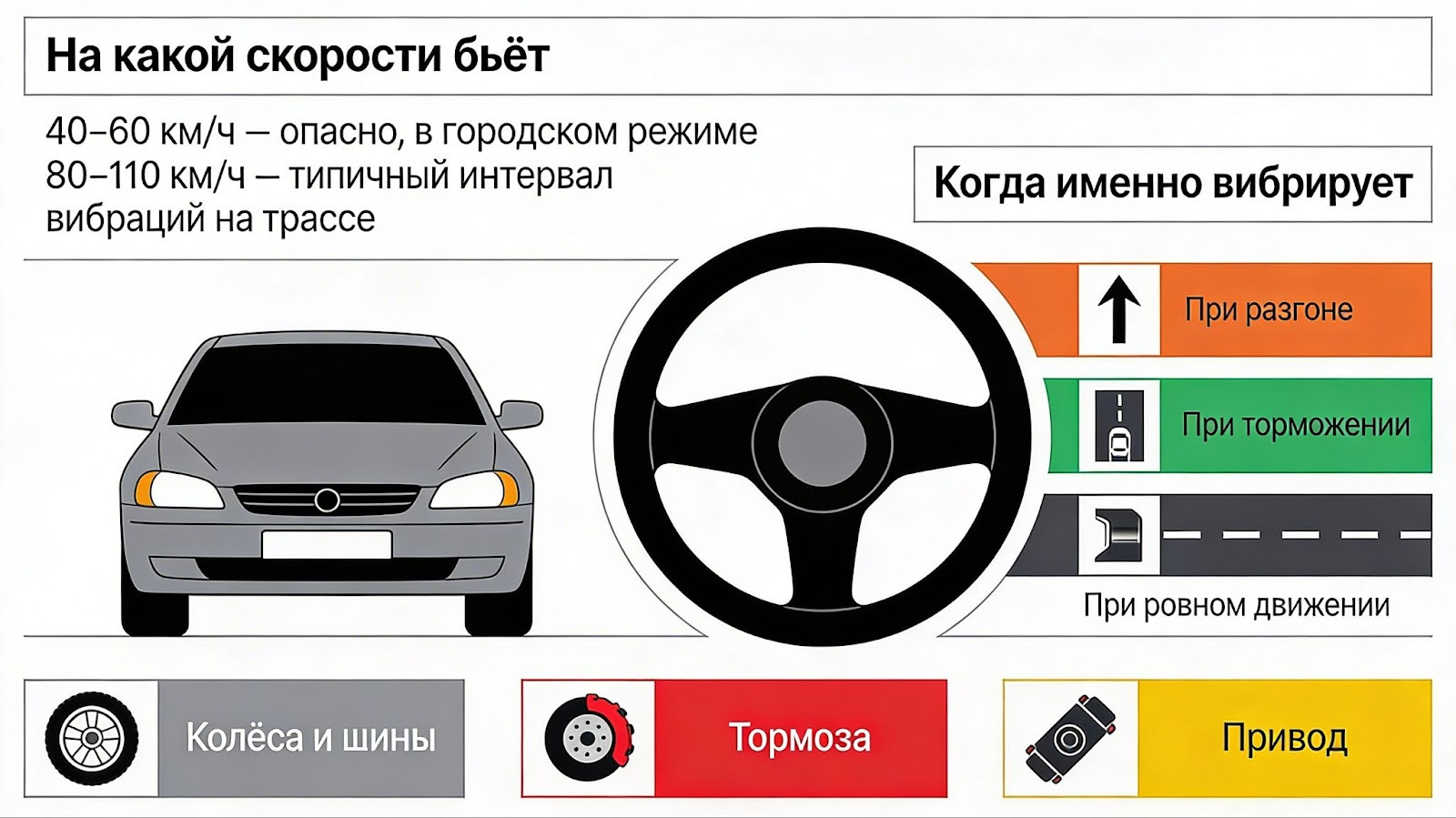
Most often, vibration from imbalance appears at speeds of 80 km/h and increases as the speed increases.
2. Incorrect tire pressure
Underinflated or unevenly inflated tires also cause steering wheel vibration. Underinflated tires deform more when rotating, causing imbalance and vibration. If tire pressure varies significantly between tires, wheel height changes, wheel tilt occurs, and the car becomes less stable at speed.
3. Suspension and steering rod faults
Wear of suspension components is a common cause of vibrations, especially “floating” ones, which appear at a certain speed.
Steering wheel vibration can be caused by worn ball joints and steering tips, loose or damaged control arm bushings, and damaged wheel bearings.
Such malfunctions are often accompanied by knocking, creaking, the car pulling to one side, and a deterioration in the overall feeling of control, when the steering wheel becomes less responsive and the car begins to behave "wanderingly."
4. Problems in the braking system
If the steering wheel starts to shake when braking, the cause often lies in the brake discs and calipers.
Possible faults include warped brake discs with ripples and irregularities, uneven wear or sticking of brake pads, and sticking caliper guides or damage to their rubber components.
When you press the brake pedal, such defects create a variable friction force that is transmitted to the steering wheel in the form of vibrations, which are especially noticeable when decelerating from high speed.
5. Drive shafts, CV joints and cardan shafts
In front-wheel drive and all-wheel drive vehicles, vibration can be associated with drive shafts and constant velocity joints (CV joints).
A worn or damaged CV joint causes vibration during acceleration and turning, often accompanied by a characteristic clicking sound heard from the front wheels. Looseness or deformation of the drive shaft or cardan causes vibrations throughout the entire vehicle at high speeds, with the vibration often felt in the steering wheel and seats.
6. Defective or loose wheel fastenings
Incorrect wheel installation, including loose or overtightened bolts/nuts, can also cause steering wheel vibration. If vibration occurs immediately after tire installation or wheel replacement, this is one of the first things to check. In this case, it's important to promptly re-inspect the vehicle, as a loose wheel can pose a serious accident risk.
Signs and symptoms
To notice a problem in time, it is important to understand how exactly steering wheel vibration manifests itself and what to pay attention to.
The main symptoms of steering wheel vibration are quite typical. Drivers most often notice vibration at a certain speed, usually between 80 and 110 km/h (50 and 70 mph), with the vibration noticeably decreasing as they slow down.
If the vibration intensifies during braking, it most often indicates a problem with the braking system. If the vibration appears during acceleration and is accompanied by a characteristic clicking sound, wear in the drivetrain components or CV joints can be suspected.
Another warning sign is the car pulling to one side and the need to constantly adjust the steering wheel to maintain the lane. Additional warning signs include unusual noises from the wheels and suspension, such as knocking, squealing, or humming, as well as changes in braking distance and a feeling of instability at speed.
The dangers of ignoring the problem
A steering wheel vibration is not just a discomfort, but a signal of problems that could lead to an emergency.
The main risks are related to loss of stability and control at high speeds, especially during maneuvers and emergency braking. Constant vibrations accelerate wear on tires, bearings, ball joints, steering rods, and other chassis components, ultimately increasing repair costs.
In severe cases, CV joint or suspension component failure may occur, resulting in a sudden loss of vehicle control. If the vibrations are caused by a serious defect in the brake discs or a seized caliper, the situation may lead to partial or complete failure of the braking system.
Service experts note that minor defects, such as initial imbalance or slight deformation, almost always develop into more serious and expensive breakdowns when left untreated for long periods of time.
What can you check yourself?
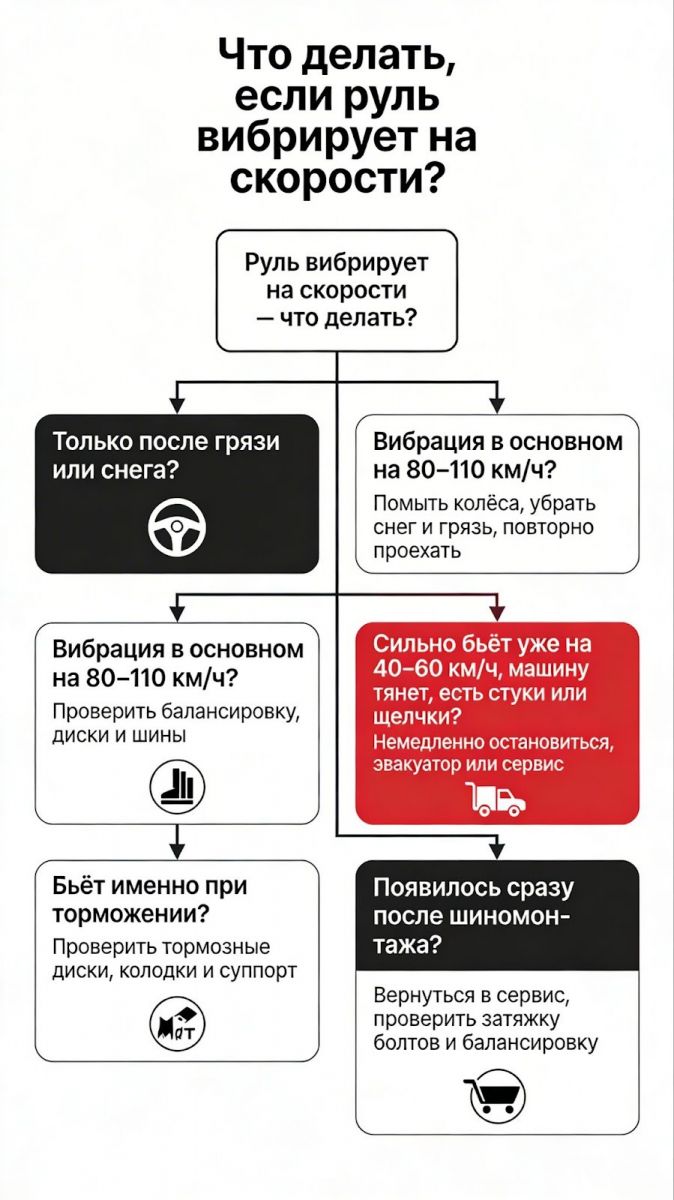
The driver can perform some basic checks himself, without special equipment.
Visual inspection of wheels and tires
The basic step is to carefully inspect the tires for bulges, bulges, cuts, and visible deformations. It's also worth checking the tread: uneven wear, ridges, or clearly worn edges often indicate issues with the suspension geometry or wheel alignment.
It is equally important to ensure that the wheels are free of heavy dirt and any snow or ice, especially on the inside of the rim, as this will directly affect balancing.
Checking tire pressure
Tire pressure is checked using a simple tire pressure gauge. Measure the pressure on all tires and compare it to the recommended values indicated on the door pillar or in the vehicle's owner's manual.
If the readings deviate from the norm, the pressure should be adjusted, not forgetting about the spare tire: if it is installed with the incorrect pressure, vibration and pulling to the side are also quite possible.
Wheel fastening control
Carefully check the wheel nuts and bolts for looseness (especially if the tires have recently been serviced). If you have any doubts, it's best to take the wheels to a service center to have them properly tightened with a torque wrench rather than tightening them all the way.
Test drive
Pay attention to the speed at which the vibration begins and how it changes during acceleration and braking. Check whether the vibration occurs only during braking or also during steady movement.
When is it necessary to contact service?
There are situations in which further operation of the vehicle is dangerous and immediate service is required.
A service visit is essential if the steering wheel begins to vibrate strongly even at city speeds of 40–60 km/h, and the vibration significantly interferes with maintaining the car's directional stability. Another alarming scenario is when the vibration increases sharply when braking, the brake pedal pulsates, and the car pulls to one side: this could indicate serious problems with the brake discs, pads, or calipers.
Loud knocking, crunching, or clicking sounds from the wheels and suspension, especially when turning the steering wheel or accelerating, are also a dangerous sign. If the car noticeably pulls to one side and requires constant steering correction, this is also a reason to get it checked immediately.
And most importantly: at the slightest suspicion of a wheel becoming loose, it is better to stop immediately and not continue driving until the cause is determined.
A professional inspection typically includes a chassis check, brake disc runout measurement, wheel alignment, tire condition, suspension, wheel bearings, and steering.
FAQ
Is it possible to drive if the steering wheel shakes a little at speed?
A short drive to the service center is acceptable if the vibration is mild, the car responds to the steering wheel, and there are no extraneous sounds, but you shouldn't put off diagnostics.
The steering wheel only shakes at speeds of 90–100 km/h – is this definitely a wheel imbalance?
The most likely cause is wheel imbalance or deformation, but there may also be problems with the suspension or tires, so a test on a stand is necessary.
The steering wheel starts vibrating when braking - what is it?
Most often, this is a sign of warped brake rotors or pad/caliper problems that require inspection and possibly replacement.
Will simple balancing help?
If the issue is simply imbalance and the tires/wheels are intact, balancing will usually eliminate the vibration; if the components are warped, repair or replacement will be necessary.
What should I do if the steering wheel starts shaking more after tire fitting?
You need to return to the service center as soon as possible to check the quality of balancing, correct installation of the wheels, and tightening of the bolts.
Conclusion and recommendations
Steering wheel vibration at speed is a clear sign that there's a problem with the car, not just a road quirk, and it's best not to delay diagnostics. Regularly checking tire pressure, balancing wheels, careful driving on rough roads, and scheduled suspension maintenance significantly reduce the risk of vibration and extend the life of the chassis.
If you notice steering wheel vibration, especially at high speeds or when braking, it's safest to schedule a visit to a reputable service center as soon as possible rather than wait for a minor issue to develop into a major breakdown.