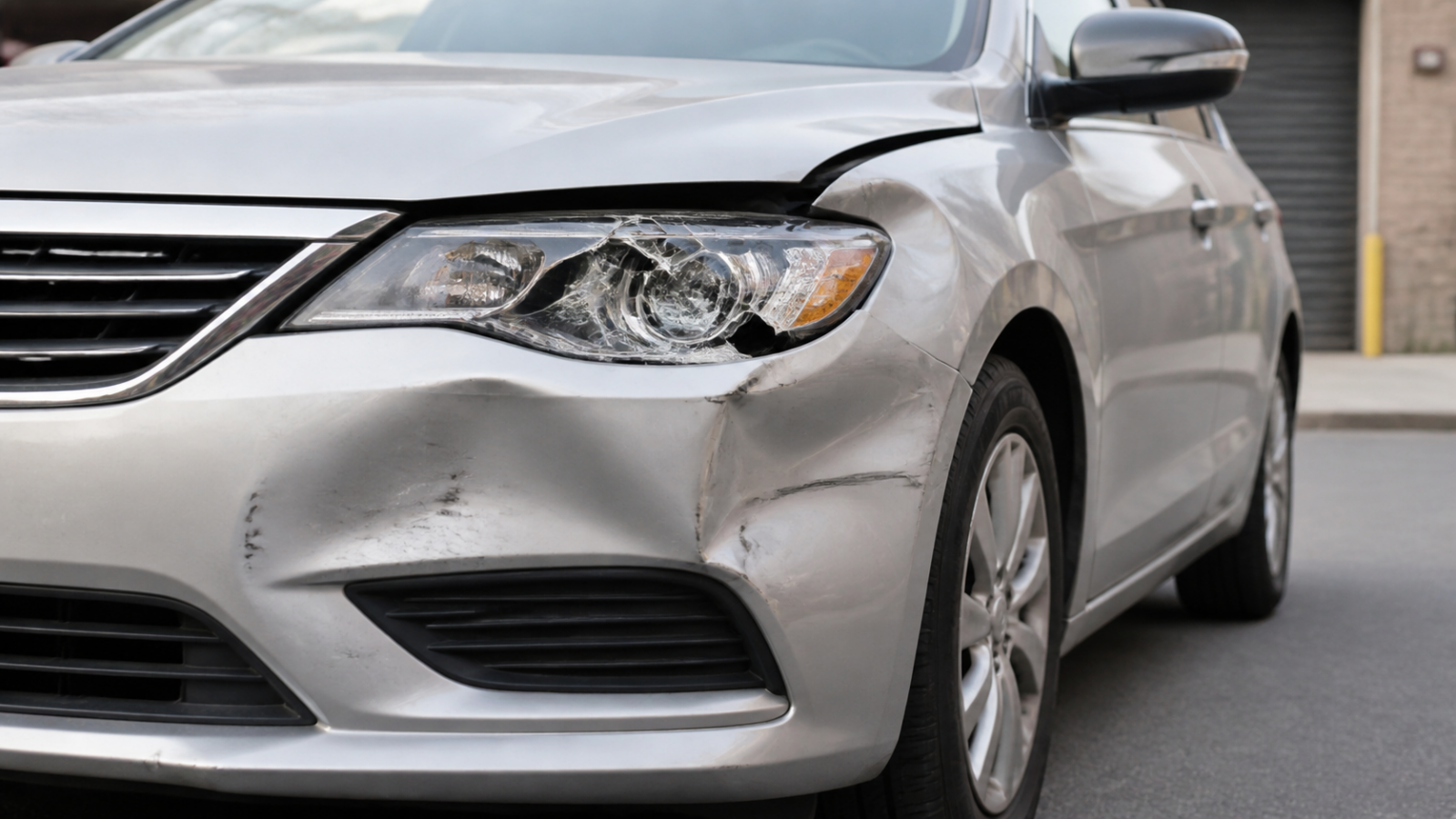
Imagine a minor accident in the city, a dented bumper, a cracked headlight, and a slight grazing of the fender. At first glance, it seems like a cosmetic issue, but the service bill is a dreadful one to show your family. New original headlights, a rearview mirror with a camera, or a complete door assembly can sometimes cost tens of thousands of hryvnias.
In recent years, cars have become much more complex: headlights house control units, mirrors house cameras and heated mirrors, and doors house wiring, comfort modules, and airbags. Because of this, even a minor collision can turn into an expensive repair.
At the same time, auto dismantlers already have a large selection of original used spare parts from the USA, which can often be used instead of new ones without loss of quality.
In this article, we'll explore which 7 used parts are more profitable to buy, why it's safe when done correctly, what to look for when buying, and when it's best not to skimp.
Why has the topic become particularly relevant?
New, genuine auto parts have become significantly more expensive in recent years, especially for bodywork and optics, where the average price for body work has increased by tens of percent.
Manufacturers are actively embedding electronics into body elements: radars and parking sensors are located in bumpers, LED modules and control units are located in headlights, and all-round cameras are located in mirrors.
That's why car owners are increasingly turning to auto dismantlers and genuine used parts, especially when a new part costs half the market price of the car.
New part, analog or used original
Most often, owners have three options: a new genuine part, a new aftermarket replacement, or a used genuine part from a salvage yard. Below is a general table to help you choose the right option for your specific situation.
Option | Pros | Cons | When it suits |
New original part | Maximum compatibility, resource, quality. | Very high price, waiting period possible. | New, expensive car, warranty repairs, complex electronics. |
New non-original analogue | Lower prices, wide selection of simple items. | May differ in geometry, quality, and resource. | Simple body parts, consumables, when price is important. |
Used original part | Factory quality, correct fit, price lower than new. | It is necessary to carefully check the condition and history. | Headlights, doors, hoods, mirrors, wheels, interior, some control units. |
When a used part is a good solution
Used genuine parts are appropriate when it comes to body and interior components, which are easy to inspect and evaluate from photos and in real life. For many of these parts, the advantage is their factory quality, correct geometry, and reasonable price compared to a new, genuine part.
It's especially logical to consider salvage parts when the car is no longer new and the price of a new, genuine part is prohibitive. It's important, however, not to turn savings into a gamble—check the OEM number, mounting hardware, part history, and return policies.
1. Headlights and light control units
A modern headlight is more than just a piece of glass and a bulb, but a complex assembly with LED modules, lenses, ignition units, and light control units. A new, original headlight for a mass-produced European or Japanese car can cost between 10,000 and 25,000 UAH or more, while a premium headlight can cost significantly more.
At auto salvage yards, you can find an original used headlight for 2-4 times less, often with the control unit already installed and the mounts intact. If the headlight hasn't been in a serious accident and doesn't have cracks in the housing or fogging, it's one of the most reasonable candidates for a used one.
2. Heated mirrors with cameras
A modern mirror is a complete module: turn signal, heating, power folding, blind spot sensors, and all-round cameras. A new, original mirror assembly can cost as much as half a door, especially for crossovers and premium models.
A used, original mirror from a salvage yard allows you to preserve the correct geometry, color, and completeness, while usually being significantly cheaper than a new part. Often, the mirror can be purchased with the cover and repeater, saving on painting and additional parts.
3. Doors and hoods
Body components like doors and hoods are ideal for used purchases because they are most affected by the geometry and quality of the metal. A new, original hood or door assembly can cost tens of thousands of hryvnias, plus painting and installation.
At a car dismantling yard, you can find an original door or hood painted in the original color, sometimes even matching your car's color, which saves on painting and preparation costs. The main thing is to carefully check for any distortions, signs of major repairs, or corrosion along the edges.
4. Original alloy wheels
Original wheels often turn out to be more expensive than the owner expects: a set of new original alloy wheels can cost 20,000–60,000 UAH and more, depending on the brand and size. Moreover, many wheels suffer damage not from accidents, but from curbs and potholes, making them ideal for a smart used purchase.
At a dismantling shop, you might find a single disc instead of a complete set, find a factory-quality set, or replace a badly damaged disc with a good, used one. It's important to check for cracks, major repairs, and warping.
5. Seats and interior elements
Seats, door trims, center consoles, and dashboards are typical items that are frequently replaced due to wear, burns, or airbag deployment. New original interior components are expensive, and the quality of plastic and fabric alternatives is usually significantly inferior.
A used, original interior from a car with low mileage or minor body damage allows you to restore the car to its factory appearance without overpaying. The ideal scenario is to find a seat or interior kit with the same features (heated, power, airbag in the back).
6. Electronic control units (ECU, comfort modules, light units)
Control units for new cars are expensive, and a single malfunction can cripple the entire system—from the lights to the gearbox. New original units cost several thousand hryvnias and are not always available.
Used control units from auto salvage yards are a common solution, especially if they offer inspection and a warranty on installation. Often, the required unit can be found by OEM number and firmware version, and, if necessary, can be reprogrammed for a specific vehicle.
7. Bumpers and attachments with sensors and radars
Bumpers with parking sensors, adaptive cruise control radars, and lane-keeping systems have become significantly more expensive due to the inclusion of electronics. A new bumper in the same color as the car, complete with sensors and mounting hardware, can easily add up to a hefty bill.
A used original bumper , especially one complete with grilles, mounts, and sensor covers, allows you to restore its appearance and functionality much more affordably. The main thing is to determine whether the bumper was heroically restored after a severe impact.
What to look for when buying a used part
Below is a basic checklist to help you avoid making mistakes when buying any used part—from a headlight to a door.
Checkpoint | What to do before purchasing |
OEM part number | Check against the catalog, photo of the tag or case |
Compatibility by model and year | Check applicability to your body/engine |
Fastenings | Request large photos of all ears and seating areas |
Signs of repair | Look for putty, welding, sealant, soldering |
Cracks and chips | Check the case, glass, and plastic at different angles |
Connectors and wiring | Chips must not be melted or “modified” |
Equipment | Please clarify whether blocks, sensors, plugs are included |
Photo "before removal" | If possible, see the part while it is still on the car. |
Guarantee for verification | Check the return terms and test conditions |
Common mistakes when buying used parts
Mistakes made when choosing used parts often cost more than the savings initially realized. Below are some common mistakes you'd be better off avoiding.
Error | What is dangerous? | What is the correct way? |
Buying a headlight without a photo of the mounting hardware | The headlight will not be level, gaps and vibrations will appear. | Ask for large photos of all ears and brackets. |
Failure to verify OEM number | The part may not fit in shape or connectors. | Check OEM number by VIN and catalog. |
Control unit "only in the photo" | Risk of incompatibility, error, block failure. | Check the number, version, and clarify the possibility of return. |
Buying a door with "light repair" | Hidden seams, distortions, problems with tightness. | Inspect doors with minimal intervention, check gaps. |
Saving on a cracked disc | High risk of destruction while driving. | Avoid discs with welds along the shelf and cracks. |
Ignoring return conditions | It is impossible to return a part if it does not fit. | Immediately clarify the timing and format of the inspection. |
When a used part is a good solution, and when it is not
Used original parts are justified when:
these are body elements (headlights, mirrors, doors, hoods, bumpers) without serious hidden damage;
The OEM number and components are completely identical;
There are detailed photos from all sides and a clear history;
A new original part is too expensive, and the analogue is much inferior in quality.
It's better to be careful or refuse if:
the part directly affects safety (airbags, seat belts after an accident, brake components, high-voltage part of an electric vehicle);
the history of the part is unclear (serious accident, fire, drowning);
there are traces of rough repairs, cracks, welding in loaded areas;
There is no way to test the electronics or get a test guarantee.
When choosing a used original part, it's important not only to "find it cheaper" but also to verify the part number, components, and condition in person or with detailed photos. At a car dismantler, you can immediately confirm whether the required components, mounts, and connectors are available, get actual photos of the part, and arrange for inspection before installation.
If you're unsure whether a headlight, door, control unit, or original wheel will fit your car, it's a good idea to contact a car dismantler with the VIN—this significantly reduces the risk of error and unnecessary expenses.
FAQ
How do I know if a used part will fit my car?
Check the OEM part number against the catalog, taking into account the model, body, year of manufacture and engine type, and, if necessary, check compatibility with a specialist.
What is better: a new analogue or a used original?
For body and interior parts, used originals are often more cost-effective, while for consumables and simple components, a high-quality analogue will do.
Is it possible to return a used spare part if it doesn’t fit?
It depends on the specific auto dismantling facility's terms and conditions: many offer a warranty for inspection and the possibility of returning the car within a certain time frame.
What parts are dangerous to buy used?
Airbags and seat belts after accidents, untested turbochargers, control units without diagnostics, high-voltage modules of hybrids and electric vehicles without specialized testing.
Conclusion and recommendations
Used original parts are a normal and rational option when it comes to body parts, optics, mirrors, interior, wheels, and some electronic components, and the choice is made based on the OEM number and the actual condition of the part.
This strategy is especially relevant when a new original is too expensive, and a non-original replacement is significantly inferior in quality and fit. The key is to avoid buying blindly: ask for detailed photos, check the fasteners, connectors, and part history, clarify the return policy, and don't skimp on items that compromise safety.