The AZ series engines appeared on Toyota cars from 2000 - they gradually replaced the legendary S series engines and remained the main "medium-sized" engines of the company for ten years. They were installed on a large number of originally front-wheel drive models of the "C", "D", "E" classes, vans, medium- and full-size SUVs.
| Engine | Displacement, cc | Bore x Stroke, mm | Compression Ratio | Power, hp | Torque, Nm | RON | Weight, kg | EMS | Standard | Model | Year |
| 1AZ-FE | 1998 | 86.0 x 86.0 | 9.8 | 147 / 6000 | 192 / 4000 | 95 | 117 | EFI-L | EEC | AZT250 | 2003 |
| 9.8 | 152 / 6000 | 194 / 4000 | 95 | 131 | EFI-L | EEC | ACA30 | 2006 | |||
| 9.5 | 137 / 5600 | 190 / 4000 | 95 | 112 | LG | EEC | AZT250 | 2003 | |||
| 1AZ-FSE | 1998 | 86.0 x 86.0 | 9.8 | 152 / 6000 | 200 / 4000 | 91 | - | D-4 | JIS | AZT240 | 2000 |
| 10.5 | 155 / 6000 | 192 / 4000 | 91 | - | D-4 | JIS | AZT240 | 2004 | |||
| 11.0 | 147 / 5700 | 196 / 4000 | 95 | 124 | D-4 | EEC | AZT250 | 2003 | |||
| 11.0 | 149 / 5700 | 200 / 4000 | 95 | - | D-4 | EEC | AZT220 | 2000 | |||
| 2AZ-FE | 2362 | 88.5 x 96.0 | 9.6 | 160 / 5600 | 221 / 4000 | 91 | - | EFI-L | JIS | ACM21 | 2002 |
| 9.8 | 170 / 6000 | 224 / 4000 | 91 | 138 | EFI-L | JIS | ANH20 | 2008 | |||
| 2AZ-FSE | 2362 | 88.5 x 96.0 | 11.0 | 163 / 5800 | 230 / 3800 | 95 | - | D-4 | JIS | AZT250 | 2006 |
| 2AZ-FXE | 2362 | 88.5 x 96.0 | 12.5 | 131 / 5600 | 190 / 4000 | 91 | - | EFI-L | JIS | ATH10 | 2007 |
| 12.5 | 150 / 6000 | 190 / 4000 | 91 | - | EFI-L | JIS | AHR20 | 2009 | |||
| 3AZ-FXE | 2362 | 88.5 x 96.0 | 12.5 | 150 / 6000 | 187 / 4400 | - | - | EFI-L | CHN | AHV40 | 2010 |
| 2AZ-FE (2.4 EFI) |
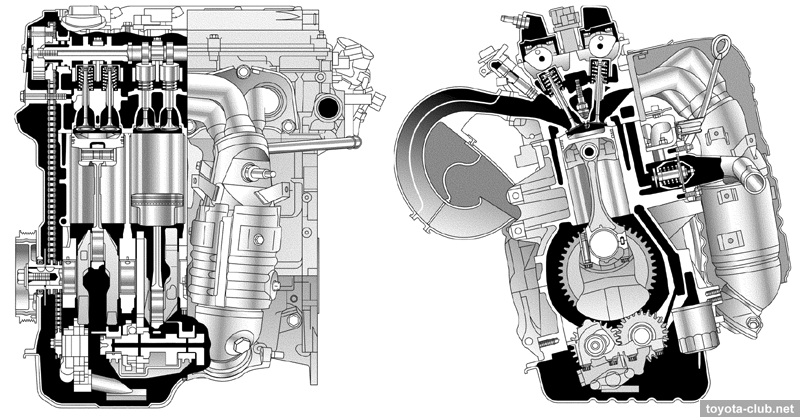 |
2AZ-FE - transversely mounted, with distributed injection, for originally front-wheel drive passenger cars, vans, and SUVs. Installed on models: Alphard 10..20, Avensis Verso 20, Blade 150, Camry 30..40, Corolla/Matrix 140, ES 40, Estima 30/40..50, Harrier 10..30, Highlander 20, Ipsum 20, Kluger, Mark X Zio, Previa 30..50, RAV4 20..30, Rukus 150, Scion TC 10, Solara 20..30, Vanguard 30.
In the early 2010s, it was gradually replaced by ZR and AR series engines.
Modifications:
- 2AZ-FXE - with distributed injection, for originally front-wheel drive passenger cars with hybrid powertrains (Alphard Hybrid 20, Camry Hybrid 40, Estima Hybrid 10..20, HS250h, Previa Hybrid 20, SAI).
- 3AZ-FXE - for passenger cars with hybrid powertrains (Camry Hybrid 40 CHN).
Cylinder Block
The engine uses an aluminum (alloy) cylinder block with thin-walled cast iron liners and an open cooling jacket. The liners are embedded in the block material, and their special rough external surface contributes to a strong connection and improved heat dissipation. The engine is not designed for a major overhaul by the manufacturer.
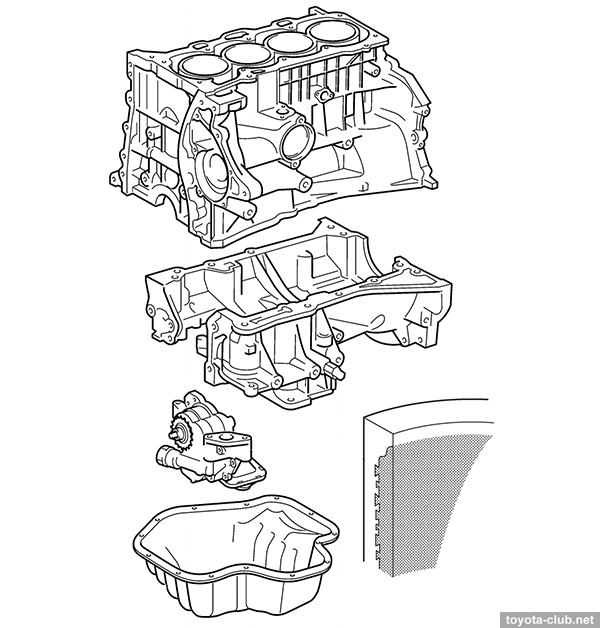 |
A massive crankcase is attached to the block, serving as the upper part of the oil pan and increasing the rigidity of the structure.
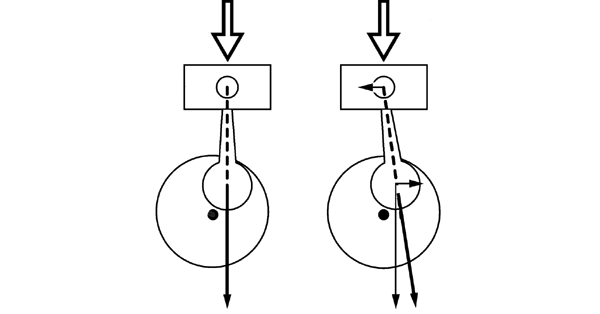
The forged steel crankshaft with 5 journals and 8 counterweights is held by individual main bearing caps. The crankshaft axis is offset by 10 mm from the cylinder axis (desaxage), reducing the lateral force on the cylinder from the piston and reducing wear.
 |
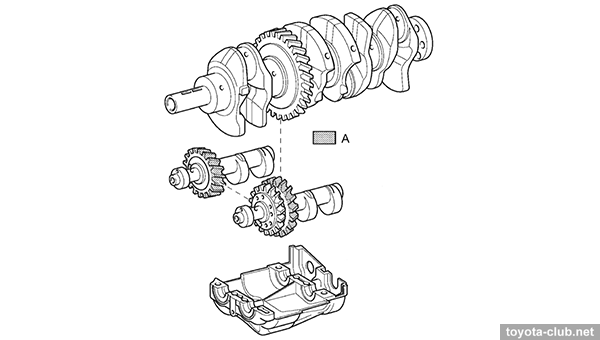
As is customary for Toyota engines with a displacement of more than two liters, a balancer mechanism is driven directly from the crankshaft with polymer gears (to reduce noise). This mechanism, while improving comfort, can create another potential weak point in the engine's mechanical components.
 |
The pistons are made of aluminum with a moderately lightened skirt and an anti-friction polymer coating. The pistons are connected to the connecting rods with fully floating pins.
 |
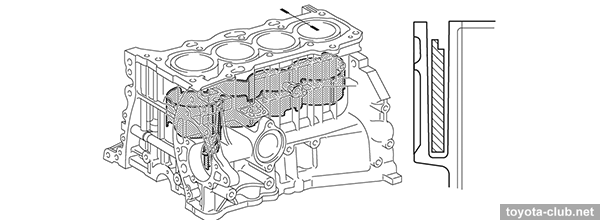
In the '2006 type, a spacer appeared in the cooling jacket, allowing the coolant to circulate more intensively in the upper part of the cylinders, improving heat dissipation and promoting more uniform heat distribution.
 |
Cylinder Head
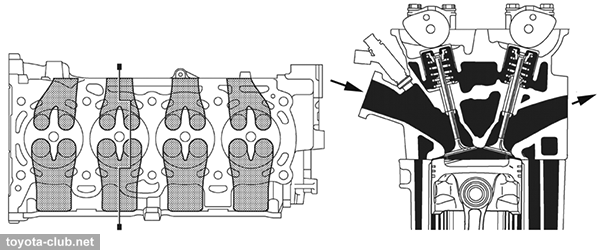
The cylinder head is of traditional design, with intake ports close to vertical (to improve cylinder filling) and mounting holes for injectors with distributed injection. The head cover is cast from a magnesium alloy.
 |
Timing System
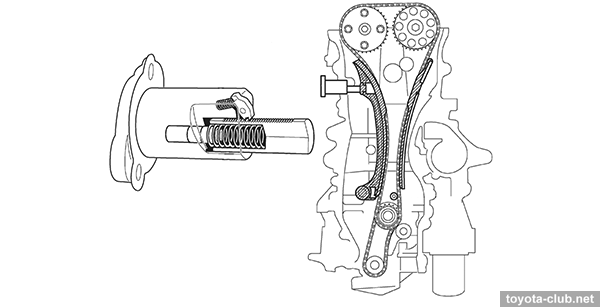
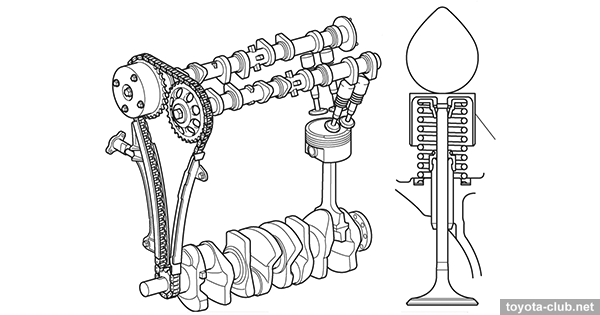
The camshaft drive mechanism is a 16-valve DOHC system, driven by a single-row roller chain (8 mm pitch). A hydraulic tensioner with a ratchet mechanism is used to tension the chain, and a separate oil nozzle is used for lubrication.
 |
A VVT drive sprocket is installed on the intake camshaft, with a phase change limit of 50° (40° for the '2006 type). The valve drive clearance is adjusted using a set of lifters, without the use of shims or hydraulic lash adjusters. Therefore, owners usually refrain from the overly complex and expensive adjustment procedure.
 |
Predicting the chain's lifespan is quite difficult - in rare cases, it does not require replacement up to 300,000 km, but sometimes it can critically elongate and fail at 150,000 km (manifested by noise during operation, especially after startup, and errors related to camshaft timing). When replacing the chain, it would be advisable to also replace all other drive components (sprockets, tensioner, guide), as previously used components can accelerate the wear of the new chain. However, since the intake camshaft sprocket comes as a unit with the VVT drive (~$120), not all owners follow this recommendation. The chain tensioner may require more frequent replacement, but this operation can be performed externally without removing the chain cover.
Lubrication
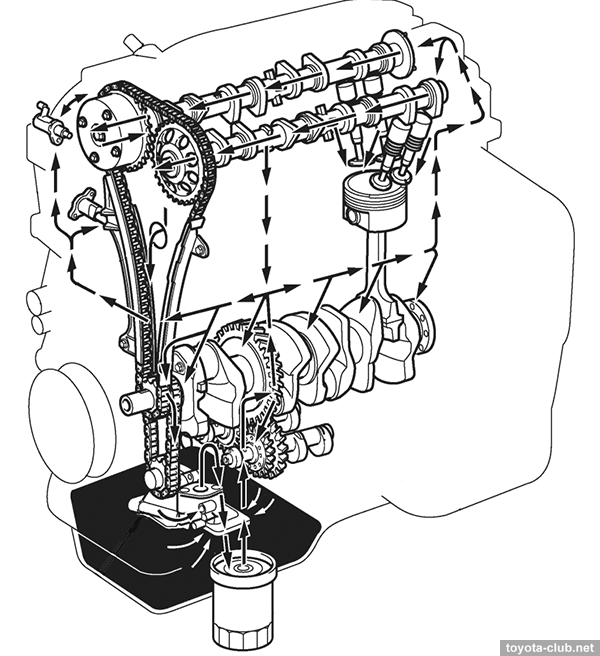 |
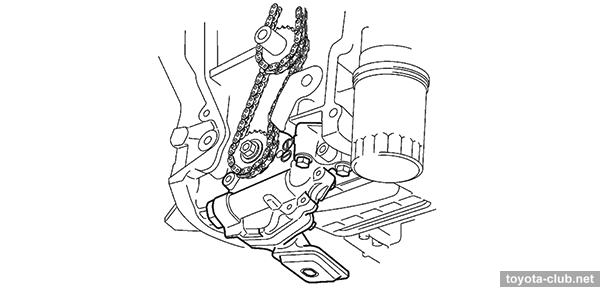
The trochoid type oil pump is installed in the crankcase and is driven by the crankshaft with an additional chain. On one hand, this increased the number of moving parts, but on the other hand, it improved oil circulation after startup at low temperatures.
 |
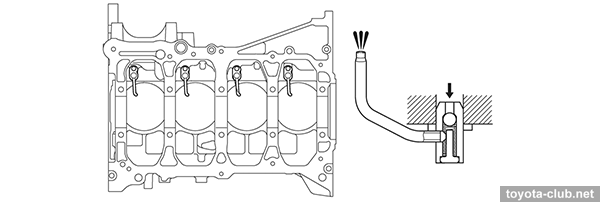
The engine block contains oil cooling and piston lubrication jets.
 |
The oil filter is located vertically under the engine, with the opening facing upwards.
Cooling
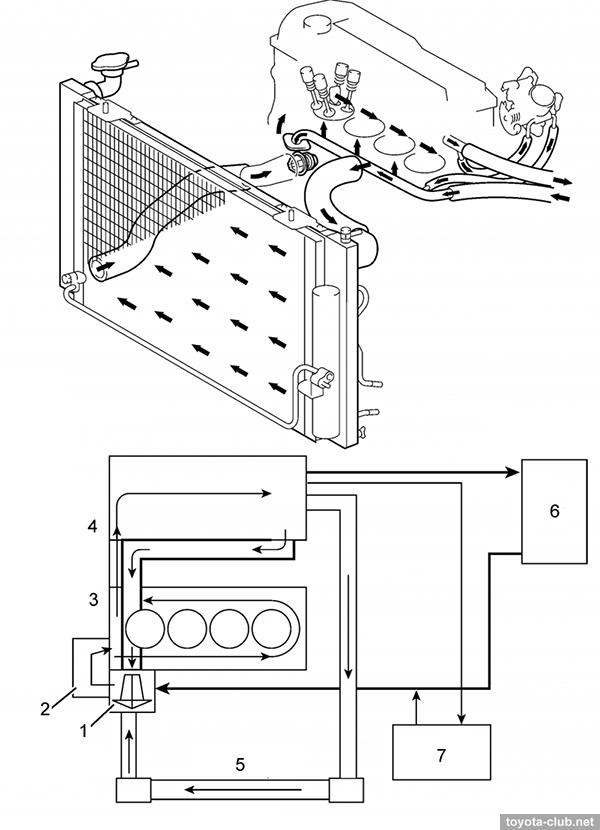
The cooling system is traditional for "third wave" engines: the pump is driven by the common belt for the accessory drive, a "cold" (80-84°C) mechanical thermostat, throttle body heating, stepwise ECM control of radiator fans via relays (without a coolant temperature switch).
 |
Intake and Exhaust
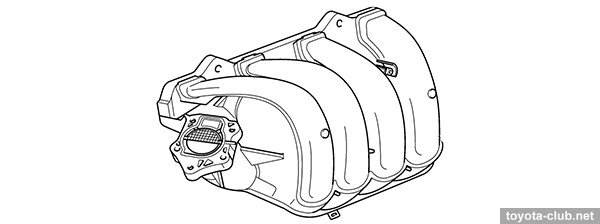
The manifold layout is more characteristic of previous generation Toyota engines - intake at the rear, exhaust at the front. A notable innovation is the plastic intake manifold (to reduce weight and cost, and decrease air heating at the engine inlet), which has proven to be quite trouble-free even in winter conditions.
 |