Increased fuel consumption is one of the most common complaints from drivers, especially with rising gasoline and diesel prices. This increased fuel consumption can be due to driving style and operating conditions, as well as actual technical malfunctions.
Ignoring the problem is not a good idea: an extra liter per 100 km quickly turns into significant expenses, and malfunctions that affect consumption often accelerate wear on the engine and other components.
In this article, we'll explore why fuel consumption increases, the dangers of this, what you can check yourself, and when a visit to the service center is unavoidable.
The main reasons for increased fuel consumption
Driving style and speed
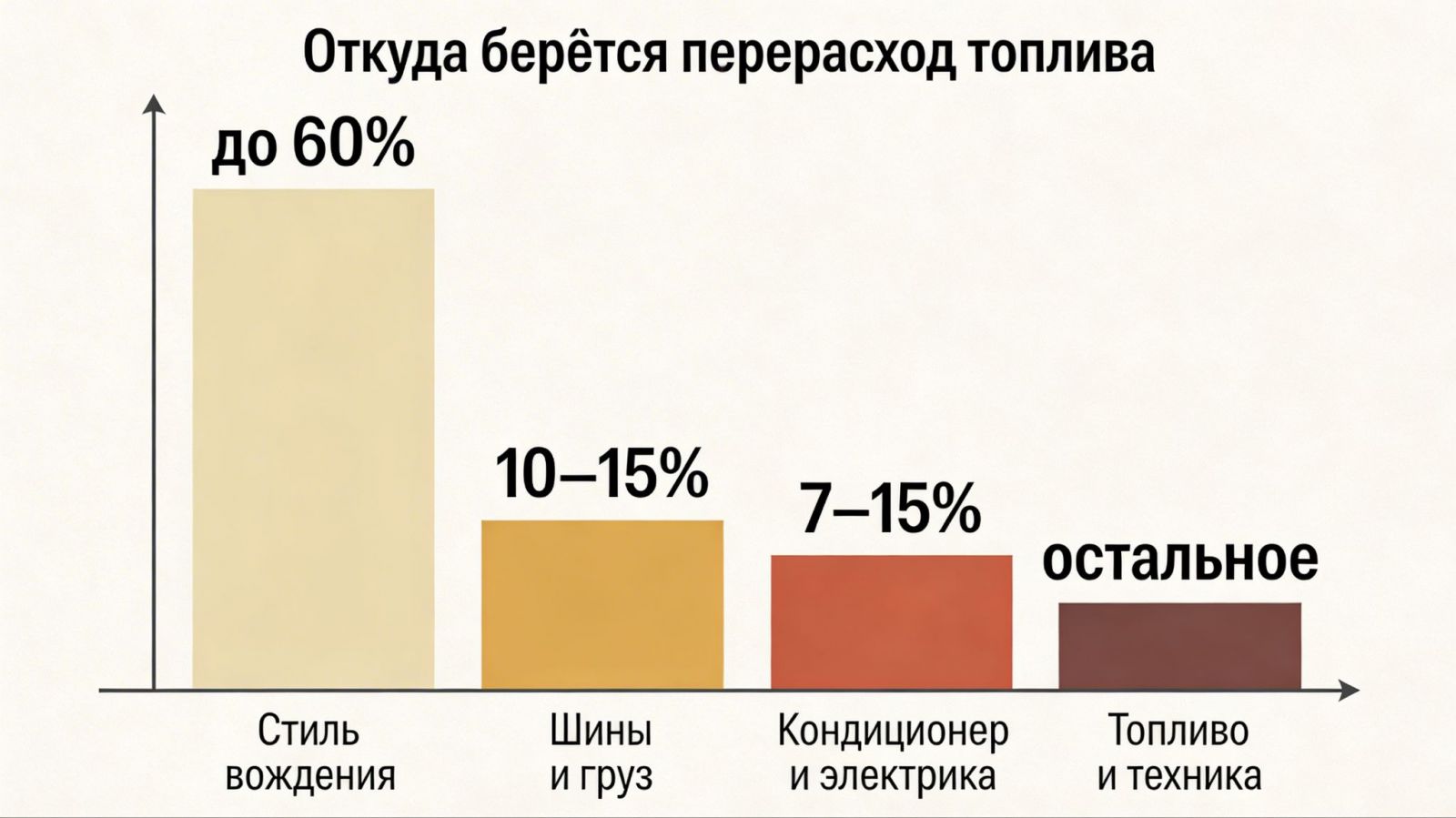
Aggressive acceleration, frequent braking and driving at high revs are one of the main factors causing excessive fuel consumption (up to 60% of the impact).
Maintaining a steady speed of 90–100 km/h on the highway is usually more economical than driving with constant acceleration and braking.
Driving for long periods in low gear at high revs is the most uneconomical mode for the engine.
Incorrect tire pressure and excess weight
Underinflated tires increase rolling resistance and can add up to several percent to fuel consumption.
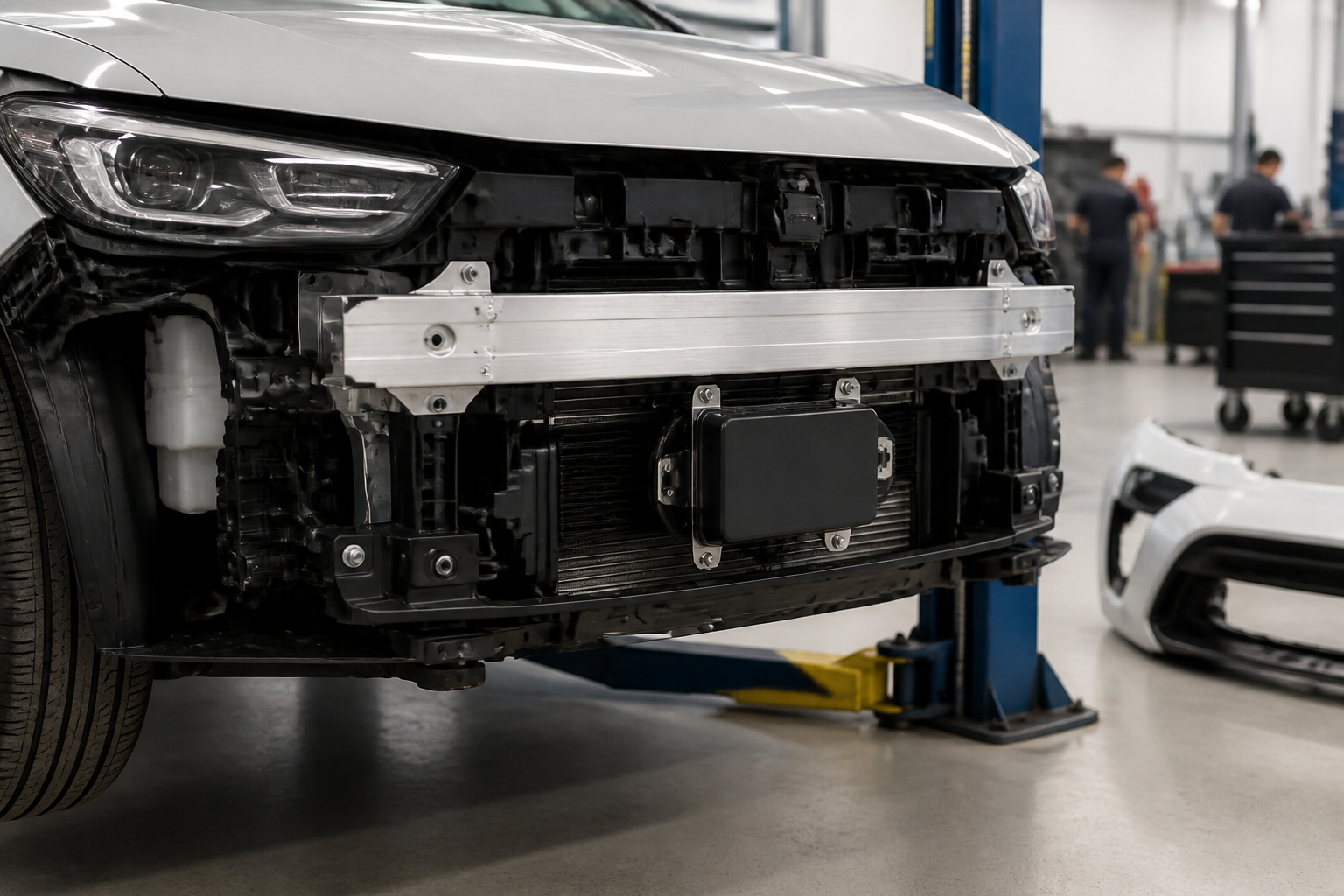
Excess cargo in the trunk and on the roof (roof racks, boxes, additional structures) increases weight and worsens aerodynamics, so when replacing exterior trim elements and fasteners, it is worth choosing body parts and attachments that do not add unnecessary weight to the vehicle.
Excess cargo in the trunk and on the roof (racks, boxes, additional structures) increases weight and worsens aerodynamics. Operation of the air conditioner and additional equipment
Air conditioning and climate control increase fuel consumption by an average of 7–15%.
On the highway, at speeds above 60 km/h, using air conditioning is often more beneficial than open windows, which create additional air resistance.
Headlights, heated windows and seats, and other energy consumers also contribute to the overall consumption.
Fuel quality and type
Low-octane or low-quality gasoline impairs engine performance, reduces combustion efficiency and increases fuel consumption.
Fuel that is not recommended by the manufacturer (for example, too low an octane rating) can cause detonation, loss of power and excessive fuel consumption.
Air and fuel filters
A clogged air filter restricts air flow, the mixture becomes “rich” (too much fuel), and consumption increases.
A dirty fuel filter impairs fuel supply, the engine may run unstably, and the system will try to compensate for this by increasing supply.
Spark plugs and ignition system
Worn or dirty spark plugs lead to incomplete combustion of fuel, misfires and increased fuel consumption.
Incorrect ignition timing and coil malfunctions also reduce the combustion efficiency of the mixture.
Faulty sensors and ECU
The mass air flow sensor (MAF), coolant temperature sensor, and oxygen sensor (lambda probe) have a significant impact on the composition of the air-fuel mixture.
Failure of the lambda probe can increase fuel consumption by up to 20–25% and is accompanied by a “Check Engine” error.
Malfunctions in the electronic engine control unit (ECU) lead to incorrect fuel metering.
"Aging" of the engine and transmission
A worn engine (low compression, increased friction) requires more fuel to produce the same power.
Clutch wear and incorrect automatic transmission or CVT settings lead to slippage and excessive fuel consumption.
Signs and symptoms of increased fuel consumption
Table: What a driver might notice
Sign/symptom | Probable group of reasons | What to do first |
Consumption increased by 1–2 liters for no apparent reason. | Driving style, tire pressure, excess weight | Check your driving style, tire pressure, and trunk |
The car became dumber, but its fuel consumption increased. | Filters, spark plugs, sensors, engine wear | Check filters, ignition, and ECU errors at a service center |
The "Check Engine" light is on on the dashboard. | Faulty sensors, fuel/ignition system | Scanner diagnostics, service visit |
There are jerks and uneven idle speed. | Spark plugs, coils, fuel system, air leaks | Don't delay, sign up for diagnostics |
Strong smell of gasoline or black smoke from the exhaust | Over-enriched mixture, injection problems, sensors | Urgent service, possible overconsumption and breakdowns |
Consumption increases significantly when the air conditioner is turned on. | Partially normal, but additional load or malfunction is possible | Check the overall consumption and condition of the cooling system |
What to look out for
Drivers should pay attention to the on-board computer readings: average fuel consumption in the city and on the highway, as well as its change over time. It's important to monitor engine performance—how stable the idle is, whether there are any jerks or dips during acceleration.
Additional signals include smells and exhaust: a strong smell of gasoline, black or blue smoke may indicate incomplete combustion of fuel or problems with the oil.
No less indicative are extraneous sounds: detonation in the form of a ringing knock under load, various knocks and a pronounced “diesel” sound in a gasoline engine are reasons for a more thorough inspection.
The dangers of ignoring increased consumption
Long-term neglect of increased fuel consumption leads to accelerated engine wear: with a rich mixture, carbon deposits form more quickly on pistons, valves, and spark plugs, increasing the risk of detonation.
Unburned fuel in the exhaust causes overheating and destruction of the catalytic converter, which ultimately results in costly repairs or replacement.
Due to the incorrect mixture composition and increased exhaust gas temperature, the oxygen sensor, turbocharger on supercharged engines and other system components suffer.
Constantly driving at high revs and abrupt starts puts strain on the transmission and clutch, accelerating wear. This also significantly increases daily fuel costs, especially in urban areas, where the car is often stuck in traffic and operating in unfavorable conditions.
What can you check yourself?
Driving style and routes
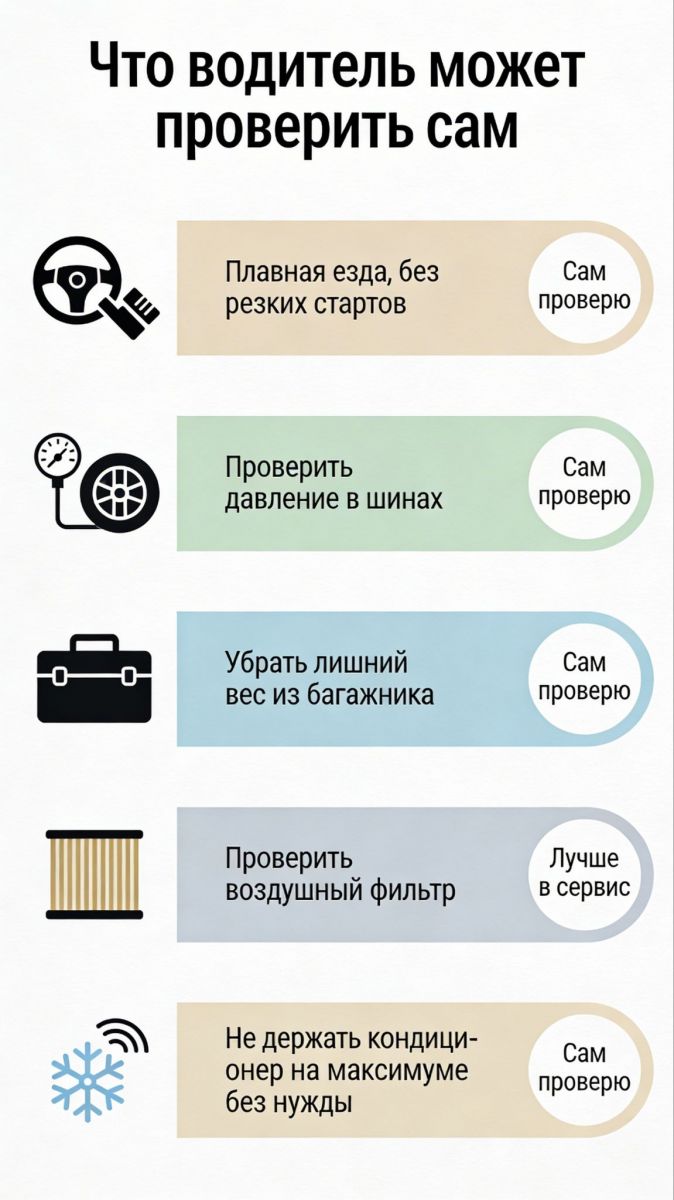
Try driving as smoothly as possible for a week: without sudden starts and braking, with early upshifts.
On the highway, maintain a stable speed of 90–100 km/h and, if possible, turn on cruise control.
When making short trips, don't let the car idle for too long—2–3 minutes is enough; the engine will warm up faster as you drive.
Tire pressure and excess weight
Check your tire pressure at least once a month and always before a long trip, referring to the values in the instructions or on the plate on the car body.
Remove all unnecessary items from the trunk: tools and cargo that are not constantly needed add hundreds of extra kilograms.
When driving at high speeds, remove unnecessary roof racks and boxes if they are not in use.
Air filter (visual inspection)
Open the air filter housing (according to the vehicle instructions) and assess the condition of the element.
If the filter is heavily soiled, clogged with dust and debris, it is best to replace it—it is inexpensive and significantly impacts fuel consumption.
Use of air conditioning and electrical equipment
In the city, make sure that the air conditioner does not run constantly at maximum unless necessary.
On the highway at speeds above 60 km/h, it is better to use the air conditioner than to drive with the windows open.
Self-assessment checklist
Compare current consumption with the rated value, taking into account conditions (city/highway, traffic jams, season).
Evaluate your driving style and try a smoother ride for a week.
Check and adjust tire pressure.
Remove excess cargo and external racks (if not needed).
Visually inspect the condition of the air filter and replace if necessary.
Pay attention to the presence of errors on the panel, foreign odors and smoke from the exhaust.
When is it necessary to contact service?
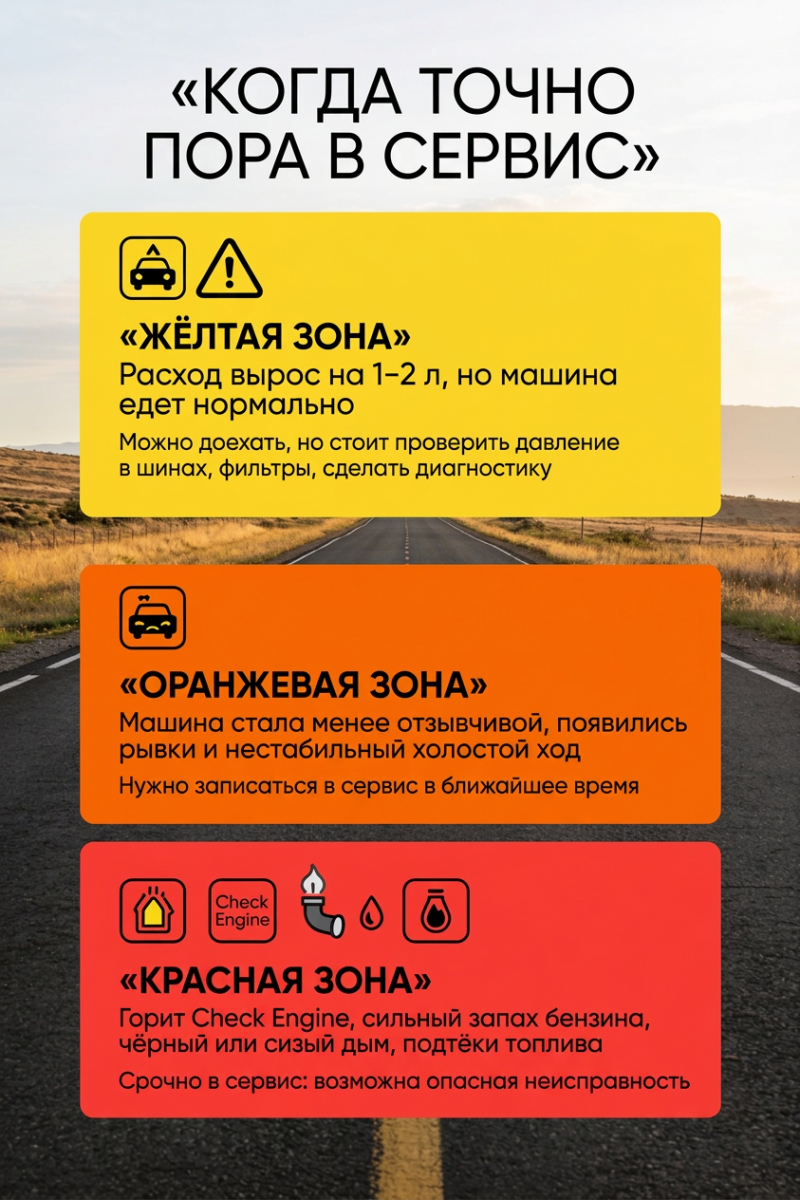
It is essential to contact a service center if fuel consumption has increased sharply by 2–3 liters or more without changing driving conditions, and the car behaves differently: there is a noticeable loss of power, jerking, or unstable idling.
Another dangerous signal is the lighting of the “Check Engine” indicator on the panel or other warnings, especially if this is accompanied by a change in consumption.
A strong smell of gasoline in the car or near the vehicle, and noticeable fuel leaks, are reasons to immediately visit a service center, as this creates a fire risk.
If black smoke is coming from the exhaust pipe, indicating a rich mixture, or thick gray/blue smoke, increased oil consumption and serious problems with the engine or fuel delivery system are possible.
It is also important not to delay diagnostics if you suspect a faulty sensor (MAF, lambda probe, temperature sensor), fuel system components, or ignition system—such faults cannot be reliably identified without specialized equipment.
For high-mileage vehicles, a worrying situation arises when fuel consumption gradually increases and the engine becomes increasingly difficult to start, which may indicate engine aging and a drop in compression.
In all of the above cases, it is safer to have a computer diagnostic and a full inspection performed at a service center than to continue operating the car and letting it run in this condition.
FAQ
Is it possible to continue driving if the consumption has just increased slightly, but the car is running normally?
A slight increase in consumption may be due to seasonal factors, traffic jams, or driving style, but if excess consumption persists for a long time or increases, it’s worth at least checking the tire pressure, filters, and, if possible, getting a diagnostic done.
What should you do if the “Check Engine” light comes on and fuel consumption increases?
Don't delay your service visit: the error is often related to sensors, the fuel system, or ignition, and driving with malfunctions can damage the catalytic converter and increase fuel consumption.
Does ECU reflashing help reduce fuel consumption?
Some firmware promises savings, but without taking into account the engine's condition and the specific motor, it can lead to unstable operation and even increased fuel consumption. Therefore, any software changes should only be made by qualified specialists and after diagnostics.
How much does the cooling system and air conditioning affect consumption?
On average, air conditioning adds 7-15% to fuel consumption, especially in the city, so it makes sense to use it wisely and also monitor the engine cooling system for proper operation.
Does it make sense to fill up with more expensive gasoline "above" the manufacturer's recommendations?
Using a higher octane rating than the manufacturer recommends usually does not provide a noticeable improvement in fuel consumption or power on standard engines. It is more important to refuel with high-quality fuel at reputable gas stations.
Conclusion and recommendations for prevention
In most cases, reducing fuel consumption requires a combination of careful driving, regular maintenance, and checking simple things like tire pressure and filter condition. It's important not to ignore a sudden increase in fuel consumption, the appearance of dashboard errors, or other unusual symptoms—this isn't just a costly blow to your wallet, but also a sign of potential engine and fuel system problems.
Prevention boils down to a few basic rules: use high-quality fuel, change the oil and filters regularly, monitor the spark plugs, and avoid overloading the car. At the first sign of a serious problem, it's better to contact a service center for diagnostics rather than let the situation escalate to costly repairs.



.jpg)