Summer tires are responsible for a car's traction, handling, and braking distance in hot and rainy weather, so choosing the right ones directly impacts safety. Inappropriate tires reduce stability, increase the risk of hydroplaning, and lengthen braking distances.
A wrong choice leads to accelerated wear of tires and suspension, excessive fuel consumption and constant discomfort while driving.
Below, we'll discuss which parameters are important, how to tell if the tires are incorrect, what the owner can check themselves, and when it's time to take them to a service center.
The main reasons for choosing the wrong summer tires
Incorrect size
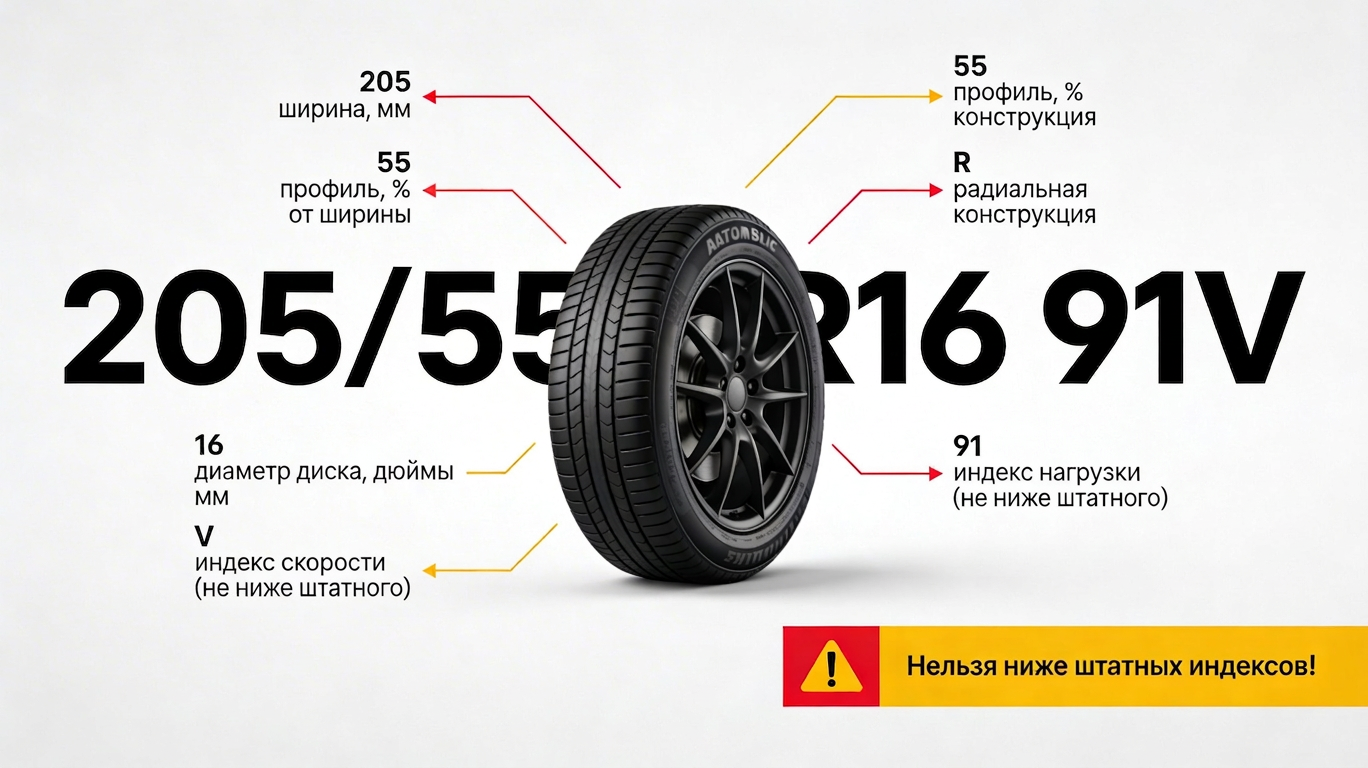
The recommended tire size (width, profile, and diameter) is specified in the owner's manual and on the vehicle's plate. Deviating from these recommendations will affect the tire diameter, ground clearance, and vehicle handling.
Tires that are too wide can catch the mudguards and increase the impact of the rut, while tires that are too narrow can impair stability and braking. An incorrect profile makes the suspension either excessively stiff or rolls.
Ignoring load index and speed
The load index and speed index are indicated on the tire sidewall. The load index indicates the maximum weight per wheel, and the speed index indicates the maximum speed permitted for the tire.
You cannot install tires with indexes lower than recommended: when overloaded and at high speed, they overheat, become deformed, and may fail while driving.
Inappropriate tread pattern for the climate and roads
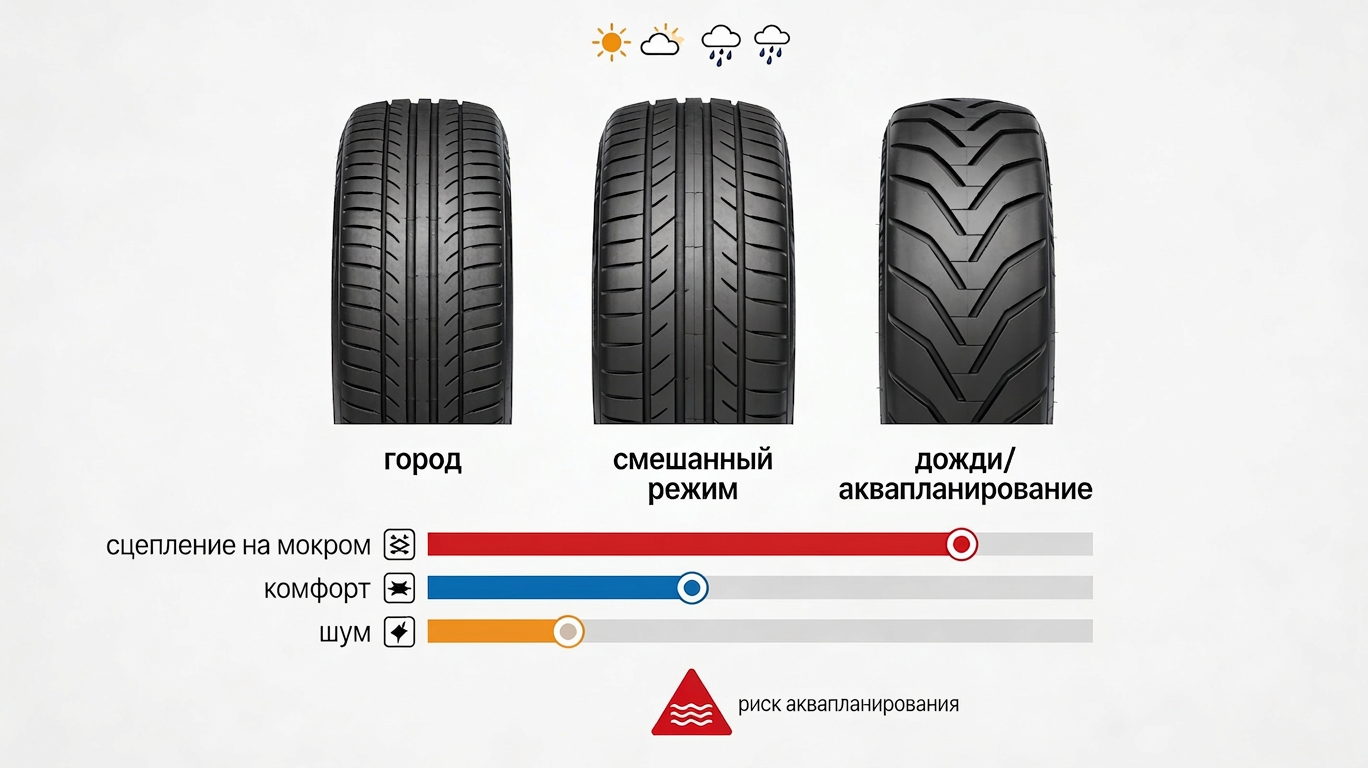
Summer tires come with symmetrical, asymmetrical, and directional tread patterns. Regions with frequent rainfall require tires with a well-developed system of water-draining grooves to reduce the risk of hydroplaning.
For dry and hot climates, models with a focus on traction and heat resistance are ideal. For mixed driving (city + highway + some off-road), it's best to choose all-rounders with balanced performance.
Inappropriate tires for operating conditions and driving style
City driving, highway driving, and unpaved roads all require different tires. Comfort, low noise, and fuel efficiency are important for city driving.
For dynamic driving and high-speed tracks, tires with a high speed index and a more rigid construction are needed.
If you frequently drive on unpaved roads, a higher profile and more toothy tread are more important. Using "city" tires in difficult conditions leads to rapid wear and loss of traction.
Ignoring temperature conditions and seasonality
Summer tires are designed for positive temperatures and are usually switched to when the average daily temperature is stable above +7 °C.
Winter tires become too soft in hot weather, impairing handling and fuel economy, and wearing out faster. Summer tires lose elasticity and grip in cold weather, which is especially dangerous during sudden braking and maneuvers.
Signs and symptoms that summer tires are chosen incorrectly
Instability and "floating" behavior of the car
If the tire size is incorrect or the tread is unsuitable, the car may "float" on straights and in ruts, requiring constant steering adjustments. This may include swerving when changing lanes and a delayed steering response.
This indicates that the size, profile or hardness of the tires is not suitable for the specific vehicle and operating conditions.
Extended braking distances, especially on wet roads
If your braking distance has increased significantly after changing your tires, especially on wet pavement, it's possible that the tread pattern and rubber compound are not providing the necessary grip.
Poorly developed water drainage grooves increase the risk of hydroplaning. This is typical when choosing cheap tires or models not adapted to the local climate.
Increased noise and vibration
Loud humming and vibrations at certain speeds may indicate problems with wheel alignment and that the tires are not designed or sized correctly for your vehicle.
Hard, high-speed tires on a car with less-than-soft suspension significantly increase noise and harshness. Aggressive tread on smooth pavement also creates excess noise.
Uneven and accelerated tread wear
Incorrectly selected or installed tires often wear out in a "ladder" pattern, with spots on one side. Incorrect wheel alignment can also be the cause, but a mismatch between tire size and load index also accelerates wear.
Rubber that is too soft on a heavy vehicle or when driven aggressively will wear out much faster than its rated life.
Security system errors and indicators
Modern ABS, ESP, and tire pressure monitoring systems are sensitive to tire size. If the tire diameter is significantly different from the standard tire pressure, errors and warnings may appear on the dashboard. These warnings should not be ignored: they often indicate a truly dangerous situation.
The dangers of ignoring the problem
Risk of accidents
The main danger is reduced traction and stability, especially on wet roads. Increased braking distances, directly related to the condition of the braking system , and a tendency to hydroplaning increase the risk of accidents in emergency situations.
An incorrect speed and load index increases the risk of tire overheating and failure on the road, and a blowout at high speed is extremely dangerous.
Damage to suspension and steering
Tires that are too hard or the wrong size increase shock loads on suspension and steering components. This accelerates wear on bushings, ball joints, shock absorbers, and bearings. As a result, the car requires more frequent repairs, and handling deteriorates.
Excessive fuel consumption and deterioration of dynamics
Tires with increased rolling resistance increase fuel consumption and make the car less responsive. Excessively wide tread and heavy wheels impair acceleration. Choosing the right tires can reduce fuel consumption and maintain good performance without compromising safety.
Reduced tire life
Operating tires outside recommended conditions, under constant overload, or at high speeds reduces their lifespan. Damage to the tread, cord, and sidewall forces premature tire replacement. Ultimately, savings at the initial purchase turn into significant additional costs.
What can you check yourself?
Marking and size compliance
Before purchasing and installing summer tires, check the size, load index, and speed rating in the wheel and tire catalog against the vehicle manufacturer's recommendations.
You can't go lower on these indexes. All four tires must be the same model and size; mixing different tires will worsen the car's performance.
Visual inspection of the tread and sidewalls
Check the tread depth and ensure there are no cuts, bulges, or cracks. If wear is noticeable or uneven (different wear along the edges, spots), it's best to check the suspension and wheel alignment. Avoid used tires with obvious defects or signs of rough repair.
Pressure control
Check the tire pressure regularly with a gauge and adjust it according to the placard on the vehicle. Low pressure impairs handling and accelerates shoulder wear, while high pressure reduces the contact patch and reduces traction. It's best to measure tire pressure when the tires are cold.
Studying tests and reviews
Before purchasing a specific model, check out independent tests and ratings that compare braking distances, wet/dry road performance, noise, and comfort. Owner reviews are helpful, but don't rely solely on them—it's important to consider objective testing as well.
Table "Causes → Symptoms → What to do"
Cause | Symptoms | What to do |
Incorrect size | Floating behavior, vibrations | Check the size, replace if not correct |
Low load index/speed. | Strong heating, deformation on the track | Install tires with indexes not lower than the standard ones |
Inappropriate protector | Long braking distance in the rain | Choose a model with effective water drainage |
Incorrect pressure | Uneven wear, poor handling | Adjust the pressure according to the table |
Tires too hard/soft | Noise, discomfort, rapid wear | Choose a model that suits your car and driving style |
When is it necessary to contact service?
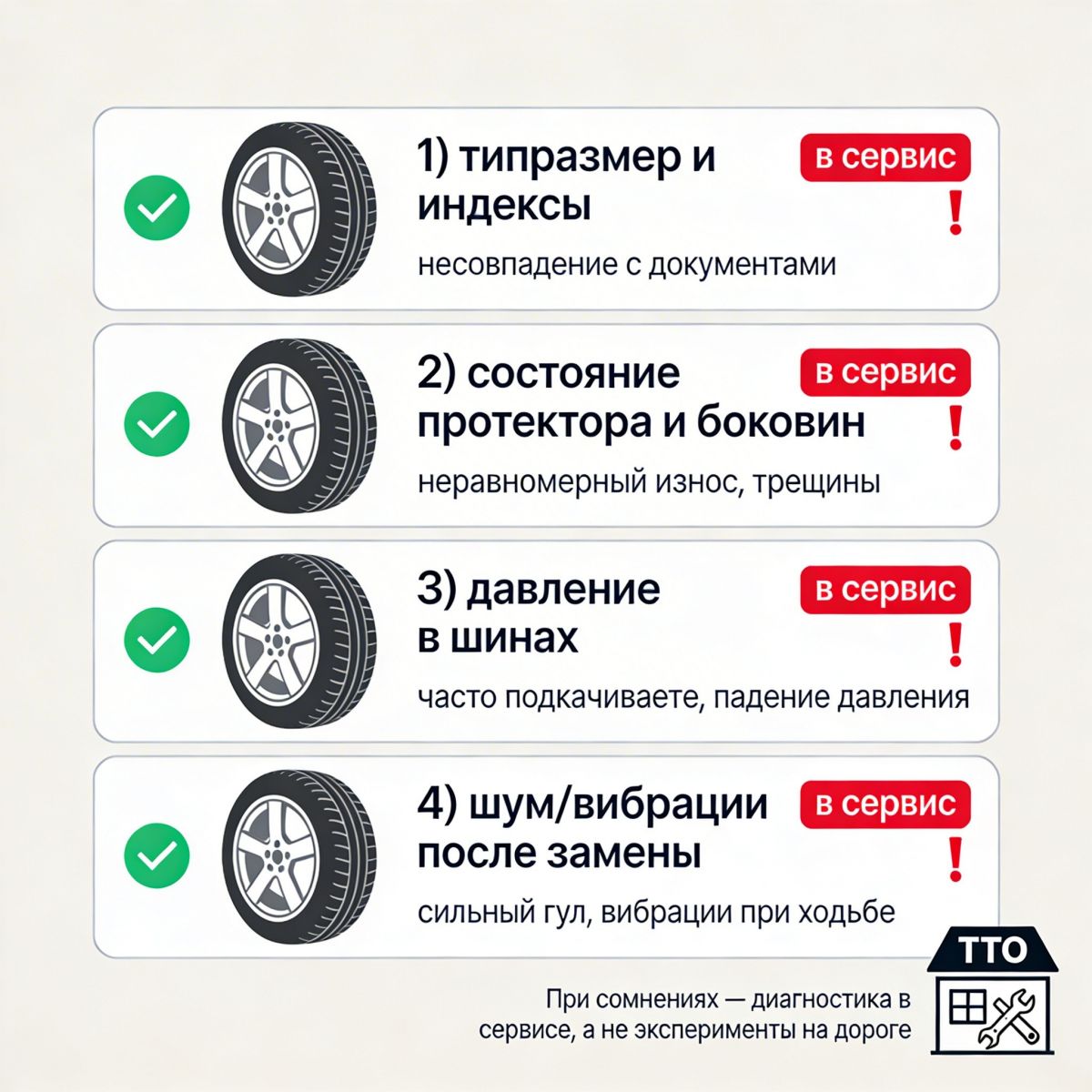
The car pulls to the side and there are strong vibrations after installing the tires.
The tire has bulges, deep cuts, and cracks on the sidewall.
After changing tires, ABS/ESP or pressure control errors appeared.
The new set wears out quickly and unevenly.
In these cases, independent experiments are dangerous - you need to conduct diagnostics, check the tires for proper fit and the condition of the suspension.
FAQ
At what temperature should you switch to summer tires?
You should focus on a stable average daily temperature above +7 °C, when winter tires begin to lose their properties and overheat.
Is it possible to install summer tires of a different size than those stated in the documents?
Only those options that are approved by the manufacturer and specified in the manual or official tables are allowed, while the load index and speed must not be lower than the standard ones.
Is it safe to drive if there is a small crack on the sidewall of a summer tire?
Even small cracks and bulges on the sidewall are dangerous, as they can lead to a tire blowout, so it is best to have the wheel examined by a specialist as soon as possible and have it replaced if necessary.
What should I do if my car starts making a lot of noise after changing my tires?
You should check the pressure, balance, and the correct size and model selection. If you experience significant discomfort, contact a service center or consider a different tire model with a lower noise level.
Is it possible to install different models of summer tires on the front and rear axles?
Manufacturers and experts recommend using the same tire model and size on all wheels to ensure predictable vehicle performance.
Conclusion and recommendations
Properly selected summer tires not only provide comfort but also a key safety feature, affecting braking distance, stability, and the performance of the vehicle's electronic systems.
To avoid problems, you should strictly adhere to the recommended size, load index and speed rating, take into account the climate and operating conditions, and regularly check the pressure and condition of your tires.
If you have any doubts about your car's performance after changing tires, it's better to have the tires selected and installed at a service center rather than risk your safety with easily avoidable mistakes.