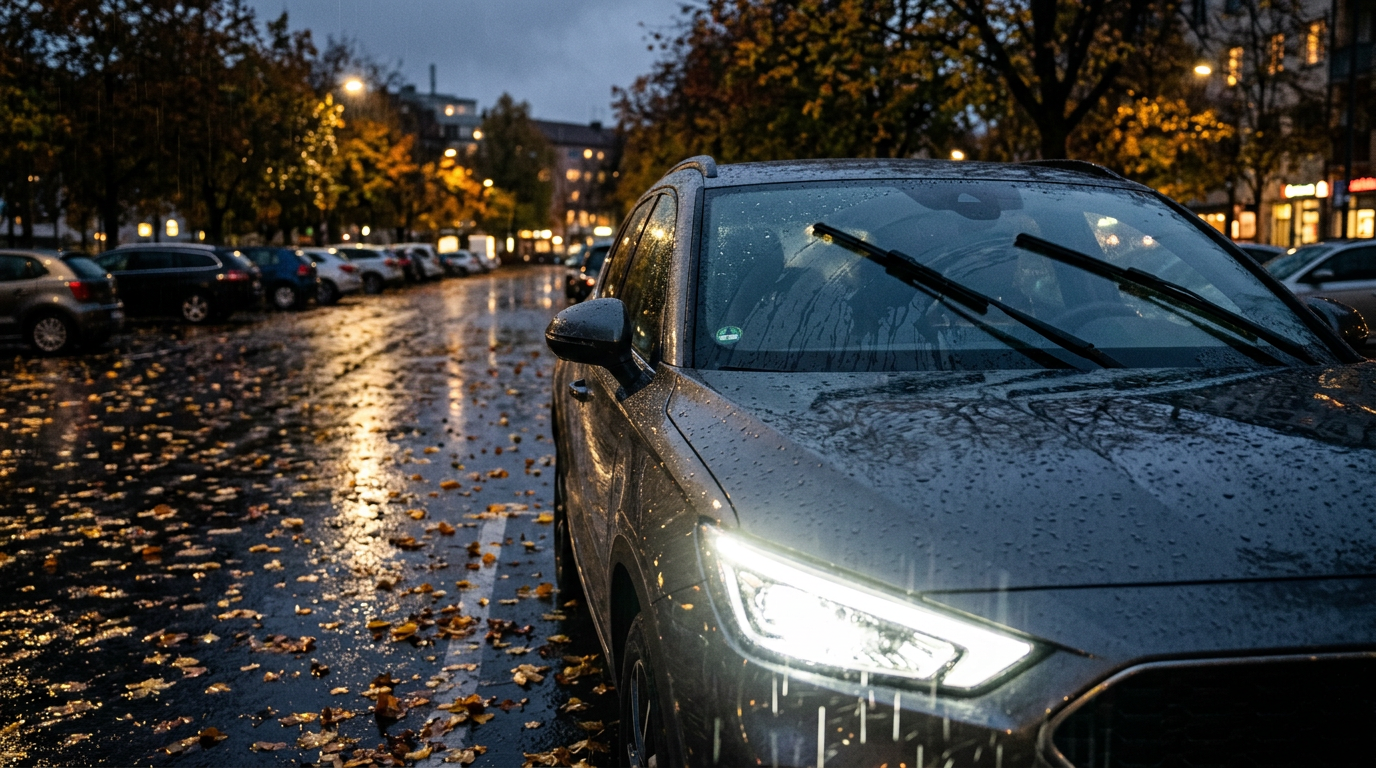
Imagine: the forecast calls for the first steady rain and a nighttime temperature of 3°C (37°F), and you have a workday, family, and at most one free evening to spend with your car. It seems like preparing for the season means servicing, diagnostics, a service appointment, and a ton of time, so many drivers put it off until the first problems occur.
Problems usually arise unexpectedly: the windshield wipers start to smear dirt, the summer washer fluid freezes in the reservoir, a weak battery won't start the engine in the morning, and worn tires on wet asphalt turn every braking into a lottery.
Moreover, some of these things can actually be closed in one evening in the yard, and if necessary, you can quickly find used original spare parts at a car dismantling site and not pay extra for a new equivalent.
In this article, we'll explore a specific 10-point checklist with time estimates and approximate costs, and show you which parts make sense to buy used, and where saving money is dangerous.
A real life example
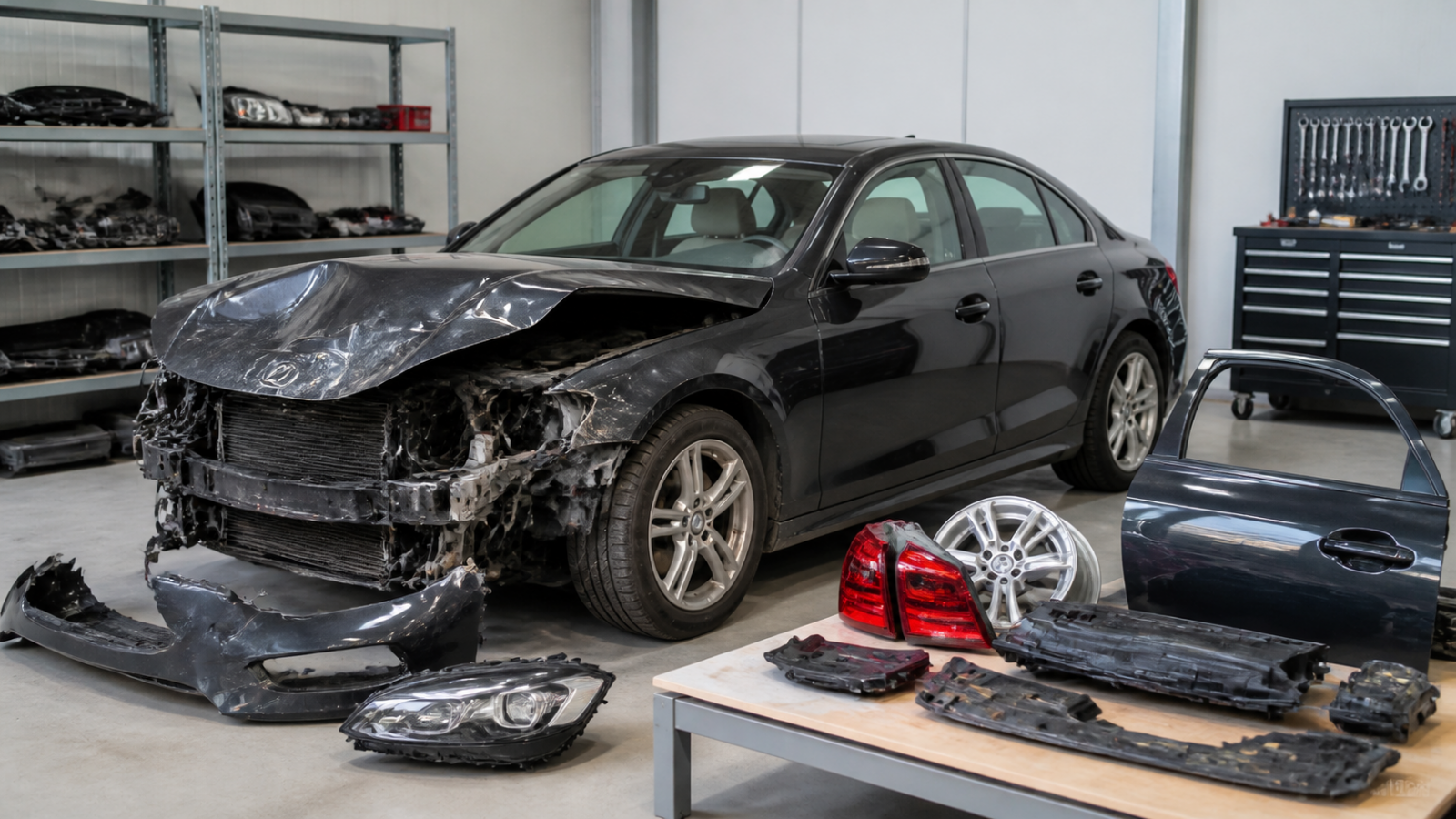
In the fall, a 2017 Kia Sportage crossover was imported to Kyiv from the United States after suffering a minor frontal impact. The front bumper, right headlight, and some mounting hardware were damaged, along with several paint chips on the hood. The car was quickly repaired, but the owner decided to save money and ignore the worn windshield wipers and worn summer tires, since "winter is still a long way off."
A month later, he was caught in a severe thunderstorm on the highway: the windshield wipers left streaks of water, the headlights were dim, and due to worn tires and puddles on the road, the car almost hydroplaned during emergency braking.
In the end, the owner still replaced the wipers and tires, but only after a couple of stressful trips, although these expenses could have been planned in advance and partially covered by a used original—for example, by buying a used headlight with intact mounts instead of a new one for 10-15 thousand UAH.
A used, original part from a car dismantler was installed on the bumper: its washer system, mountings, and geometry were identical to the factory part, saving the owner several thousand hryvnias compared to a new part. However, he was advised to replace items like brake pads and the battery only with new ones for safety and reliability reasons.
Autumn Checklist for One Evening (10 Items)
Below is a 10-point checklist detailing what to check, how much time you'll spend, and how much it might cost. Prices are approximate for Ukraine and depend on the car model and parts selected.
Point 1. Windscreen wipers – visibility in the rain
In the fall, windshield wipers are running almost constantly, and any streak of water or "missed" section of windshield is effectively a loss of visibility. A simple test: splash water on the windshield and check for streaks, squeaks, or areas of uncleared water.
If your wiper blades leave marks or make noise, it's best to replace them immediately with new ones—branded pairs cost approximately 400–1,200 UAH, depending on the model. Used wiper blades are pointless: the rubber is already worn out, the savings are minimal, and the risks are high.
Point 2. Washer fluid - transition to autumn
Summer washer fluid can freeze in the reservoir and nozzles at the first drop in temperature, meaning you won't be able to clean your windshield when you need it most. In the fall, it's best to switch to a mid-season or winter washer fluid with frost resistance down to approximately -5°C or lower.
It costs 150-300 UAH per 4-5 liter canister and takes 5-10 minutes: drain the remaining fluid, add new fluid, and check the injectors. Clogged injectors can be cleared with a thin needle—an easy way to save on service.
H3: Item 3. Headlights and lighting equipment
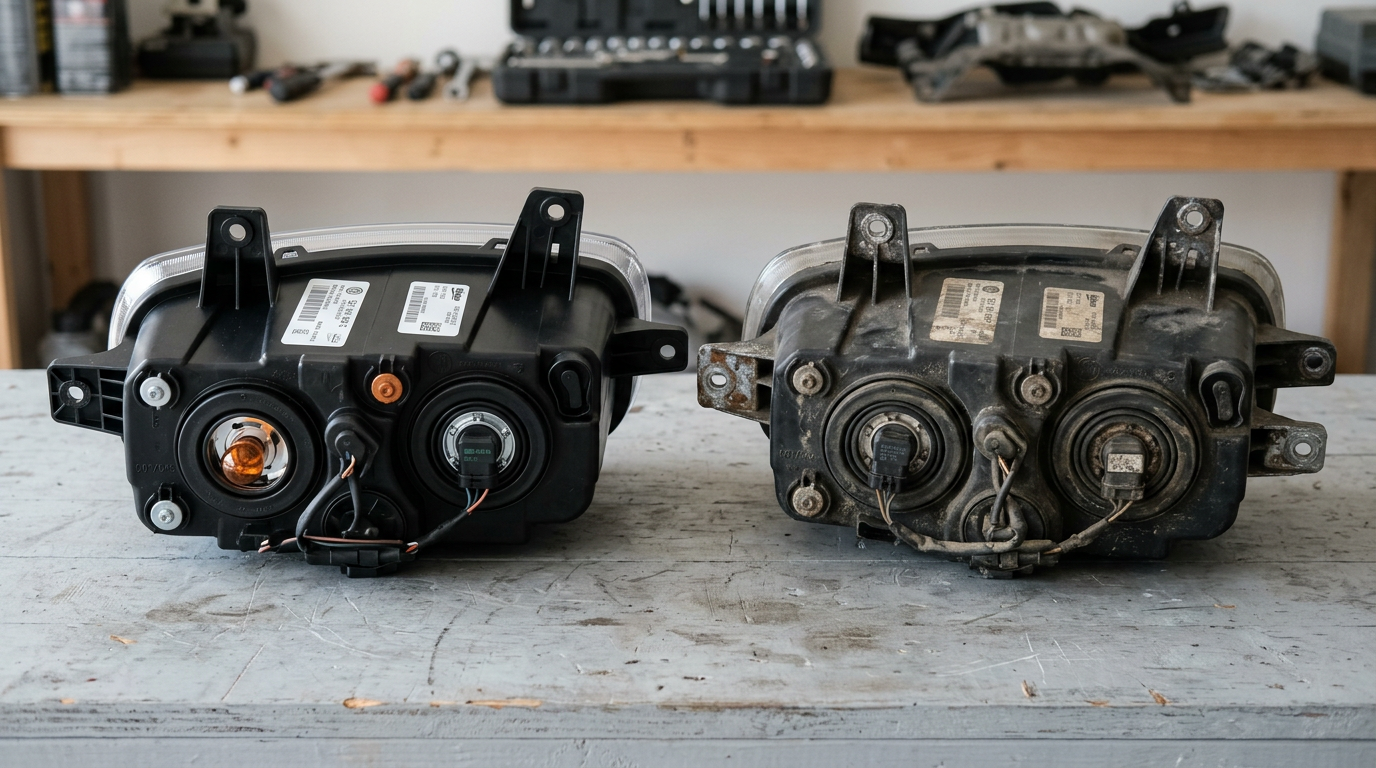
In autumn, light is your main ally: short days, fog, and rain demand the most effective headlights and taillights. Start with a check: turn on your low beams, high beams, fog lights, brake lights, and parking lights, and evaluate the brightness and uniformity of the light.
If a headlight is cracked, fogged up, or the mountings are damaged, you can often replace a new part with a used, original headlight from a car dismantler for 10,000–20,000 UAH. These headlights undergo a visual inspection, often retain the original light module and mountings, and cost, on average, 2–3 times less than new ones.
Item 4. Battery - to start on a cold morning
Autumn quickly reveals a weak battery: even with a slight chill in the morning, an old battery may fail to turn the starter. A simple test is to pay attention to the engine cranking speed, the brightness of the dashboard, and, if possible, measure the voltage under load at a service station.
If the battery is older than 3-5 years, it's best to plan for a replacement in advance: a new one will cost 3,000-6,000 UAH. Buying a used battery is dangerous—its history is unknown, its lifespan may expire at any time, and the savings are short-lived.
Point 5. Tires – wet grip
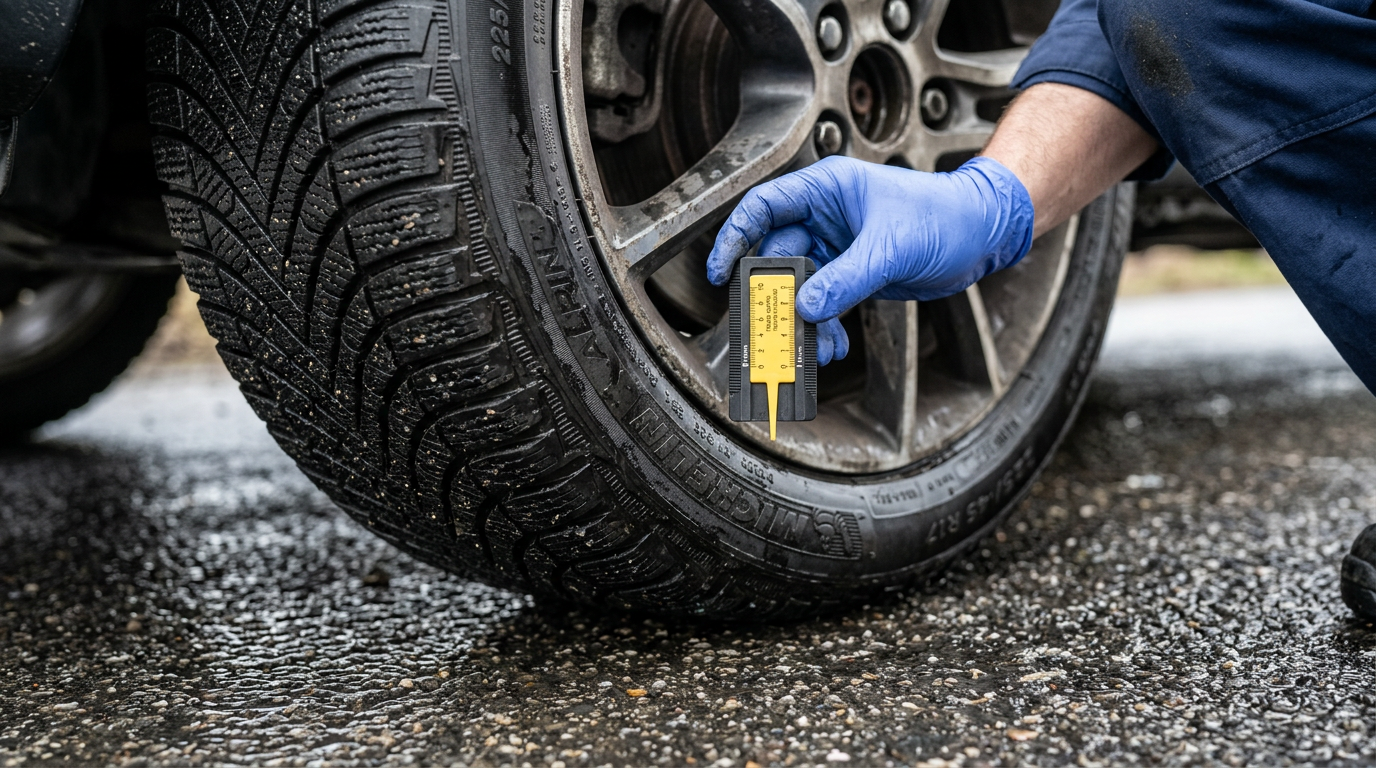
With the onset of rain, the main danger is hydroplaning and extended braking distances on worn tires. Check the tread depth: 3–4 mm is considered a safe minimum; below that, the tire significantly loses its ability to evacuate water.
A new set of tires for a popular crossover can cost between 12,000 and 25,000 UAH, so many people consider used tires . This is acceptable as long as the tread is at least 4 mm thick, there are no bubbles, uneven wear, or sidewall cuts, and the tires are no more than 4–5 years old—otherwise, saving money could result in an accident.
Item 6. Brakes - pads, discs, fluid
In autumn and winter, brakes are used more frequently and in more challenging conditions: wet asphalt, leaves, and cold. It's important to check the brake pad thickness (change when less than 3 mm remains) and the condition of the discs: deep grooves, cracks, and wobble.
Brake fluid deteriorates due to moisture and is recommended to be replaced every two years. Skimping on used parts is unacceptable: the pads and rotors must be new, and the fluid must be fresh, according to the manufacturer's specifications.
Item 7. Door and trunk seals
Seals protect against water, dirt, and cold: if the rubber is cracked or compacted, water can leak into the car and the doors can freeze. Checking them is simple: inspect around the doors, trunk, and hood, looking for cracks, tears, and areas where the seal isn't sealing properly.
Applying silicone grease and partially replacing problem areas takes 15–25 minutes and costs approximately 300–1,500 UAH. If necessary, long seals can be replaced with used, original ones from a salvage yard—they fit better and often last longer than cheaper, universal alternatives.
Point 8. Drainage holes - to prevent water from living in the car
Clogged drainage holes in the doors, sills, under the windshield, or in the trunk are a common cause of puddles in the car's interior and corrosion. In the fall, it's especially important to ensure that water drains easily after rain.
The inspection takes 15–30 minutes: carefully clean the drainage holes with a thin cable, wire, or special brush, and wash away any dirt. This is a virtually free procedure that can save thousands of hryvnias on repairs to sills, floors, and hidden corrosion.
Point 9. Cabin filter - air and no fogging
The cabin filter is responsible for air quality and the speed at which windows defog. In the fall, when humidity rises, a clogged filter leads to a constant haze on the windows and unpleasant odors.
It's best to change the filter every 10,000–15,000 km or once a year. It costs between 300–900 UAH, depending on the model. Used cabin filters are not suitable—they are consumables and must be new.
Item 10. Chips on the body and body parts
Chips on the hood, fenders, and bumper aren't just aesthetically pleasing; they also indicate future corrosion: water and chemicals quickly reach the metal. In the fall, it's worth carefully inspecting the front of the car, sills, and wheel arches.
A spot touch-up by a painter costs approximately 500–3,000 UAH, depending on the area and scale. If the bumper or fender is heavily damaged, it's worth considering a used, original part from a salvage yard —it matches the factory part in geometry and mounting hardware, and is significantly cheaper than a new, original part.
Drivers' Mistakes in Preparing for Autumn
Many problems in the fall are the result of typical mistakes that are easy to avoid.
Driver error | What is dangerous? | What is the correct way? |
Leave the summer "washer" until the first frost | Freezing of the liquid, crack in the tank or injectors | |
Ignore worn out wipers | Loss of visibility in the rain, risk of accidents | Replace the brushes before the season, checking their operation. |
Do not check tire treads | Aquaplaning, long braking distance | |
Save on brake pads and discs | Deterioration of braking, overheating, cracks | Install only new, high-quality parts. |
Ignore chips and rust | Spread of corrosion, increased repair costs | |
Buying a used headlight from a photo without checking it | Poor installation, gaps, fogging | |
Buying used tires without measuring the tread | The tire may be critically worn or damaged. | Check the depth, production date and presence of defects. |
FAQ
Is it possible to buy used headlights for the fall season?
Yes, if it is an original headlight with intact mounts, no cracks or fogging, with a matching OEM number and a clear history.
How do I know if a used part will fit my car?
You need to check the OEM number, year, and model of the car, as well as ask for detailed photos and clarify the complete set (mountings, connectors, blocks).
What is better: a new analogue or a used original body part?
Often, a used original bumper or wing has better geometry and metal/plastic quality than a cheap analogue, at a comparable or lower price.
Is it possible to return a used spare part if it doesn’t fit?
This depends on the conditions of a particular auto dismantling facility, so check in advance whether the part can be returned and checked before installation.
What used parts are dangerous to buy after an accident?
It's dangerous to skimp on the suspension, steering, braking, and high-voltage components of an electric vehicle—safety is more important than savings.
Final conclusion
Autumn car preparation can actually be completed in one evening if you follow a specific checklist: visibility (wipers, washer fluid, headlights), starting (battery), traction (tires, brakes), and body and interior protection (seals, drainage, cabin filter, chips).
This approach allows you to address the most common "weak points" of the autumn season in advance and reduce the risk of unexpected breakdowns, accidents, and unnecessary costs.
Used genuine parts are appropriate where geometry and material quality are important, but where a reliable assessment of the part's condition is possible: body parts, headlights, doors, some interior parts, and exterior accessories. In these categories, a genuine used part is often tens of percent cheaper and still better than a cheaper alternative, provided you've verified the OEM number, fasteners, connectors, and part history.
At the same time, safety must not be compromised: brake pads and discs, critical suspension and steering components, as well as the battery and high-voltage components of electric vehicles must be new or have a transparent history and a clear warranty.
The autumn checklist helps you differentiate between "where you can buy a used original part and save money" and "where it's best to pay for a new part" to maintain a balance between budget and safety.
For the owner, this means a simple strategy: one evening of inspection before the first rains, planning replacements by priority (visibility, brakes, tires, starting, body) and an informed choice between a new part and a used original from a car dismantler.
This approach reduces stress in the fall, makes the car predictable in bad weather, and allows you to get through the season without overpaying, relying on real-life examples and proven solutions.