You pull into a gas station, fill up the tank, look at the receipt, and catch yourself thinking, "It used to last a week, now it only lasts a few days, even though the routes are the same." There are no obvious problems: the car starts and drives normally, but fuel consumption is clearly higher than specified.
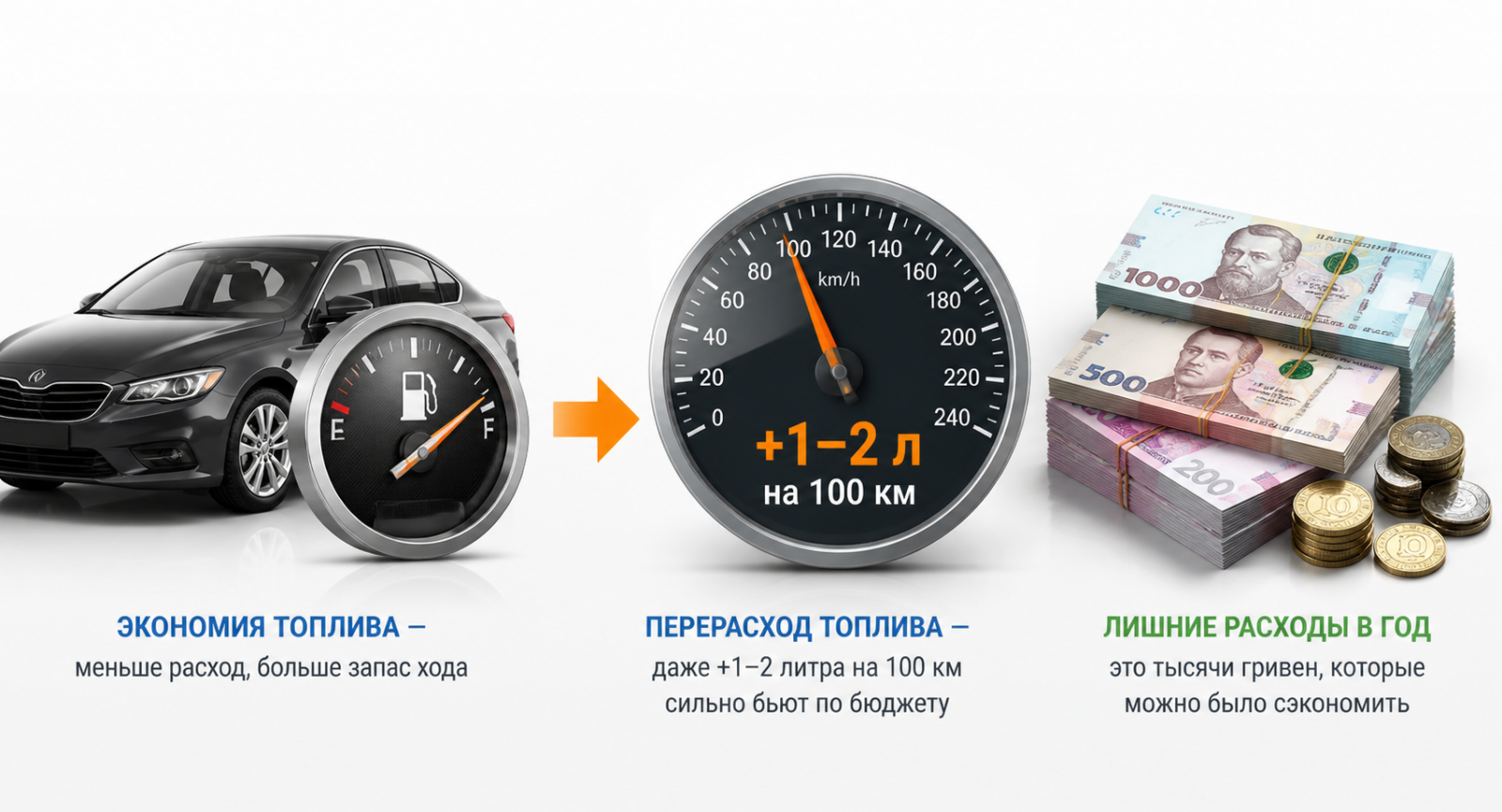
Rising gasoline and diesel prices in Ukraine make an extra 1–2 liters per 100 km a significant budget hit, especially if you drive every day.
In this article, we'll explore what really affects fuel consumption, what driver habits can eat up to 20-30% of excess fuel, how a car's technical condition can add a few more liters, and when it makes sense to turn to a car dismantler for genuine used parts instead of expensive new ones.
Why the topic of fuel economy has become especially relevant
Fuel costs have risen significantly in recent years, and modern cars have become more complex and heavier, with more electronics, safety systems, optics, and additional equipment. The heavier the car and the more additional equipment it has, the higher its actual fuel consumption compared to the manufacturer's stated fuel consumption.
At the same time, many drivers continue to drive in an "aggressive" style: abrupt starts, braking before every traffic light, and jerky movements in traffic jams - this, without direct breakdown, adds up to 20-40% to consumption.
Simple things also have an impact: under-inflated tires, a clogged air filter, low-quality oil, excess weight in the trunk, a roof rack—each factor can add another 3–10% to consumption.
What influences fuel consumption the most?
Driving style and speed
Fuel-efficient driving is the fastest and cheapest way to truly reduce fuel consumption. Key principles:
Smooth acceleration and braking: Sharp acceleration and braking increase fuel consumption by up to 40%.
Maintaining a steady speed: It is easier for the engine to operate in a steady state than to constantly accelerate and decelerate.
Optimal speed: on the highway, many experts call 80–90 km/h the “gold standard,” while above 120 km/h, consumption can increase by 30–40%.
Turning off the engine during long periods of parking, if it is safe and does not violate traffic regulations: extra minutes idling imperceptibly “eat” fuel.
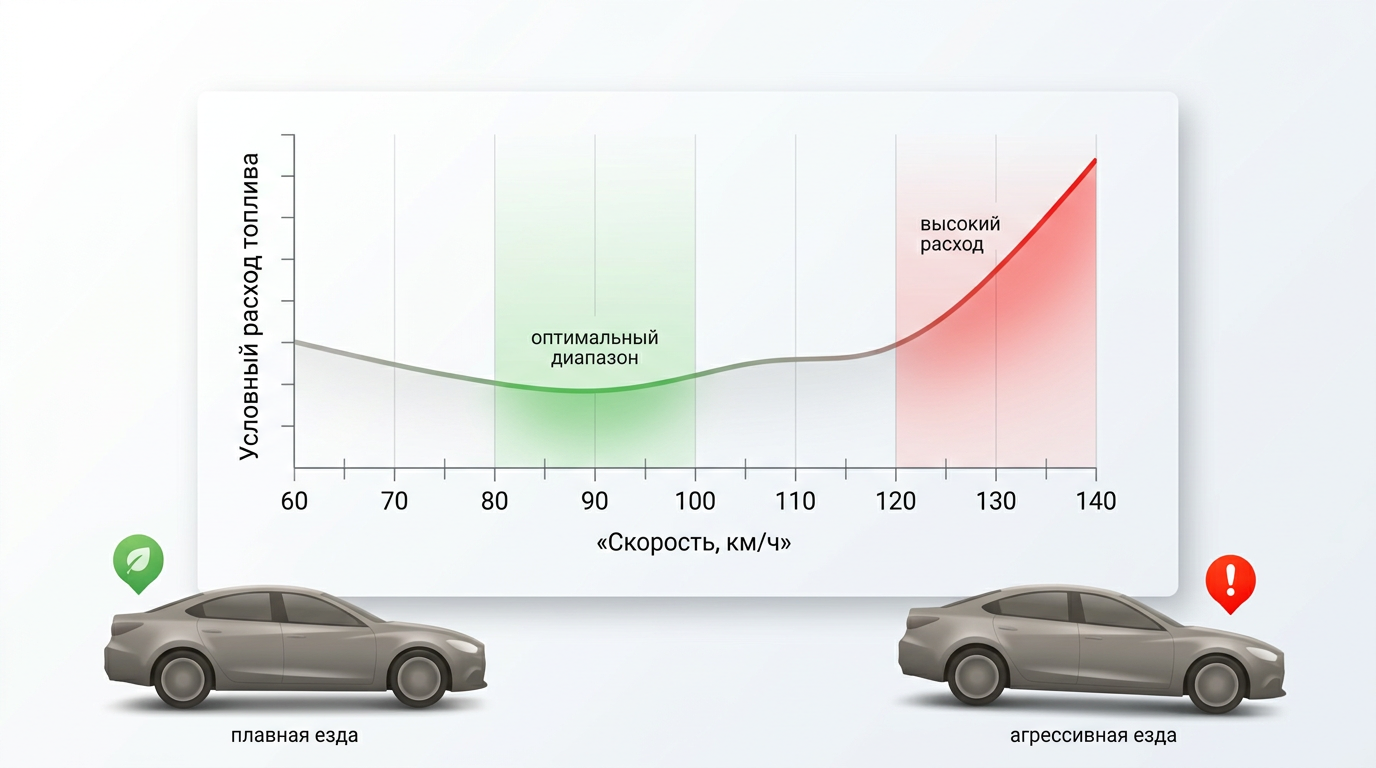
One practical example: switching from an aggressive driving style to a moderate one in the city allows you to reduce fuel consumption by 1–2 liters per 100 km, which, with a mileage of 15,000 km per year, results in fuel savings of approximately several thousand hryvnias.
Technical condition of the engine and filters
Even an engine that appears to be in good working order can consume more fuel due to "little things": spark plugs, injectors, fuel pump, air filter, and fuel filter. If the filter is clogged, the engine has to push air and fuel through resistance, which increases fuel consumption.
Key points:
Replace the air filter in a timely manner: a dirty filter increases consumption and reduces traction.
Condition of spark plugs and fuel system: worn spark plugs and injectors impair combustion of the mixture, increasing consumption.
Regular maintenance according to the manufacturer's regulations, using oils of the correct viscosity and quality: a properly selected synthetic oil can reduce consumption by up to 5%.
If the original new components are too expensive, some of these parts can be safely sourced as used originals from a car dismantling yard , subject to diagnostics and OEM number verification.
Tire pressure and condition
Low tire pressure increases rolling resistance and directly impacts fuel consumption. Even a 0.5 bar reduction in tire pressure from the manufacturer's recommended pressure can increase fuel consumption by several percent and accelerate tire wear.
Recommendations:
Check your blood pressure regularly, especially in winter when it drops faster.
Maintaining pressure at the upper limit of the recommended range helps reduce consumption.
Use seasonal tires with good energy efficiency.
If one or more tires are deformed or worn unevenly, the car may consume more fuel due to increased drag and improper wheel alignment. In such cases, replacing them with serviceable wheels or suspension parts from a salvage yard, matched to the OEM part number, can help restore normal fuel consumption without purchasing expensive new components.
Aerodynamics and excess weight
Any changes that worsen the car's aerodynamics increase fuel consumption: roof racks, side deflectors, large trims, open windows at speed.
For example, installing a roof rack can almost double the drag coefficient, which significantly impacts fuel consumption.
The extra weight also has an impact:
Unnecessary items in the trunk and cabin: constant overload can almost double fuel consumption, according to some experts.
Heavy accessories and additional equipment that are not really necessary.
It's often easier for a driver to remove an unused trunk, unload the trunk of "spare" items, and return the aerodynamics to factory levels than to try to compensate for this by saving on gas.
What can be replaced with a used original to reduce consumption?
In many situations, increased fuel consumption is related not only to driving style but also to specific damaged or worn parts. New, original parts are expensive, so auto dismantlers can help by offering genuine, used parts in good condition.
Parts that affect fuel consumption and are suitable for used vehicles
Sensors and components of engine management systems (oxygen sensor, mass air flow sensor, etc.) - if they fail, they can "over-enrich" the mixture, increasing consumption.
Injectors and fuel system components - with proper diagnostics, serviceable used components can perform just as well as new ones.
Wheel rims and suspension components - if they are deformed or misaligned, the car will roll worse, increasing fuel consumption.
Exhaust system components (part of the catalytic converter, resonator, fasteners) - subject to inspection and absence of internal damage.
Selecting such parts by VIN and OEM number through a car dismantler allows you to restore normal fuel consumption without purchasing new parts for tens of thousands of hryvnias.
What to look for when buying a used part that affects fuel consumption
Before purchasing a used part, it is important to make sure that it will actually help reduce fuel consumption and will not add new problems.
Does the OEM part number match your vehicle?
Compatibility by model, year of manufacture and engine type.
Condition of the body and fastenings: no cracks, soldering, or signs of rough repair.
Cleanliness and condition of the connectors - is there any corrosion, burnt contacts, or traces of moisture?
History of the part: what car it was removed from, whether there were any serious accidents.
Photos from all sides and connectors, preferably close-ups.
Possibility of testing and short-term warranty on functionality.
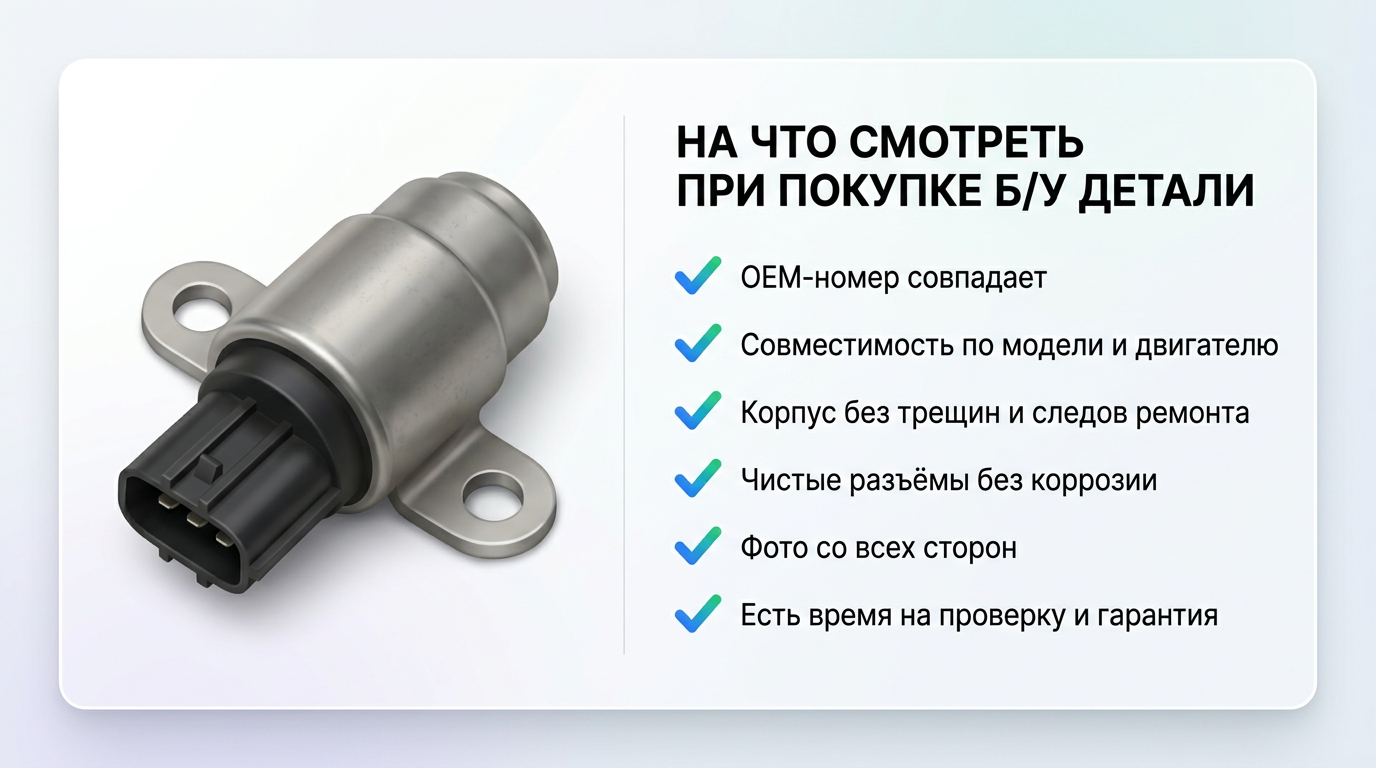
An example checklist before purchasing a used sensor or engine system component:
The OEM number matches your part number.
The case is without damage and signs of opening.
The connectors are clean, without corrosion or signs of overheating.
There is a photo of the part on the car and separately on the table.
The seller gives time for inspection and installation.
New, Replacement, or Used Original: What to Choose for Fuel Economy
When it turns out that increased consumption is associated with a specific faulty part, the driver has three main options.
Part selection table
Option | Pros | Cons | When it suits |
New original part | High price, sometimes waiting for delivery | ||
New analogue | Lower price, wide availability | May differ in terms of resource and accuracy of work | |
Used original | Factory quality at a lower price | Relatively simple parts where fit and compatibility are important |
For many owners, saving fuel begins with a smart compromise: avoiding overpaying for a new original when a used part from a salvage yard will perform just as well, but avoiding risking a cheap replacement in critical engine and electronic components.
Common driver mistakes that prevent fuel consumption from being reduced
Errors in purchases and service
Ignore diagnostics and change consumables “by eye”.
This leads to the fact that the real reason for the increased consumption remains, and money is spent on unnecessary replaced parts.Buying spare parts "from a photo" without checking the OEM number and compatibility.
The part may not fit or work correctly, and you will lose time and money.Trying to "save money" on cheap alternatives in critical engine and electronic components. A low-quality sensor or pump can not only fail to reduce fuel consumption but also cause further breakdowns.
Driving on underinflated tires "until the right moment" instead of regularly checking pressure. During this time, you're effectively paying for extra liters of fuel that could have been saved.
Driving style mistakes
Constant abrupt starts and braking “out of habit” even where you can drive smoothly.
Driving at high speed when the time difference is minimal and consumption is significantly increased.
Open windows and sunroof on the highway instead of using standard ventilation or air conditioning.
By correcting these errors, many drivers notice a reduction in fuel consumption without any complex or expensive interventions.
FAQ
How to really reduce fuel consumption without repairs?
Changing your driving style to a smooth one, maintaining a consistent speed, monitoring your tire pressure, and removing excess weight can save you up to 20–30%.
How do you know if your fuel consumption has become higher than normal?
Compare actual consumption using a simple formula (liters / kilometers × 100) with the manufacturer's nominal value and the dynamics over the past months.
What parts are most often to blame for increased consumption?
Most often, these are a clogged air filter, worn spark plugs, faulty sensors (oxygen, mass air flow), problems with injectors, and under-inflated tires.
Is it possible to buy used sensors and power supply system components?
Yes, if they are genuine parts, have been verified, and match the OEM number, they can restore normal fuel consumption without overpaying for new parts when selected correctly.
Why do identical used parts cost different amounts?
The price depends on the model and year of the donor vehicle, the condition of the part, its mileage, the presence of an inspection and warranty, and the demand for a specific part number.
Conclusion and recommendations
Fuel consumption can often be reduced without complex and expensive interventions: simply change your driving style, adjust your tire pressure and filters, and perform basic engine diagnostics.
When it turns out the problem lies in a specific component, it makes sense to consider used original parts from auto dismantlers. When properly selected by OEM number, inspection, and photos, they can help restore normal fuel consumption and avoid unnecessary costs for new components.