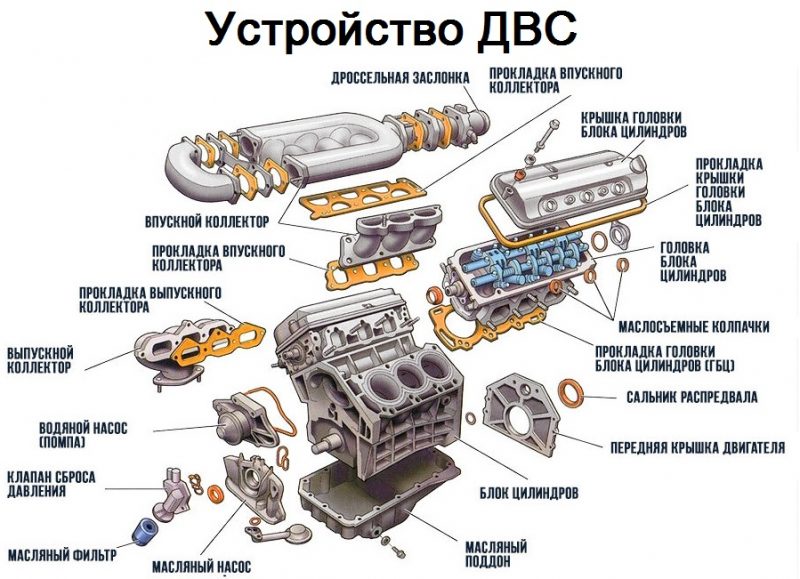
Engine knocking is one of the most alarming signs for a car owner: from a slight clinking sound under load to a dull, frequent thumping from below the engine, it can all indicate a serious malfunction. In most cases, knocking is associated either with improper fuel combustion (detonation, "pinging") or wear of mechanical components—connecting rod and main bearings, pistons, and pins.
The danger is that prolonged driving with knocking can quickly lead to damage to pistons, connecting rods, and crankshafts, and even complete engine failure. However, many causes can be detected and eliminated relatively inexpensively at an early stage—from checking the quality of fuel and spark plugs to timely diagnostics of the lubrication system.
Below, we'll discuss the different types of knocking noises, the symptoms that distinguish them, what you can check yourself, and when operation is already dangerous and an urgent trip (or towing) to a service center is required.
The main causes of engine knocking
Incorrect fuel combustion: detonation and "pinging"
Detonation is a condition where part of the fuel-air mixture ignites too early or unevenly, causing a characteristic metallic ringing or "pinging" sound under load. It is most often caused by low octane fuel, a lean mixture, incorrect ignition timing, or engine overheating.
If detonation is not eliminated in time, shock loads destroy pistons, rings, and damage the cylinder head, which may result in a major overhaul.
Problems with the ignition system
Faulty spark plugs, coils, or incorrect ignition timing can cause misfires and uneven combustion, which can manifest as a slight knocking sound, popping, or vibration under load. In practice, this is often accompanied by a loss of power, increased fuel consumption, and misfire codes (Check Engine Code).
Low quality or unsuitable fuel type
Using fuel with an octane rating lower than the manufacturer's recommended one is a typical cause of pinging and detonation, especially under load and in high gears. Add dirty injectors and deposits in the combustion chamber, and the risk of knocking due to improper combustion increases significantly.
Low oil pressure and lubrication problems
Insufficient lubrication or low oil pressure causes increased wear on friction surfaces and metallic knocking due to metal-on-metal contact. Particularly vulnerable are the connecting rod and main bearings of the crankshaft, camshafts, and hydraulic lifters, and their knocking often intensifies with increasing RPM.
Wear of connecting rod and main bearings (connecting rod knock)
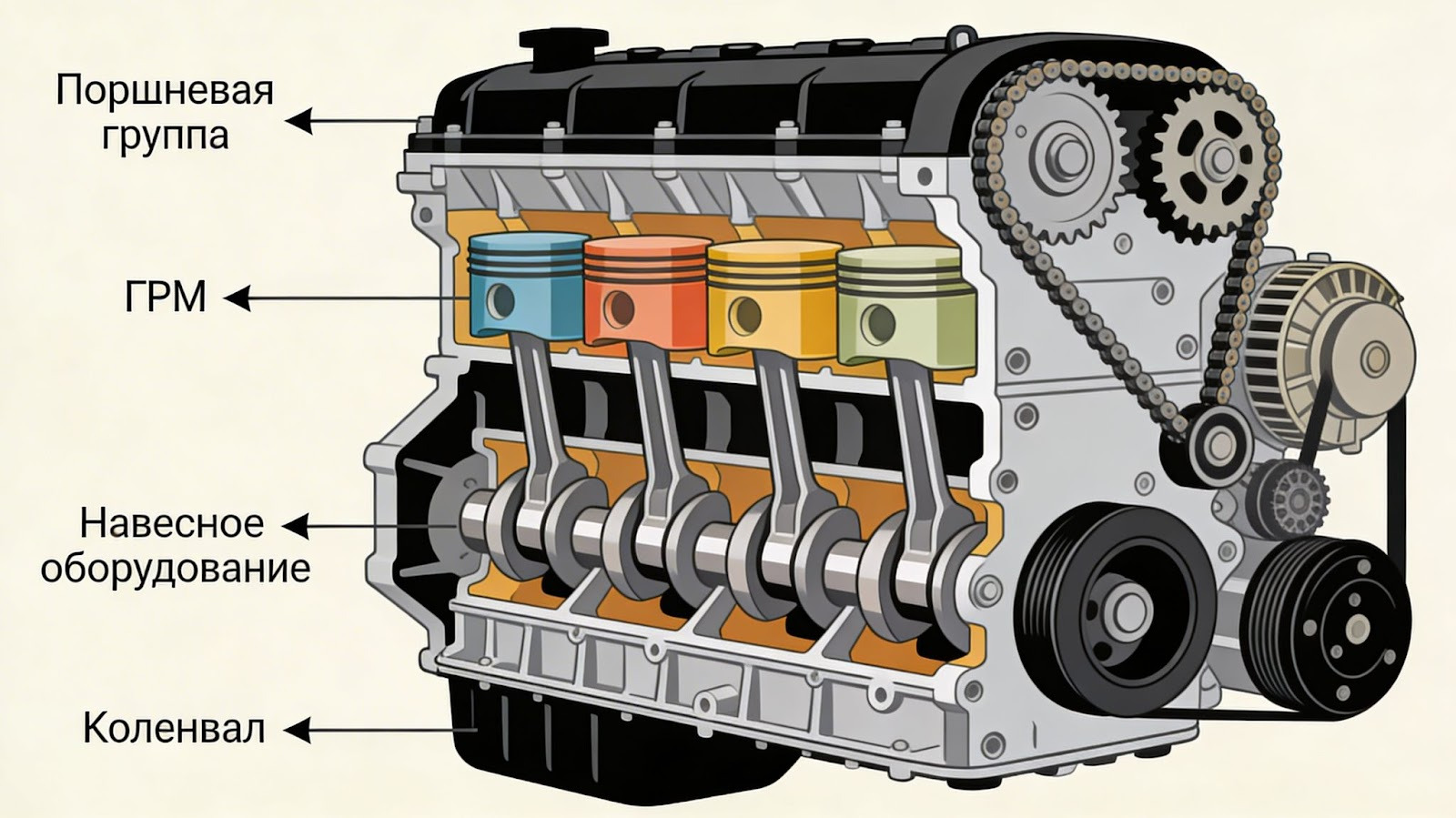
Connecting rod knock is one of the most dangerous types: a deep, dull thud from the lower part of the engine, which intensifies with acceleration and load. The cause is wear or failure of the connecting rod bearings or crankshaft main bearings, often due to oil starvation or overload.
Piston knock and piston slap
Piston slap occurs when the piston or cylinder wears, causing the piston to wobble and hit the cylinder walls. It's most often noticeable when the engine is cold and may diminish as it warms up. Prolonged driving with this type of knocking can lead to cylinder scuffing and a significant reduction in engine life.
Knocking of timing belt, valves and attachments
A number of knocks are not associated with the cylinder block, but with the valve timing mechanism and ancillary units:
knocking or cracking of the timing chain/belt when there is a problem with the tensioner;
noise from hydraulic compensators due to insufficient oil or its aging;
knocking of rollers, a pump, or a generator, which is sometimes mistaken for "engine knocking."
Signs and symptoms
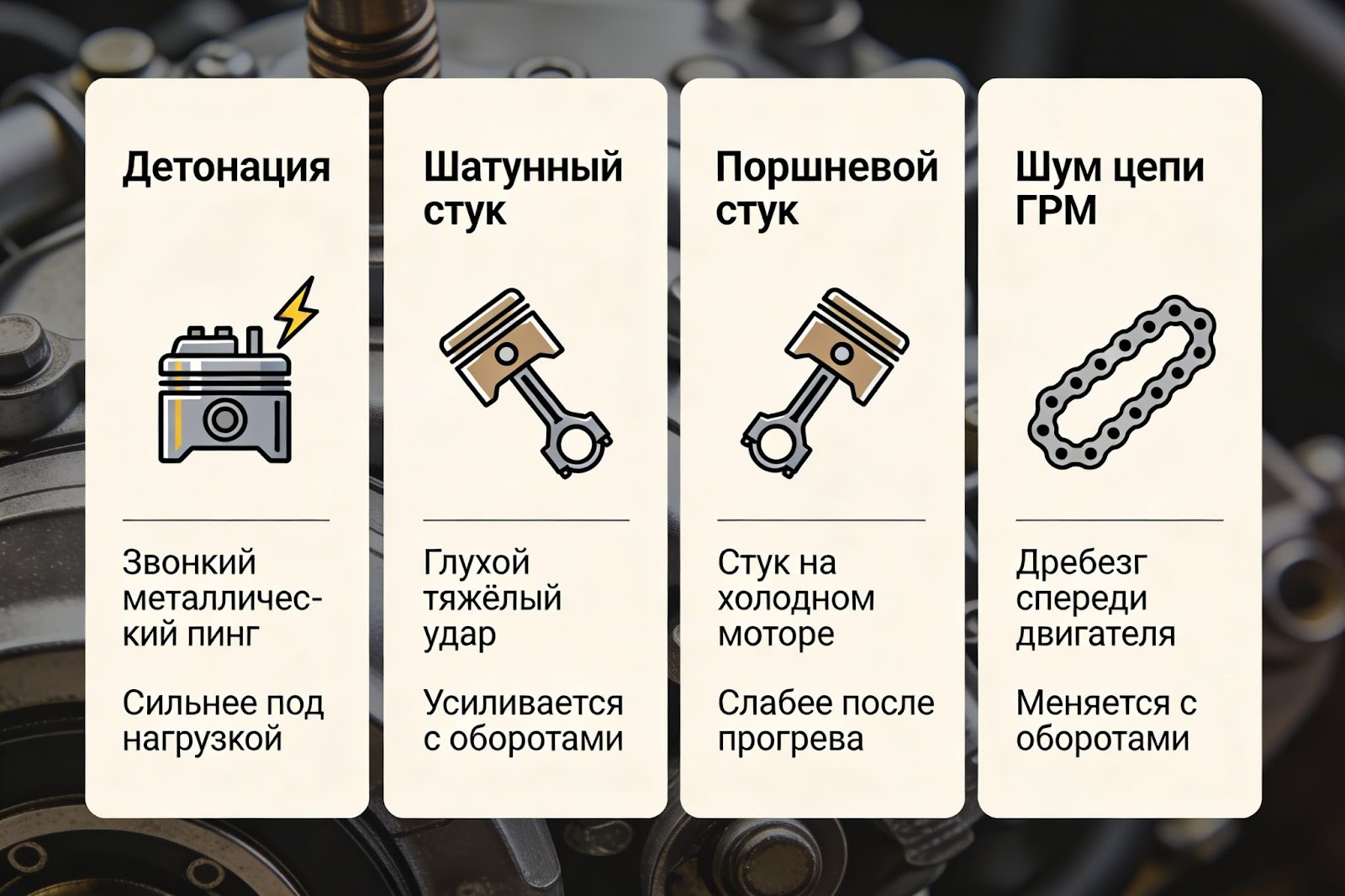
How to tell if the knocking noise is really coming from the engine
It is worth focusing on a combination of signs:
a metallic ringing or knocking sound that changes with engine speed (when you press the gas, it intensifies or becomes more frequent);
the noise is especially noticeable under load – when accelerating, driving uphill, in high gear;
The knocking sound is heard from under the hood, and not just from the suspension or exhaust system.
What should a driver pay attention to?
Useful to track:
character of sound: ringing “ping”, dull blow, crackling, frequency (rhythmic or floating);
the mode in which the knocking occurs: cold start, warm engine, only under load, only at idle;
additional symptoms:
loss of power, jerks, dips during acceleration;
increased fuel consumption;
engine and body vibrations;
Check Engine indicator, detonation/misfire errors;
oil pressure light or overheating.
The dangers of ignoring the problem
Ignoring engine knocking almost always leads to progressive wear and tear and increased repair costs.
Main consequences:
destruction of pistons, rings and formation of scoring in cylinders during prolonged detonation or piston knocking;
wear or twisting of connecting rod and main bearings, damage to the crankshaft, up to the need for its replacement;
a broken connecting rod with a breakdown of the cylinder block (“the connecting rod was knocked out”), which actually means replacing the entire engine;
destruction of the catalytic converter and overheating due to constant misfires and improper combustion of the mixture.
Many sources specifically emphasize that if there is a loud, rhythmic knock that increases with revs (suspected connecting rod knock), continuing to drive is extremely risky - the engine can be destroyed in a matter of kilometers.
What can you check yourself?
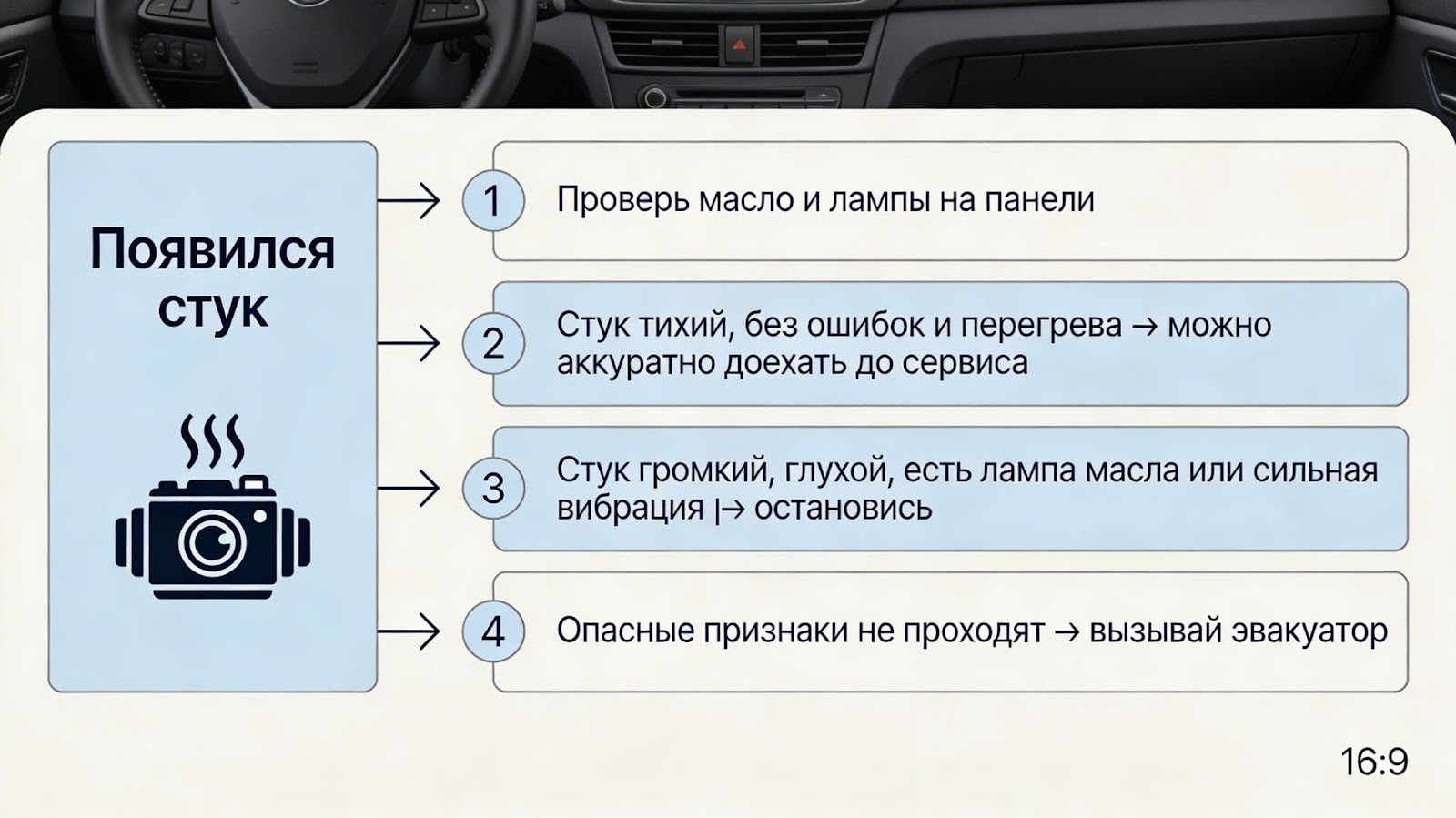
Alt: A flow chart of what a driver should do when a knocking sound appears in the engine: what to check, when to stop, and when to call a tow truck
Below is a basic checklist that a driver can complete without special equipment, while exercising caution.
Check the level and condition of the engine oil (using the dipstick): low level or very black, thick oil is a reason to immediately top up/replace and do not overload the engine.
Check to see if the oil pressure, overheating, and Check Engine lights are on; if they appear, operating the vehicle without diagnostics is not recommended.
Check to see if you have recently changed the fuel type and whether the octane rating matches the manufacturer's recommendations (indicated on the fuel filler flap/instructions).
Listen to the sound:
appears only when cold and decreases when warmed up;
appears only during sharp acceleration/climbing uphill;
can be heard constantly at any speed.
Visually inspect the engine compartment for oil and coolant leaks.
If you have experience: check the condition of the spark plugs (coating, gap) and, if they are clearly worn, replace them according to the regulations.
A brief checklist for drivers
Don't ignore new knocking - record it when it appears.
Check the oil level and signs of overheating immediately.
Assess whether it is safe to drive to a service center with a light load, or whether it is better to call a tow truck (if there is a loud, heavy knocking sound).
Don't experiment with "miracle additives" as a substitute for diagnostics—they don't eliminate mechanical wear.
When is it necessary to contact service?
There are situations when further use of the vehicle is highly undesirable and it is necessary to at least stop driving, or better yet, use a tow truck.
Be sure to contact the service if:
the knock is loud, dull, rhythmic and gets louder when you press the gas (suspicion of connecting rod/root knock);
the oil pressure light is on at the same time or there is a clear drop in the level on the dipstick;
the engine vibrates heavily, there are sudden drops in power, and popping sounds in the exhaust;
the knocking sound appeared suddenly after the engine overheated or a sudden loss of oil (leak, filter “shot”, etc.);
The Check Engine light is constantly on, and the scanner shows errors for detonation, misfires, or the knock sensor.
According to specialized services, if there is heavy connecting rod knocking and obvious signs of oil starvation, it is recommended to immediately stop the engine and not start it until it has been inspected by a specialist.
After diagnostics, you will most likely need to select and purchase the necessary parts to repair the engine and related systems - from suspension and steering components to brake system and transmission components .
Table: Common Causes, Symptoms, and Actions
Cause | Character of knocking/symptoms | What should the driver do? |
Detonation, low octane | A loud metallic "ping" under load, loss of traction. | Fill with recommended fuel, reduce load, and schedule an ignition and fuel system diagnostic. |
Faulty spark plugs/coils | Trouble, dips, possible pops, Check Engine | Check/replace spark plugs, visit a service center as soon as possible to have the ignition checked. |
Low or bad oil | General noise, knocking of hydraulic lifters, possible oil pressure light. | Urgently check the level, top up/change the oil, do not overload the engine, make an appointment for service. |
Wear of connecting rod/main bearings | A deep dull knock from below, gets louder with revs, does not go away. | Stop immediately, call a tow truck, disassemble and repair the engine. |
Piston slap | Knocking when cold, decreases as it warms up, slight vibration. | Do not delay diagnostics, plan repairs before wear progresses. |
Knocking of timing chain/belt, attachments | Rattling or popping noise from the front of the engine, changing with revs. | Visit a service center to check the timing belt and rollers, avoid high revs. |
FAQ
Is it possible to drive if the engine is knocking, but the car runs fine?
Continuing to drive with any new knocking sound is risky: a light detonation "ping" may still allow you to safely drive to a service center, but if the knocking becomes deeper or gets louder, it's safer to stop and call a tow truck.
What should I do if a knocking sound appears after refueling?
Detonation is likely due to unsuitable fuel: if possible, change gas stations, fill up with gasoline with the recommended octane rating and avoid sudden loads until the engine is checked.
The knocking noise disappears after warming up – is this normal?
Some piston knocking or hydraulic lifter noise may decrease when the engine is warm, but it is still a sign of wear or lubrication problems that require diagnosis.
Will changing the oil help eliminate the knocking?
If the cause is old or diluted oil and the hydraulic lifters are noisy, replacement can reduce the noise, but if the bearings or pistons are seriously worn, the knocking will not disappear and repairs are inevitable.
Is it possible to “fill in the additive” and continue driving?
No additive will restore worn bearings or pistons; they may temporarily improve noise, but they don't eliminate the need for a full diagnosis and repair.
Conclusion and recommendations
Any unusual knocking sound in the engine is not a "peculiarity," but a signal that the engine is operating outside of its normal operating mode, and delaying diagnostics almost always increases the scope and cost of repairs.
To reduce the risk of knocking, it is important to adhere to oil change intervals, use fuel with the recommended octane rating, monitor the oil level and temperature, and contact a service center at the first sign of symptoms.