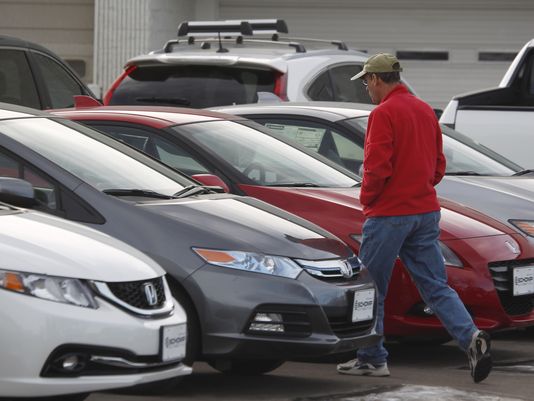
Just a couple of years ago, Chinese cars were a rarity in Ukraine: a few Cherys or Geelys, with cautious interest in BYD and Haval. Today, every other news story about the auto market mentions a Chinese brand, and crossovers and electric vehicles from the Middle Kingdom are increasingly common on the roads.
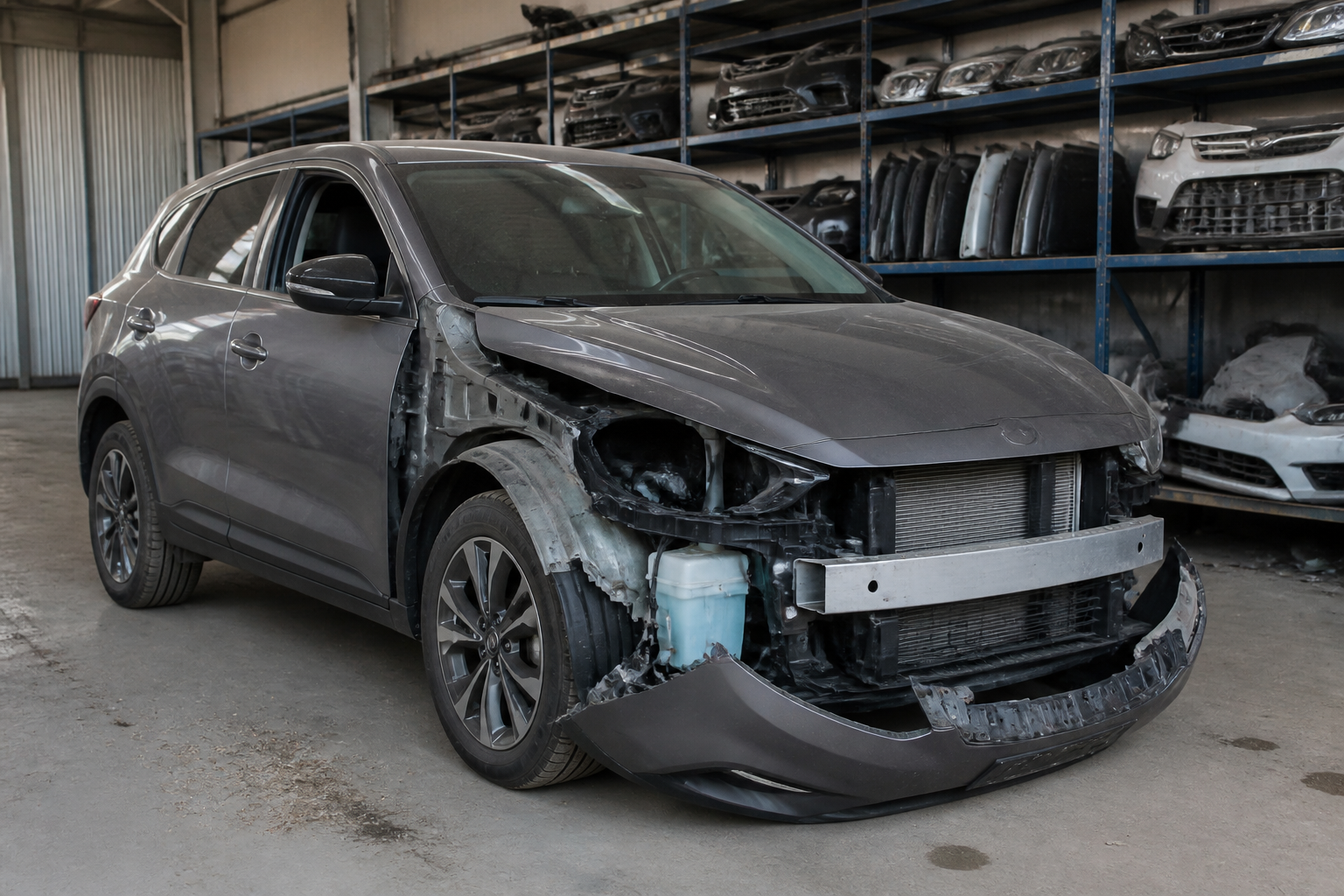
The logical result: the first serious accidents, totaled vehicles after impacts, rollovers, and flooded cars ending up at auto wreckers. At the same time, demand for used original parts is growing—especially for body panels, optics, and expensive electronic modules, which, when new and in their original price tags, can cost as much as half a car.
In this article, we'll explore which Chinese car parts have already become hot sellers at auto dismantlers, which brands (Chery, Geely, Haval, BYD, Exeed, Omoda) are in highest demand, which used parts are profitable, and which ones require careful consideration.
Why the topic has become relevant
In recent years, sales of Chinese cars in Ukraine have increased exponentially: this applies not only to mass-market models from Chery and Geely, but also to crossovers from BYD, Haval, and more premium models from Exeed and Omoda.
At the same time, new original parts for Chinese cars often cost significantly more than owners expect: complex LED optics, radars and cameras for assistance systems, and high-voltage components for hybrids and electric vehicles.
Against the backdrop of rising exchange rates and logistical risks, many drivers are starting to look for used original spare parts from car dismantlers as a more affordable, but still "factory" option.
What parts are most often searched for on Chinese cars?
Optics and lighting modules
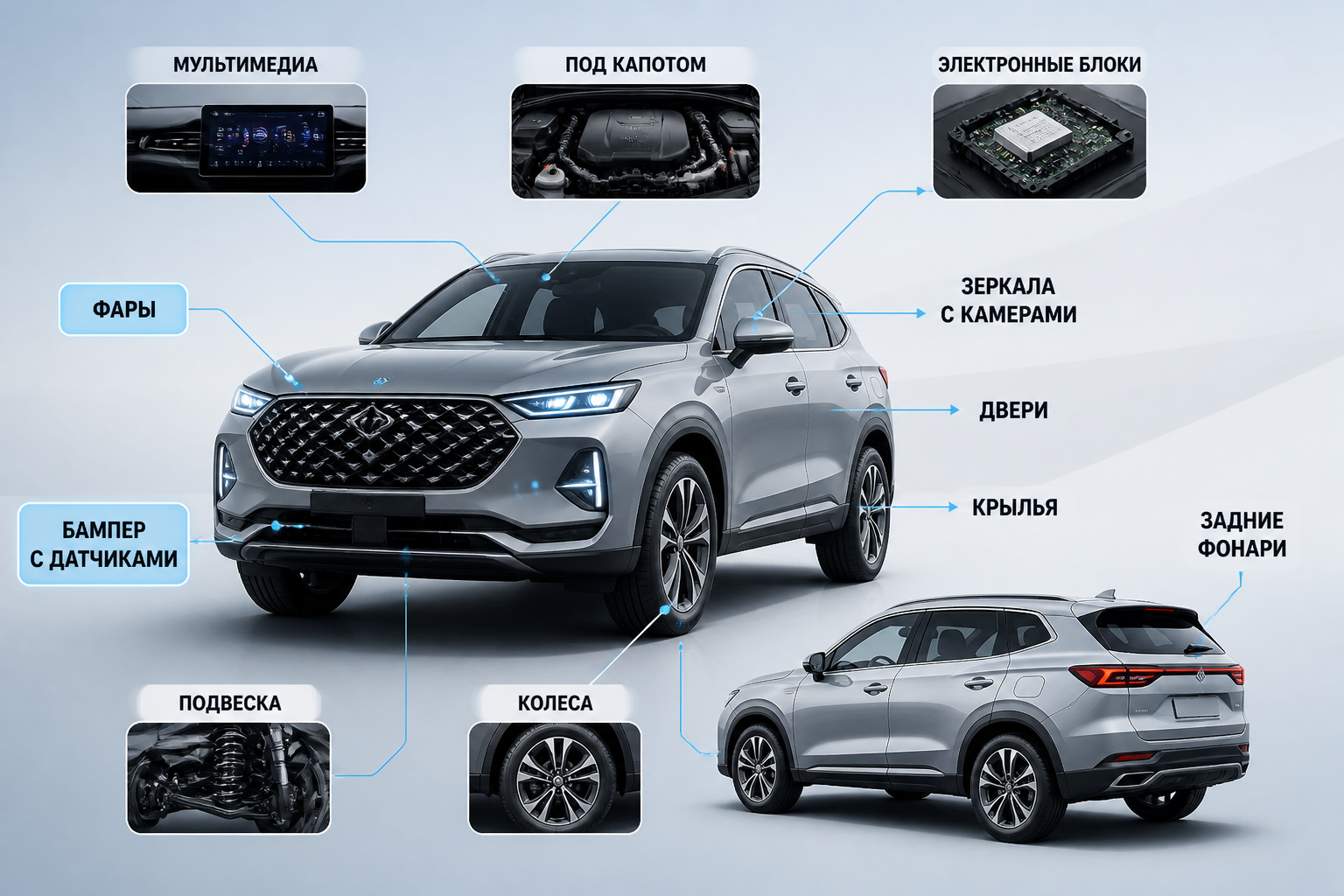
Modern Chinese crossovers and sedans in mid- and upper-end trim levels almost always have sophisticated LED optics, daytime running lights, and often adaptive headlights.
A light frontal impact or even a bad parking situation can easily cause a headlight to crack or become unattached, and a new original headlight for popular BYD or Haval models can cost tens of thousands of hryvnias each.
That's why used headlights, taillights, and light control units are one of the hottest items in Chinese car dismantling catalogs.
Bumpers and mounted sensors
A classic "parking" accident today often means not only replacing the plastic bumper, but also damage to parking sensors, adaptive cruise control radars, plugs, and fasteners.
Owners of Chery Tiggo, Geely Coolray, Haval Jolion, and Omoda C5 are actively searching for used bumper assemblies to get the plastic, some sensors, and standard mounts all at once.
Body: hoods, fenders, doors
After serious side and frontal impacts, many body parts—fenders, hoods, doors, and trunk lids—end up at auto salvage yards. On Chinese cars, these are often made of thin metal or aluminum, and new, original parts are expensive and often custom-made.
That's why used doors complete with moldings and window lifters are popular, as are fenders and hoods, which can be prepared and painted more affordably than buying new ones.
Mirrors with cameras and heating
The mirrors on many Chinese models combine turn signal repeaters, all-round cameras, sensors, and heating. After an impact or vandalism, owners readily seek out used mirror assemblies, as a new set can cost almost as much as a pair of good tires.
Suspension and chassis components
As the fleet ages and the mileage increases, Chinese cars begin to develop classic problems: stabilizer struts, control arms, shock absorbers, and hubs.
Some owners prefer to buy used original control arms or subframes, especially after minor accidents when the part is intact, but new equivalents are expensive or of questionable quality.
Electronic components and multimedia
Many Chinese cars are equipped with large multimedia panels, digital instrument panels, and dozens of control units (ABS, ESP, climate control, battery charging, etc.).
These units can fail after impact, moisture, or improper intervention, and replacements are often extremely expensive or available only on request. Therefore, used multimedia systems, climate control units, and driver assistance system modules are in high demand.
[Internal link: article on choosing a used control unit]
Hybrid and plug-in electric vehicles (BYD, Exeed, Omoda EV)
With the growing share of electric vehicles and hybrids from China (BYD, Zeekr, electric versions under the VW/ID, Omoda brands, etc.), battery modules, inverters, and charging units are starting to end up in dismantlers.
These are expensive components, and new originals cost hundreds of thousands of hryvnias, so owners are actively interested in used modules, especially for partial battery repairs.
What can you buy from a car dismantler, and where should you be more careful?
Parts that are logical to buy used:
Body parts (fenders, hoods, doors, trunk lids) with intact geometry and good metal condition.
Optics: headlights, taillights, fog lights, if the glass and mounts are intact and there are no traces of moisture inside.
Assembled mirrors, including housings, repeaters and cameras.
Interior elements: panels, seats, steering columns, decorative trims.
Original wheels: it is often more profitable to buy a used set than to buy new ones, especially for rare models.
Details to be careful with:
Airbags and seat belts: these are passive safety components, their history is more important than savings.
High-voltage components of hybrids and electric vehicles (batteries, inverters, high-voltage wiring) without professional diagnostics.
Turbines and complex units without confirmed diagnostics and history.
Electronic units without the ability to be tested or returned: the risk of getting a “brick” remains high.
What to look for when buying used parts from Chinese cars
OEM number. Check the part number against the catalog number, especially for Chinese models with frequent restyling.
Compatibility by year and trim level. The same Chery or Geely model may have different headlights, bumpers, and control units depending on the market and year.
The condition of the fasteners. Cracks, chips, and solder marks all affect installation and service life.
Signs of repair. Putty, welding, and homemade sealant indicate previous damage.
The condition of the connectors. Melting, corrosion, and traces of moisture are especially important for optics and electronic components.
Part configuration. Headlight with or without ignition unit, mirror with or without camera, door with window lifter and lock or "bare."
Photos from all sides. A reputable auto dismantler shows fasteners, markings, and possible defects in close-up.
Warranty for inspection. The ability to return the part within a reasonable time after installation is a significant plus.
New part, analog or used original?
A new, original part offers maximum compatibility and service life, but is more expensive and sometimes requires a delivery wait. Therefore, it is chosen for new cars, warranty repairs, and complex electronics.
A newer alternative is usually cheaper and more readily available, but may differ in quality and fit accuracy, so it is primarily used for simple body parts and consumables.
A used original part retains factory quality and a precise fit, but requires careful inspection of its condition and is well suited for optics, body components, interior, and suspension parts.
For Chinese brands like Chery, Geely, Haval, and BYD, used original parts often become a compromise between price and quality, especially when new original parts have become more expensive or are available only on request.
A real example from a car dismantling yard
Let's imagine a Chery Tiggo 8 Pro after a front-end collision: the car is a 2023 model, has approximately 40,000 km on the odometer, and was struck in the right front corner. The headlight, bumper, fender, part of the power steering, and radiator were damaged, and some sensors under the bumper were triggered.
The following remain in good condition at the dismantling site: the left headlight, the left part of the bumper, the hood, both doors, most of the interior, the multimedia system, and many suspension components.
For one owner, this Tiggo is a total loss, for another, it's a source of rare, used, original parts: the left headlight can be installed on another Tiggo, the doors and hood will fit after repainting, and the interior trim and multimedia system will go to someone who needs to restore the interior after damage.
Similar stories are happening with the Haval Jolion, Geely Coolray, or BYD Song: one serious accident yields dozens of parts that will help other owners save on repairs and maintain the original quality for years to come.
Drivers' Mistakes When Buying Used Parts for Chinese Cars
Buying a headlight by eye without checking the OEM number
Why it's dangerous: Chinese brands often make restylings and different versions for different markets; the headlight may not fit the mountings and connectors.
The correct way: check the OEM number and compare it with the catalog or VIN, as well as get a photo of the rear part and connectors.
Ignoring the condition of the fasteners
Why it's dangerous: Even a small crack in the mount can lead to play, vibration, and fogging of the optics.
The correct way: ask for large photos of the fasteners, clarify whether there were solders and reinforcements.
Purchasing an electronic unit only by looking at a photo of the sticker
Why it's dangerous: The unit may have been repaired, flooded, or not been flashed for a specific vehicle.
The right way: check the possibility of verification, the availability of a warranty period, and compatibility with your software.
Too much savings on safety features
Why it's dangerous: Airbags, belts, and HV components are not something to skimp on unless you know their history.
The right way: either buy new ones or buy from trusted suppliers with clear diagnostics and documentation.
Conclusion: when selecting a used part for a Chinese car, it is important not only to find the right part, but also to check its part number, components, and condition.
At the auto dismantler, it's worth checking whether the kit includes sensors, control units, connectors, and fasteners, and whether it's possible to test the part or return it if it doesn't match your VIN.
FAQ
Is it possible to buy used headlights for Chinese cars?
Yes, if the OEM number matches, the fasteners are intact, and there are no signs of moisture or rough repairs; this is one of the most popular types of used parts.
How do I know if a used part will fit my Chery / Geely / Haval?
Check the OEM number against the catalog, take into account the year of manufacture and configuration, and be sure to look at photos of the connectors and fasteners.
What's better: a new analogue or a used original for a Chinese car?
For bodywork and optics, a used original is often more profitable, while for consumables and simple parts, a high-quality new equivalent is suitable.
Is it possible to return a used spare part if it doesn’t fit?
Many dismantlers offer a short inspection guarantee and the option to return the item if it remains in its original condition; be sure to check the terms beforehand.
Conclusion and recommendations
The growing number of Chinese cars in Ukraine has inevitably led to Chery, Geely, Haval, BYD, Exeed, and Omoda models being actively sold at junkyards, while demand for used original parts for these brands is steadily growing.
For owners, this is a chance to save significantly on repairs—especially on optics, bodywork, mirrors, and suspension parts—provided the part is correctly matched to the OEM number and thoroughly inspected before purchase.