Unpleasant odors in the car's interior are often caused by dirt and moisture in the upholstery, bacteria on the air conditioner evaporator, fuel leaks, or exhaust fumes, and some of these causes pose a direct health and fire hazard.
In this article, we'll take a detailed look at the source of unpleasant odors in your car, the dangers of ignoring them, what you can do yourself, and when you should definitely call a service center.
The main causes of unpleasant odor
Dirt, food debris and general clutter
The most common cause is simple dirt in the car's interior: crumbs, spilled drinks, forgotten bags, and trash under the seats quickly begin to emit a persistent musty or rancid odor. Pile carpets and fabric upholstery are particularly prone to absorbing dirt and odors.
Moisture mixed with reagents and dust is retained in and under the mats, creating ideal conditions for the growth of bacteria and mold, which make unpleasant odors more intense.
Accumulated moisture and mold growth in the car interior
Chronic dampness, caused by constantly wet carpets, damp trim from dry cleaning, leaks along the door edges, or water getting into the trunk, leads to the appearance of a musty, “swampy” odor.
Long-term dampness on carpet and sound insulation can lead to mold growth, which is dangerous for people with allergies and respiratory diseases.
Air conditioning and ventilation units of a car
Constant condensation on the air conditioner's evaporator causes dust and dirt to accumulate on its surface, where bacteria and fungi thrive. Therefore, when the air conditioner is turned on, the air entering the cabin begins to smell musty, sometimes almost putrid.
The smell of fuel and exhaust fumes inside the car
A strong smell of gasoline or diesel fuel in the cabin most often indicates a fuel leak or loose line connections. Fuel vapors are toxic and can cause poisoning, and they also pose a fire risk if they come into contact with hot components.
The presence of an exhaust odor in the cabin usually indicates a leak in the exhaust system, problems with the trunk seals, or problems with the ventilation system, and poses a serious threat due to the presence of carbon monoxide.
Coolant leak
A sweetish odor in the cabin often indicates a coolant leak in the heating or cooling system. Ethylene glycol vapors are toxic; prolonged inhalation can cause dizziness, nausea, and nervous system damage.
Typically, leaks occur in the area of the heater radiator or connecting pipes; antifreeze can get onto the carpet, leaving wet spots and a persistent sweet smell.
The smell of burnt oil, plastic, clutch
The smell of burnt oil is often caused by oil dripping onto hot engine parts or the exhaust manifold, where it scorches. The smell of a burnt clutch occurs when the clutch overheats, for example, due to constant slippage or improper driving technique, and can partially permeate the cabin.
The smell of melted plastic or rubber may indicate overheating of the wiring, pads, or other components, which requires immediate diagnosis.
Air fresheners, interior materials, and chemicals
Sometimes discomfort is caused by overly strong fragrances or emissions from cheap plastics and finishing materials, especially in new or recently reupholstered interiors.
Signs and symptoms of the problem
To choose the right method for eliminating an unpleasant odor in a car's interior, it's important to consider its nature and accompanying symptoms.

What are the consequences of ignoring an unpleasant odor?
Although an unpleasant odor in the car's interior may seem like a minor household problem to many, failure to address it can lead to serious risks to both your health and the technical condition of your car.
Health risks
Exhaust gases contain carbon monoxide, various nitrogen oxides, and hydrocarbons; inhaling them can cause poisoning, loss of consciousness, and even death.
Fuel and solvent vapors are toxic and potentially carcinogenic, and can cause harm to the respiratory and cardiovascular systems with prolonged exposure.
Mold and bacteria in the air conditioning system and on damp surfaces provoke allergic reactions, bronchospasm, and exacerbation of chronic respiratory diseases.
Antifreeze vapors, if inhaled for a long time, can cause dizziness, nausea, and damage to the nervous system.
Risks to your car and safety
Fuel and oil leaks increase the risk of fire, especially when they come into contact with hot engine or exhaust system components.
Coolant leaking through the heater core reduces the efficiency of the cooling system, which can lead to engine overheating and costly repairs.
Constant moisture and mold destroy sound insulation, carpeting, and metal floor elements, accelerating corrosion.
Overheating of the wiring or brakes, accompanied by the smell of burning rubber or plastic, can lead to brake system failure or fire. If diagnostics reveal problems with the brakes or suspension, do not delay replacing worn parts and select suitable brake , suspension, and steering components.
What can you check and do yourself?
Most common sources of unpleasant odors inside a car can be identified and partially eliminated by yourself, if you exercise caution.
Step 1: Identify the source of the unpleasant odor
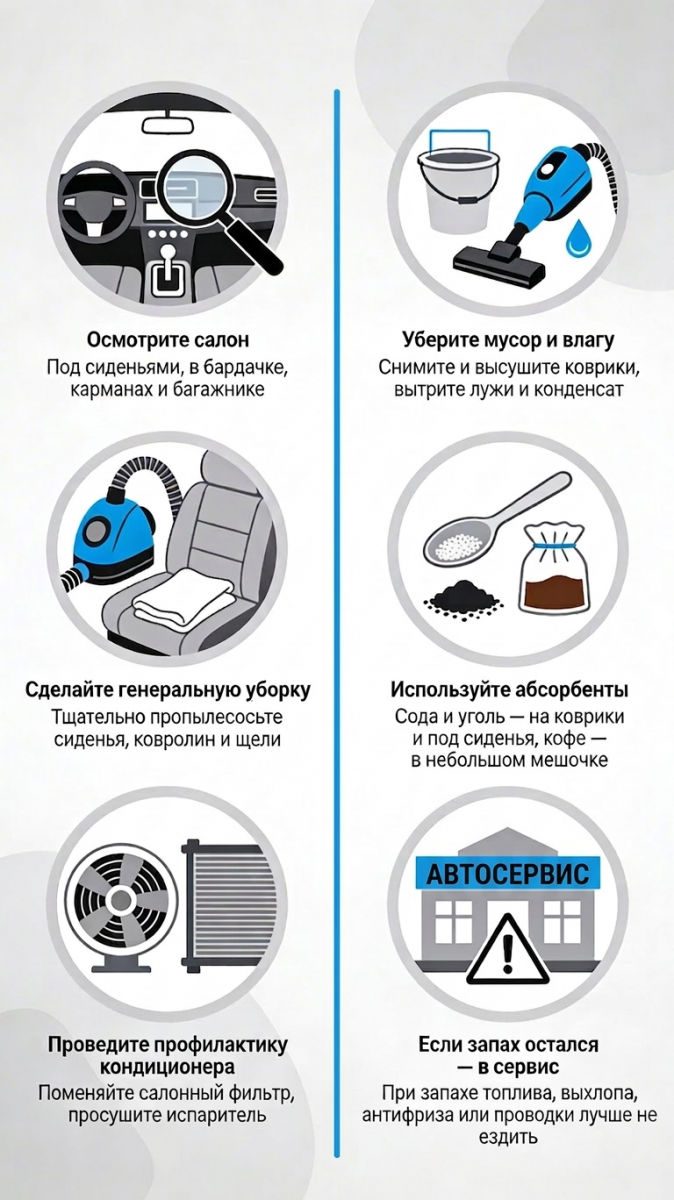
Carefully inspect the interior: look under the seats, in the glove compartment, door niches, pockets and trunk, remove all trash, food leftovers and forgotten bags.
Check the rugs and the area underneath them for moisture, dirt, or mold.
Pay attention to when the smell is strongest: when turning on the air conditioner, heater, or driving in certain modes - this will help narrow down the range of causes.
Step 2. General cleaning of the interior
Vacuum the seats, floor mats, and carpet thoroughly, paying attention to the joints and crevices where crumbs and dust accumulate, and if necessary, replace worn interior trim, floor mats, or upholstery with new ones from the interior catalog.
Remove the mats, wash them and dry them well, including the back side.
Wipe the plastic panels with a mild, neutral cleaner; do not use harsh chemicals with a strong odor.
Vacuum the seats, floor mats, and carpet thoroughly, paying attention to the joints and crevices where crumbs and dust accumulate. Remove the floor mats, wash them, and dry them thoroughly, including the backing.
Step 3: Using household items to eliminate odors
Folk remedies, but proven by practice, help remove light and medium odors if the main source is eliminated.
Baking soda. Sprinkle a small amount of baking soda on dry fabric items and rugs, leave for a few hours or overnight, and then vacuum thoroughly – baking soda effectively absorbs odors.
Vinegar. Prepare a water-vinegar solution and apply it to the plastic interior parts and fabric surfaces where it's suitable, then thoroughly ventilate the interior.
Activated carbon. Use charcoal as an odor absorber—place tablets or granules in shallow, open containers under seats and leave overnight or for several days.
Coffee Beans. A compact bag filled with coffee beans acts as a natural odor absorber while simultaneously releasing a mild coffee aroma; place it on the dashboard shelf or under the seat.
Important: It is not recommended to use ammonia and other aggressive substances without experience, as their vapors can be dangerous and require careful ventilation.
Step 4: Simple Air Conditioner Maintenance
Change your cabin filter regularly (approximately every 8,000–10,000 km) – this reduces the accumulation of dust and bacteria in the air ducts.
When turning off the air conditioner a few minutes before stopping the car, it is useful to leave the heater fan on - this helps dry the evaporator and reduces the risk of bacteria growth.
When is it necessary to contact service?
There are situations in which an unpleasant odor in a car's interior is a clear reason to stop using it and immediately contact a specialist.
Contact service as soon as possible if:
There is a distinct smell of exhaust gases in the cabin, and the driver or passengers experience headaches, nausea, and weakness – this could be carbon monoxide, and it is dangerous to continue driving.
A distinct smell of gasoline or diesel is noticeable, especially in the rear seats or trunk area; a fuel leak is possible, posing a fire risk.
If you notice a persistent sweet smell of antifreeze, notice damp spots on the carpet near the front passenger's feet, or the coolant level is dropping, there is likely a leak in the heater core.
There is a smell of burnt rubber, plastic or insulation, especially accompanied by smoke, heating of wiring or blocks - it is possible that the brakes or electrical wiring are overheating.
Self-cleaning, drying, and using absorbents are ineffective, and the odor returns or intensifies. You need to professionally search for the hidden source (hidden leaks, mold under the trim, air conditioning problems).
The more dangerous the suspected cause (exhaust, fuel, antifreeze, wiring), the faster you need to stop driving and arrange for the vehicle to be delivered for diagnostics (for example, by tow truck).
FAQ
What should you do if your car's interior starts to smell musty after winter?
The most common culprits are damp rugs and accumulated dirt: remove the rugs, dry them and the area underneath them thoroughly, vacuum, and if necessary, use baking soda or charcoal to absorb the odor.
Is it safe to continue driving if you smell a slight exhaust fumes?
No, even a small amount of exhaust gases is dangerous due to carbon monoxide. At the first sign of a smell, you need to ventilate the interior and have the exhaust system diagnosed as soon as possible.
Does air freshener help remove unpleasant odors in a car?
The air freshener masks the odor, but does not eliminate its cause, so you first need to find and eliminate the source (dirt, moisture, leaks), and only then use the air freshener if necessary.
How often should I change my cabin filter to prevent odors from my heater and air conditioner?
Many manufacturers and experts recommend changing the cabin filter approximately every 8–10 thousand km or once a year, depending on operating conditions.

Conclusion
An unpleasant odor in a car's interior is not only an inconvenience, but also an important diagnostic signal: from simple dirt and dampness to fuel, exhaust gas, and coolant leaks.
To minimize the risk, it is important to regularly clean the interior, dry the mats, change the cabin filter, ventilate the car after driving, and be attentive to any new odors.
For light household odors, a thorough cleaning and the use of safe absorbents (soda, charcoal, coffee) are often sufficient, but if you smell exhaust, fuel, antifreeze, or burnt wiring, it is best to stop using the vehicle and take it to a service center.