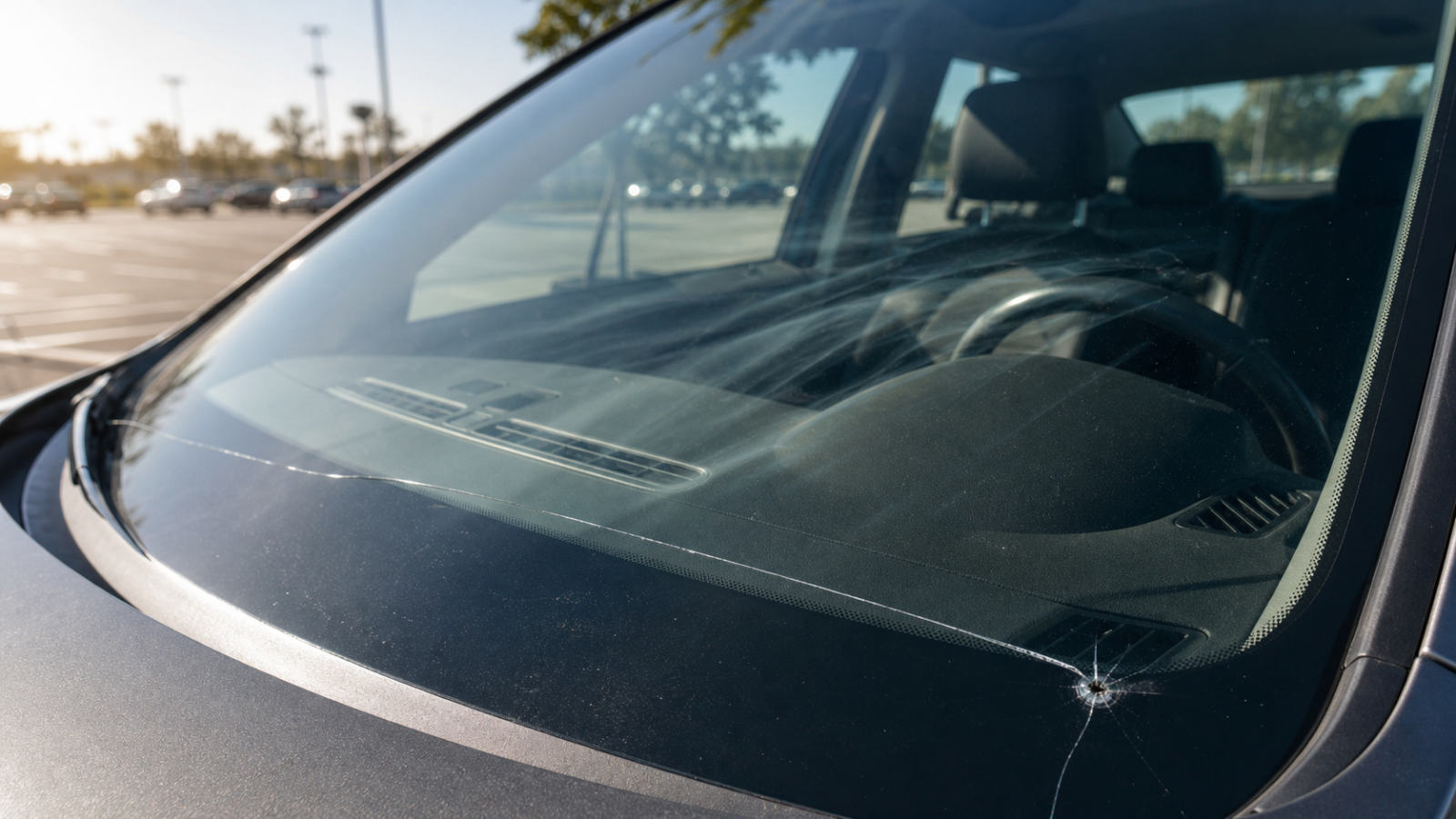
You walk out to your car after a hot day, get into the scorching cabin, turn the air conditioning up to maximum—and a couple of minutes later you notice a long, winding crack in your windshield from an old chip that didn't seem to bother you for years.
There was no impact, no children were playing with a ball nearby, no one touched the car during the night – it seems the crack appeared on its own, and this is especially annoying at a time when the heat is already driving you to white heat.
The story is typical for summer in Ukraine: the sun heats up the glass to a temperature that makes it difficult to touch, and the driver tries to quickly cool the interior with cold air or water.
In this article, we'll explore why windshields crack in hot weather, how temperature affects old chips, whether cracks can be stopped, and when replacement is absolutely necessary. We'll also give you an honest look at when a used, original windshield from a salvage yard might be the smartest solution.
A real example of the situation
Let's imagine a 2016 Chevrolet Cruze, imported from the USA and restored after a minor frontal impact: the body was straightened, the bumper was replaced, the headlights and windshield were new, but the owner saved on installation and chose a garage service with no experience working with triplex glass and rain sensors.
A year later, in the summer, the car stood in the sun all day, after which the owner turned on the air conditioner to +16 °C, directing air directly at the hot glass. By evening, a long crack had spread from a small old chip near the pillar across half the windshield.
What was damaged:
Windshield: longitudinal crack across the entire width, glass needs replacement.
The rain sensor and light sensor mounts remain intact and can be moved to another glass.
The moldings and plastic trims around the perimeter are not damaged and fit other glass on the same body.
Where the owner could save:
New original glass installed by an official dealer costs approximately 10,000–14,000 UAH, depending on the configuration (rain sensor, heating, ADAS camera).
An original used windshield from a car dismantler, matched by VIN and OEM number, with photos of chips and edges — approximately 4,000–7,000 UAH plus professional installation.
A price difference of 2-3 times, provided the selection and installation are done correctly, often makes a used original a rational choice, especially if the repair budget is limited.
How Heat and Temperature Changes Cause Glass to Crack
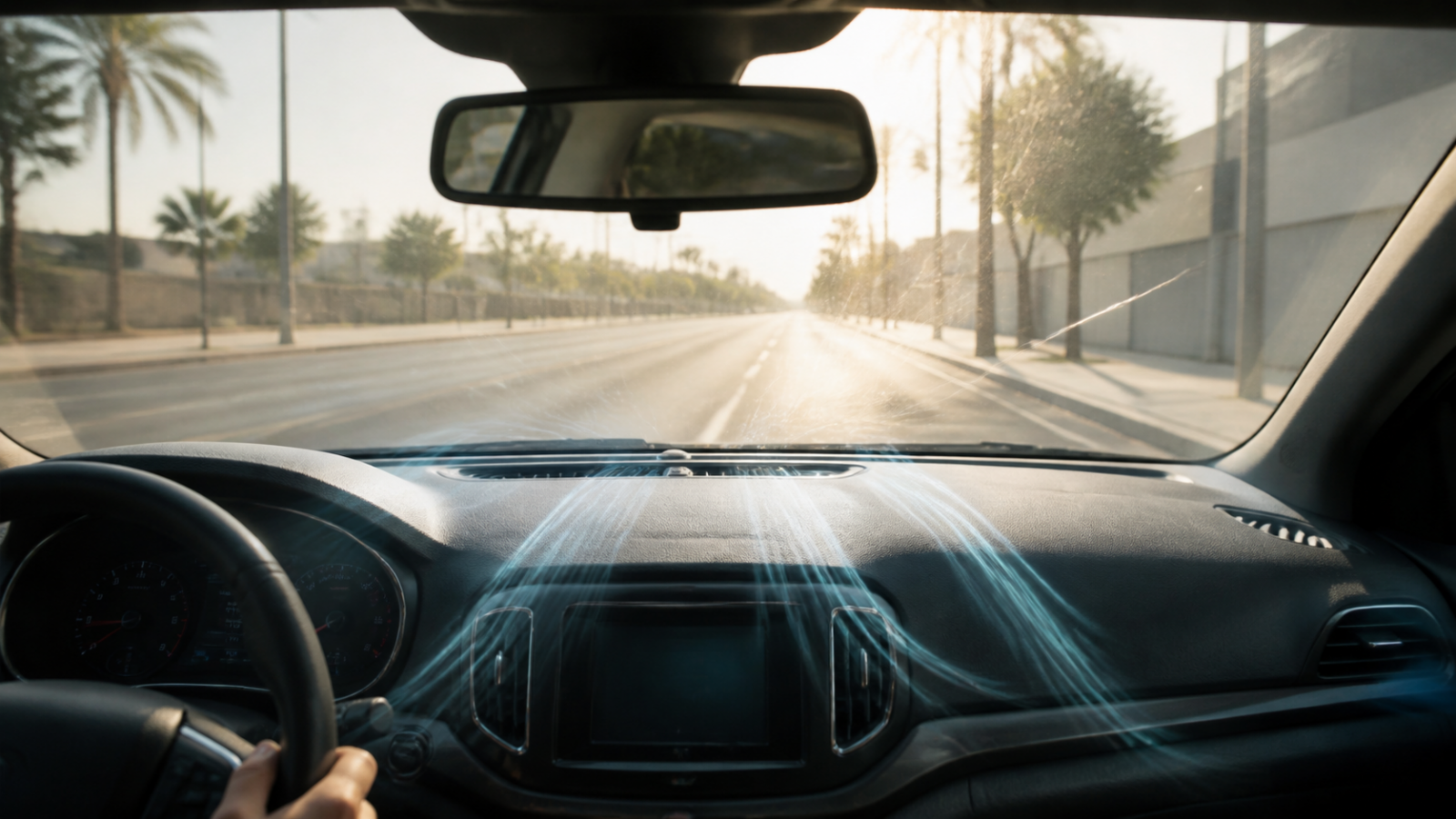
The windshield is a laminated glass: two glass plates bonded with a transparent polymer film, each layer expanding and contracting differently when heated and cooled.
Why does a crack appear even without an impact?
When a car is parked in the sun, the glass heats up and expands, and when suddenly cooled by cold air or water, it contracts unevenly, creating stress within the material that focuses on areas of old defects and turns a chip into a crack.
Particularly vulnerable:
Glass with existing chips and “stars” from stones.
Glass after imperfect installation, when the edge is compressed or deformed by the body.
Glass with hidden manufacturing defects or microcracks.
How does heat affect an old chip?
A chip is a localized damage to the glass structure where its strength has already been compromised.
In hot weather, the area around the chip heats up, the material expands, and with uneven cooling, stress is concentrated precisely in the center of the damage, and microcracks begin to grow along the glass.
If the chip is not repaired in a timely manner (filled with polymer), under the influence of temperature changes it turns into a crack: first a short one, at the edge of the glass or near the point of impact, and then a long arc-shaped line extending into the driver's field of view and obstructing visibility.
Why is cold air from an air conditioner on hot glass dangerous?
Experts note that the critical temperature difference between the glass and the cooling flow can reach approximately 40°C: the glass is heated to approximately 50°C, while the air from the air conditioner is approximately 10°C.
This difference creates strong internal stress, especially if the air is directed at one area of the glass, while the rest remains hot, and then the existing chip can practically explode into a crack immediately after turning on the air conditioner.
To reduce the risk:
Do not direct the air flow directly onto the windshield during the first minutes of driving.
Ventilate the interior with the windows open before turning on the air conditioner to even out the temperature.
Set the temperature to a moderate level rather than setting it to minimum immediately after starting.
Can you wash a hot car with cold water?
Melted asphalt, a hot car body, dust—after a long drive in the heat, your hands automatically reach for the cold water hose.
But if you pour ice water on a very hot windshield, the effect will be about the same as an improperly turned on air conditioner: the sudden cooling of a particular area while the rest of the glass is hot leads to stress and the appearance of a crack, especially in areas of old damage.
Recommendations:
If you need to wash dirt off hot glass, use warm water, not ice water.
Don't pour hot water on frozen glass in winter—the temperature difference works both ways and can also cause damage.
If possible, let the car cool down a bit in the shade before washing, especially if the glass is already chipped.
What cracks are repaired, and when does glass need to be replaced?

When does crack repair make sense?
Modern services can repair some types of windshield damage using polymer compounds, but not every damage can be repaired.
Most frequently repaired:
Small chips and dents outside the driver's direct line of sight.
Short cracks up to several centimeters long, not reaching the edge of the glass and not crossing the field of view.
Damage that has appeared recently and has not yet become contaminated with moisture and dust.
The estimated cost of repairing a chip or small crack at a service center can range from 500–1,500 UAH, depending on the region and the severity of the damage, which is significantly cheaper than a complete glass replacement.
When is it best to change the glass right away?
Glass needs replacement if:
The crack is long, across the entire width or height, especially in the viewing area.
The damage is located in the area where the windshield wipers operate, and the polymer repair will be under constant stress.
A crack at the edge of the glass poses a risk of loss of sealing, moisture penetration, and metal corrosion around the perimeter.
The damage affects the mounting area of the rain sensors, ADAS cameras, or the heated glass area.
In this case, it is worth considering replacing it with a new or used original glass :
New original glass for modern models with sensors and heating can cost from 8,000 to 20,000+ UAH including labor.
Original used glass from a salvage yard, selected by VIN and OEM number, is usually 1.5–3 times cheaper, but requires careful inspection of the condition,
How to temporarily protect a chip from dirt and moisture
If a chip occurs en route and you can't get to a repair shop for a couple of days, it's important to prevent moisture and dirt from penetrating the damaged area, as this will reduce the quality of the subsequent repair.
A few simple steps:
Carefully clean the chipped area from dust and sand with a soft cloth, without pressing on the glass.
Dry the chipped area if there is moisture there.
Cover the damage with transparent tape or special film to prevent dirt from getting inside until you visit the service center.
Try not to direct cold air or water onto the area to prevent the crack from getting bigger.
This temporary approach doesn't replace repair, but it increases the chances of a quality restoration and saves money—on average, repairing a chip is several times cheaper than replacing the glass.
Is it possible to drive with a crack?
From a legal perspective, a long crack in the field of view can be a cause for complaint from the police or insurance company, and from a safety perspective, it reduces visibility and can lead to a dangerous situation.
Furthermore, cracked glass in modern cars is part of the body's structural support, and in the event of an accident, it must function properly with the airbags, and damage can affect this function.
Practical approach:
A short crack outside the field of view and action to send to a service center as soon as possible is acceptable, but don’t delay.
A long crack across your field of vision, especially in the wiper area, is a reason to postpone your trips and schedule a windshield replacement as soon as possible.
If the crack is growing quickly, it's best to minimize the load (don't turn on a powerful air conditioner, avoid bumps) and take the car to a service center before the damage becomes critical.
FAQ - short and to the point
Is it possible to drive with a small crack on the windshield in the summer?
A short crack outside the viewing area is acceptable, but it should be shown to specialists as soon as possible, especially in hot weather, to prevent it from growing due to temperature changes.
Is it dangerous to blow cold air from an air conditioner onto hot glass?
Yes, this is one of the common causes of cracks: a sharp temperature change creates internal stress, especially in the presence of old chips.
Is it possible to temporarily cover a chip with tape to prevent it from turning into a crack?
Yes, this is a reasonable temporary measure: by covering the chip, you protect it from dirt and moisture and improve the quality of subsequent repairs.
When is it better to replace the glass immediately, rather than try to repair the crack?
If the crack is long, extends across the field of view, is located near the edge of the glass, or affects the sensor and heating areas, it is more rational to replace the glass entirely.
Is a used windshield from a salvage yard suitable as a replacement for a new original?
In many cases, yes, if it is an original part with no hidden damage, correctly matched to the OEM number, and professionally installed.
Conclusion and recommendations
The bottom line is that a windshield rarely cracks on its own—old chips, heat, and sudden temperature changes are almost always to blame. The driver's job is to notice the damage early, avoid making it worse with air conditioning or cold water, and choose wisely what to do next: repair the crack or replace the windshield, including with an original used one from a salvage yard.
When choosing a used windshield, it is important to look not only at the absence of cracks, but also at the condition of the edge, the area of the wiper blades and the sensor mounts.
At the auto dismantler, it's worth checking in advance for the OEM number, options (heating, tinting, sensors), the vehicle's history, whether the glass can be inspected before installation, and the return policy if the part doesn't fit.
This approach allows you to combine savings with safety, when a used original becomes a reasonable option instead of an expensive new glass, but does not turn into a risk for the sake of the lowest price.