Engine overheating is one of the most dangerous, yet quite common, problems in modern cars. It's almost always associated with a malfunctioning cooling system: insufficient coolant, leaks, a faulty thermostat, fan, or cooling pump.
Ignoring rising temperatures is unavoidable: prolonged operation of an overheated engine can lead to warped cylinder heads, blown head gaskets, and ultimately complete engine failure. Even an inexperienced driver can easily spot the first signs of overheating, and some of them can be verified by knowing where to look.
In this article, we'll explore the key factors that cause engine overheating, typical symptoms, possible consequences, a simple self-checklist, and situations where you should immediately stop operating your engine and contact a service center.
The most common factors causing engine overheating
Decrease in the antifreeze level or its leakage
Insufficient coolant (antifreeze) is considered one of the main causes of engine overheating. It flows through the cooling system and radiator, removing excess heat and transferring it to the surrounding environment.
If the level is low due to natural volume reduction, leaking gaskets, water pumps, radiators, or hoses, the volume of circulating coolant decreases, and the system can no longer dissipate heat, causing overheating. Severe leaks can cause the engine to rapidly "boil."
Incorrectly functioning thermostat
The thermostat controls the direction of coolant flow, switching it from the small circuit to the large circuit (through the radiator) and back. When properly functioning, it opens when the engine reaches operating temperature, ensuring a stable thermal environment.
If the thermostat valve is stuck and won't open, the coolant doesn't flow through the radiator and quickly overheats in the cylinder block, causing a sharp rise in temperature. In this case, overheating can occur within just a few minutes of driving.
Failure of the radiator fan or its electrical circuit components
In slow-moving conditions and traffic jams, when oncoming airflow is weak, the fan helps the radiator effectively cool the engine. If the fan fails due to a blown fuse, a broken relay, sensor, or electric motor, heat dissipation drops sharply, leading to increased engine temperature.
Malfunction of the pump that circulates the coolant
The pump's primary function is to maintain coolant circulation within the system, preventing the engine from overheating. If its bearings or impeller wear out, the pump seizes, or leaks, the volume of coolant pumped drops sharply or stops.
If circulation is insufficient, "hot" fluid is retained in the block and cylinder head, and the radiator does not receive the required amount of coolant - the engine overheats, sometimes without obvious external leaks.
Clogged or damaged radiator
Over time, the radiator's internal channels can become clogged with deposits, and the outer fins can become clogged with dirt, insects, and debris, which impairs heat dissipation. As a result, even with the fan running, the radiator cannot cool the liquid.
In addition, dents, corrosion, and partial blockage of the honeycomb due to poor repairs or the use of sealants also impair the system's ability to dissipate heat and can cause constant overheating.
If wear is detected on the pump, thermostat, hoses or other components of the cooling system, it is better not to delay replacing them and select suitable spare parts for the engine .
Malfunctions of the control system and additional units
Overheating can also be caused by indirect factors:
Incorrect measurements received from the coolant temperature sensor and ECU errors, resulting in the fan turning on too late.
The process of operating the power unit in heavy duty conditions (trailer, climbs, intensive driving) against the background of neglected maintenance of the cooling system.
Incorrect fuel mixture or ignition problems causing excessive heat. These situations require diagnostics at a service center.
The main symptoms that the engine is overheating
To spot a problem early, it's important to know the typical signs of overheating.
Main symptoms
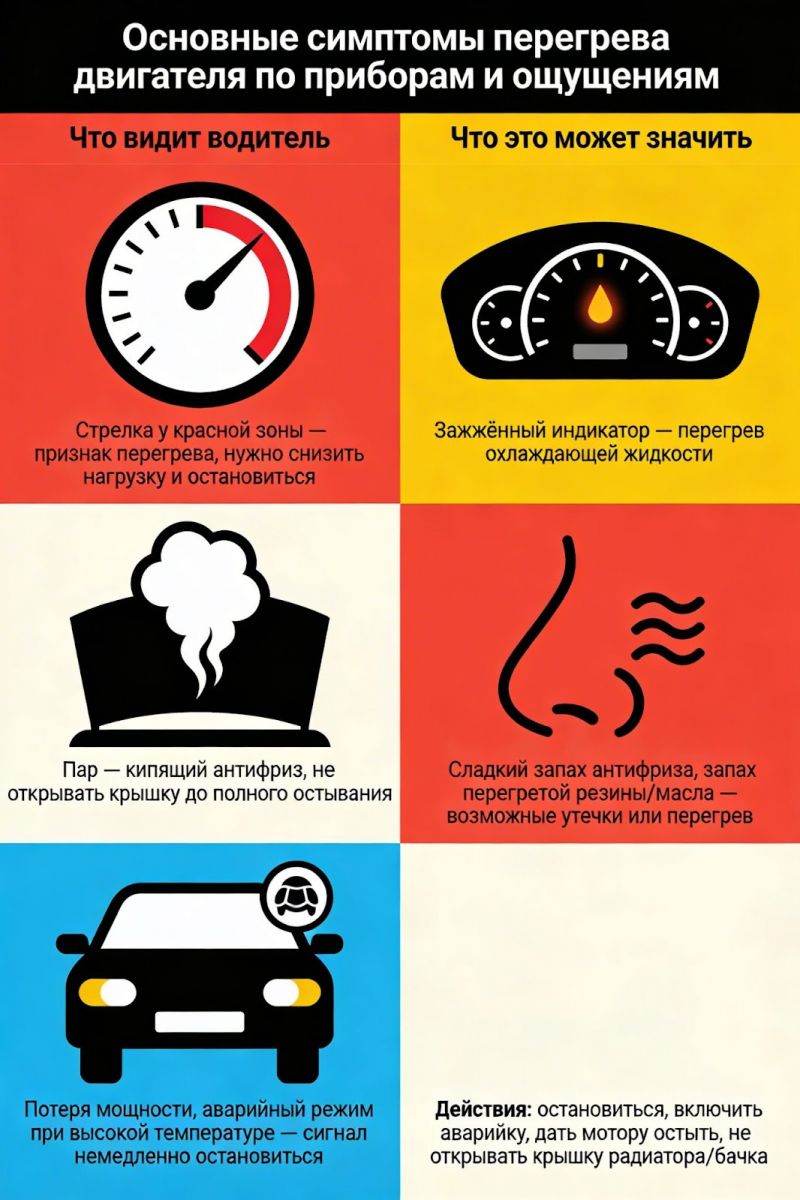
Overheating is indicated by the temperature arrow approaching the “red” sector, or the overheating/low coolant indicator on the panel turning on.
Often a cloud of steam can be seen coming from under the hood - usually this is boiling antifreeze escaping through the radiator cap or reservoir.
Additionally, a sweet smell of antifreeze or the smell of overheated rubber/oil is felt.
Loss of power, sluggish acceleration, the car goes into “emergency” mode at high temperatures.
Unstable engine operation, detonation, possible misfires due to severe overheating.
What should a driver pay attention to?
Regularly check the temperature sensor readings while driving, especially on hot days, when standing in traffic jams for a long time, or when driving under load.
Pay attention to the emission of steam from under the hood of the car, unusual odors, changes in the car’s behavior (sluggish acceleration, “heavy” engine).
Be aware of the sudden activation of emergency modes and indicators on the instrument panel – this is often the electronics’ first reaction to overheating.
What happens if you neglect overheating?
Prolonged operation of a car with an overheated engine can lead to serious malfunctions and costly repairs.
Possible consequences
Cylinder head warping: When overheated, the metal expands unevenly and can warp the cylinder head surface, which compromises the seal and requires expensive machining or replacement.
A failed cylinder head gasket disrupts the separation of the oil, coolant, and combustion chambers, resulting in white smoke, emulsions in the oil, and subsequent overheating and power loss.
Cracks in the cylinder head or block: Extreme overheating can cause cracks to form, leading to loss of sealing and subsequent oil and antifreeze leaks, often requiring a major overhaul or a new engine.
Complete engine failure (seizure): when overheated, the oil loses viscosity, lubrication deteriorates, and pistons or crankshaft seizure is possible.
Examples of risks
Even one episode of severe overheating (steam visible under the hood, engine temperature reaching dangerous levels, prolonged driving without stopping) can trigger a blown cylinder head gasket and subsequent chronic overheating.
Repeated overheating, especially under high load, dramatically increases the risk of major repairs, the cost of which is comparable to the market price of the old car.
What can you check yourself?
Below are safe steps that the average car owner can perform without special equipment. Always allow the engine to cool completely before opening the hood and inspecting the cooling system components.
Basic checklist for drivers
1. First, visually assess whether the engine is overheated.
Make sure the engine is cool: the temperature gauge is normal, there is no steam or characteristic sweet smell of coolant.
2. Then check the coolant level
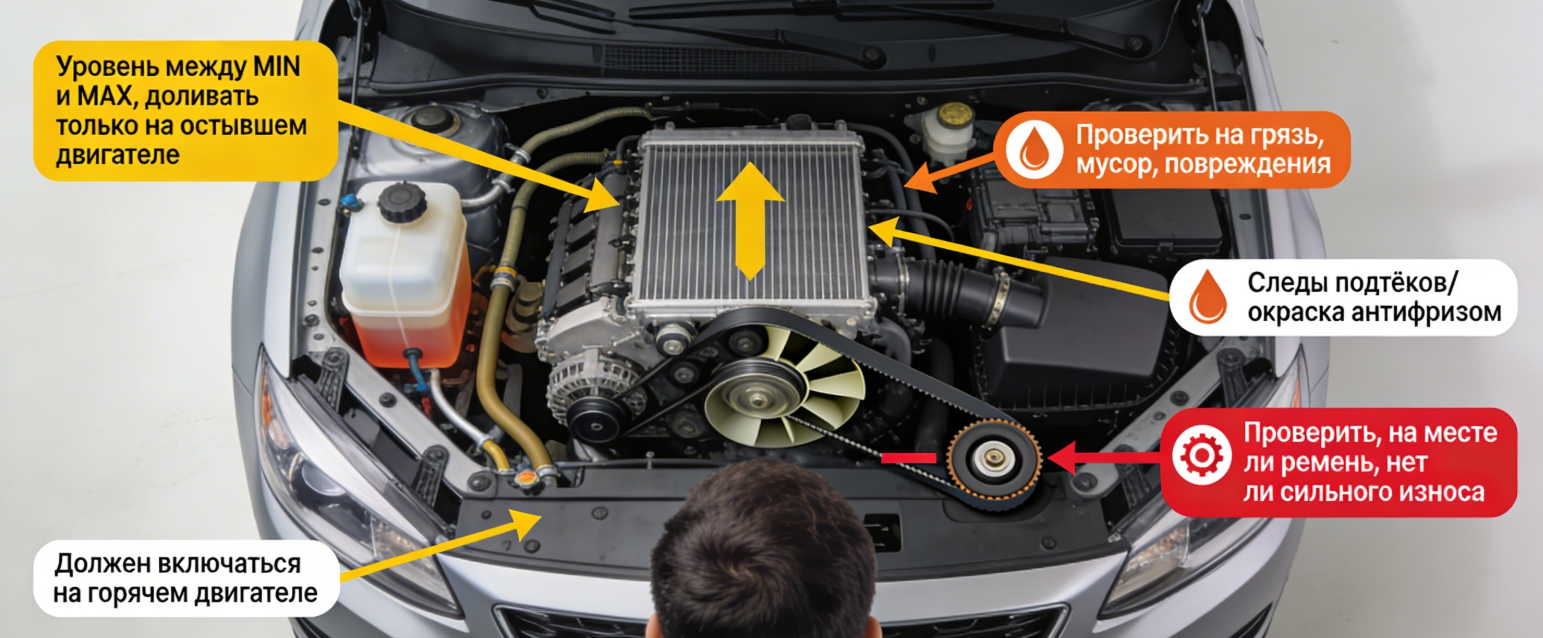
Locate the expansion tank and make sure the antifreeze level is between the MIN and MAX marks.
If the level is below the minimum mark, add suitable coolant (or temporarily water) and schedule a leak inspection.
3. Perform a quick inspection for leaks
Inspect the space under the car, the areas around the radiator, hoses and water pump for fresh leaks or dried colored marks.
4. Make sure the fan turns on.
When the engine is warmed up to operating temperature, the fan should start when the temperature rises.
If it is silent and the temperature gauge is creeping up, this is a reason to contact a service center as soon as possible.
5. Check the condition of the radiator from the outside
Inspect the front of the radiator (through the grille) for heavy clogging with dirt and debris, or mechanical damage.
6. Pay attention to the belts
If the pump is belt-driven, make sure the belt is in place and has no obvious damage (breakage, severe slippage).
All more complex checks require tools and skills and are best performed in a service center.
When is it necessary to contact service?
There are situations in which further driving of such a vehicle can lead to serious engine damage.
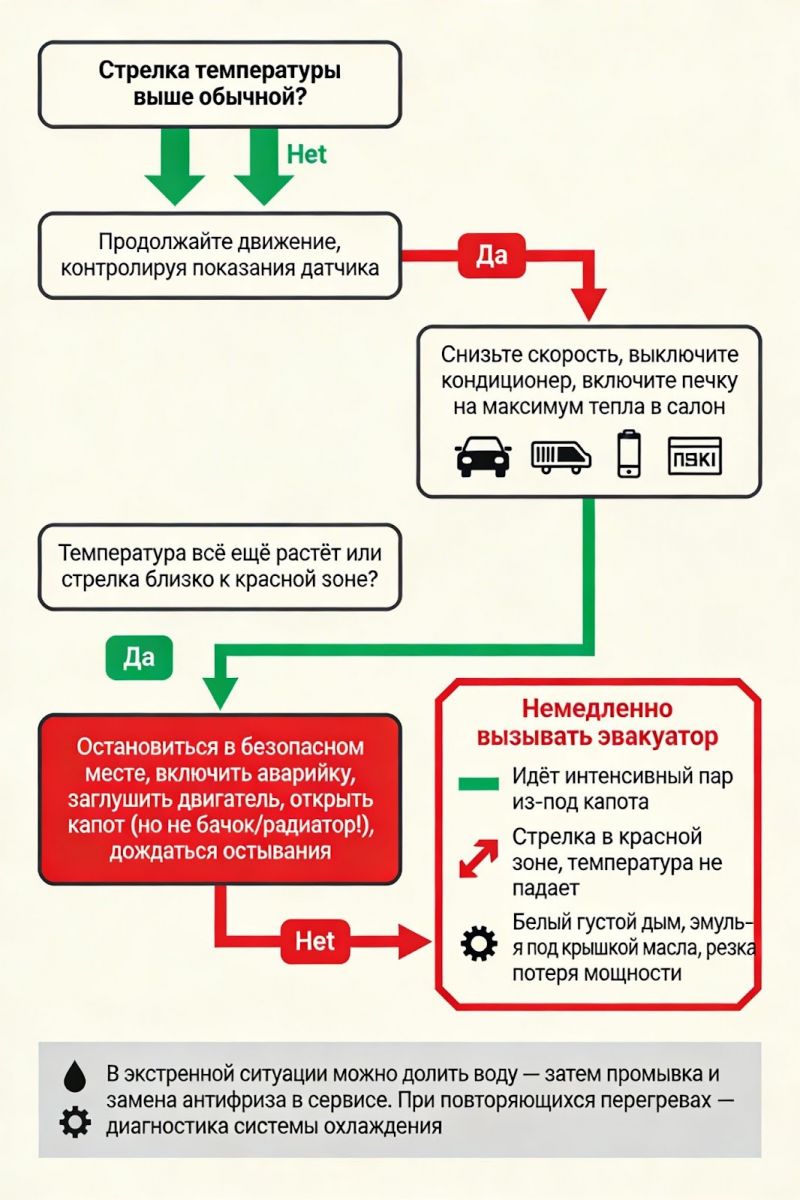
Stop immediately and do not drive on your own.
The overheating indicator is on, the arrow is in the “red” zone, and even after a short pause the temperature does not decrease.
Intense steam is coming from under the hood or there are obvious leaks of boiling liquid.
The engine suddenly lost power and the car went into emergency mode due to high temperatures.
The presence of an "emulsion" under the oil filler cap, thick white smoke from the exhaust along with accelerated consumption of antifreeze usually indicates a possible breakdown of the cylinder head gasket
If such circumstances arise, it is recommended to stop driving, park in a safe place, wait for the engine to cool down, and call a tow truck or technical support service.
Contact the service center soon
Temperatures periodically rise above normal, but do not reach the "red" zone.
Frequent topping up of coolant is required, but no obvious leaks are visible.
The fan turns on rarely or, conversely, runs almost constantly even under moderate driving conditions.
The radiator is heavily contaminated or damaged; there are traces of corrosion on the pipes, pump, and thermostat housing.
Ignoring such symptoms often results in sudden severe overheating and expensive repairs.
FAQ
What should you do if the temperature rises sharply while driving?
Stop safely as soon as possible, activate the hazard warning lights, turn off the engine, and wait for it to cool. Do not open the radiator cap or fuel reservoir until the engine has cooled completely—wait until the temperature drops.
Is it possible to continue driving if the arrow is almost in the red zone, but has not yet reached it?
No, it's better to reduce the load, stop, and let the engine cool down. Then, make sure the coolant level is correct and have it serviced as soon as possible.
Can I add regular water instead of antifreeze?
In an emergency, if the coolant overheats, it's acceptable to add clean water to restore the level and get to a service center. However, the system should be flushed and refilled with the correct antifreeze.
Conclusion and recommendations for prevention
Engine overheating is usually associated with problems with the cooling system, but regularly checking the coolant level, radiator, and connecting hoses can help prevent such situations. Don't ignore rising temperatures, the smell of antifreeze, steam coming from under the hood, and a loss of power—these are signs that the engine requires immediate attention.
For preventative maintenance, it's helpful to change the coolant and other fluids regularly, monitor the fan, avoid overloading the vehicle, and contact a service center for diagnostics at the first sign of temperature instability. This significantly reduces the risk of major repairs and extends the engine's lifespan.