You're returning from vacation: the highway is behind you, the trunk is crammed with gear, there's a light salt film on the body, and sand crunches under the floor mats. The car looks tired, but the exterior is nothing critical: a couple of stains, a bit of dirt, and streaks on the windows. At times like these, most drivers think only of a quick wash, forgetting that the most important thing remains invisible—under the car.
This is where sea salt, sand, mud, and moisture accumulate, triggering corrosion, clogging drains, and accelerating wear on suspension and brake components. Initially, this deposit appears as a thin layer, but after one or two seasons, it turns into rusty stains on sills and side members, rusted bolts, and stuck brake assemblies.
This topic is especially relevant for those who drive to the seaside every year. Regular summer trips to the seaside mean weeks spent in an atmosphere of salt aerosol and in sandy parking lots, where the car body literally lives in conditions of accelerated corrosion.
At the same time, many drivers habitually treat a seaside vacation as a harmless break for their car, although in reality, a few weeks at the seaside can damage the bodywork no less than a single winter with reagents.
In this article, we'll explore where salt and sand come from, what they actually do to your car, whether it's necessary to wash the undercarriage, how to clean radiators and brakes, and when used, genuine auto parts from a salvage yard can help you save money without sacrificing safety.
A real-life example: a car after two weeks at the seaside
Let's imagine a typical situation from a car dismantling business: the guys receive a 2017 Hyundai Tucson crossover, which the owner takes every summer on vacation to the Odessa region. His most recent vacation was two weeks at the seaside, parking 200-300 meters from the beach, and regularly driving along the embankment and dirt roads to the beach.
On the lift you can see:
on the sills and side members there is a loose layer of light-brown dirt with a whitish salt coating;
in the niches under the jack and on the suspension mounts - initial rust;
in the brake mechanisms - traces of rusted guides and plaque on the discs;
The air conditioner radiator is clogged with sand and salt, and some of the honeycombs have already begun to oxidize.
What had to be changed:
one of the brake discs has severe corrosion on the working surface;
set of guides and dust boots for front calipers;
What was replaced with the used original:
air conditioning radiator - we took the original from a dismantling site with intact honeycombs and original fasteners, costing 3-4 times less than a new original part;
Some of the suspension fasteners are original bolts/brackets from a car dismantling yard instead of cheap, non-original parts of dubious quality.
The owner could have saved even more money if he had paid attention to the condition of the undercarriage earlier: a simple preventative wash after the sea and anti-corrosion treatment of chips would have cost him approximately 1,500–2,000 UAH, while a final repair, including replacing the radiator and brake components, would have cost him 12,000–15,000 UAH.
This is a typical example: a small savings on maintenance after a sea accident turns into a significant repair, where used original spare parts from a car dismantler help reduce the bill, but do not eliminate the problem itself.
Where does salt come from on cars and why is sea air dangerous?
Sources of salt: not only the road, but also the air
Salt on a car after the sea comes not only from the asphalt:
the sea breeze raises microscopic droplets of salt water, which settle on the body, suspension and underbody;
Parking next to the beach is an aerosol of salt fog plus sand that gets into every crack;
If you drive onto wet sand or soil near the sea, a thick mixture of water, sand and salts forms underneath, which remains on the metal and in the cavities of the body.
Sea air contains salt fog, which enhances the electrolytic effect, especially if the car body already has chips, cracks in the paint or exposed metal.
Why does salt accelerate underbody corrosion?
Salt water is an ideal electrolyte: it conducts electricity and creates an environment in which metal oxidizes much faster.
What's happening:
corrosion centers form in metal joints, welds and chips;
thresholds, side members and floor reinforcements stop breathing - it is constantly damp inside, the drains are clogged with sand;
The body underneath becomes covered with a salt film, which continues to attract moisture even after drying.
The result: rust stains appear sooner than you expect, and after a few seasons at sea, you may encounter holes in the bottom, rotted sills, and problems installing a jack or lifting platform.
Where do sand and salt remain after a sea voyage?
Sand and salt like to hide in places where a regular sink can't reach:
threshold cavities and the lower part of the doors;
wheel arches, especially in places where plastic and fender liners are attached;
jack niches, floor reinforcements, suspension mounting points;
the area under the bumpers, especially if there are radiators, parking sensors, ADAS radars there;
cooling radiator and air conditioning radiator - a mixture of salt and sand accumulates between the honeycombs;
Brake discs, calipers and drums - plaque plus sand, which acts as an abrasive.
Some sand also ends up in the interior: in the carpets, under the seats, in the seat guides, and when air circulates, fine particles can get into the ventilation ducts. This leads to wear and tear on the mechanisms and the development of unpleasant odors.
Should I wash the underside of my car after going to the sea?
If your trip to the sea was a one-time, short one (1-2 days) and you didn't park close to the water, no aggressive chemicals are required, but at least washing the bottom and arches once after returning home is a highly recommended preventative measure.
If you've spent a week or more by the sea, frequently driven on wet sand, parked near the beach, or are in a city where salt and chemicals are actively used, washing the underbody becomes practically mandatory. Otherwise, salt and sand will continue their dirty work until they become real sources of corrosion and suspension problems.
How often and how exactly to wash the bottom
Recommended approach:
after returning from the sea - a full wash with rinsing of the bottom and arches with warm water under pressure;
If you live or often visit a coastal area, repeat the bottom wash every 2–3 weeks during the active travel season;
Don't limit yourself to simple pouring - you need to actually knock out the plaque from the cavities and drains.
It is important to use moderate pressure and avoid direct shots into weak spots (old anti-corrosion coatings, plastic clips, hidden wiring).
It's good if the car wash offers the option of washing the underbody on a lift—this way you can simultaneously inspect the condition of the metal, chips, and fasteners.
How to clean radiators from salt and sand
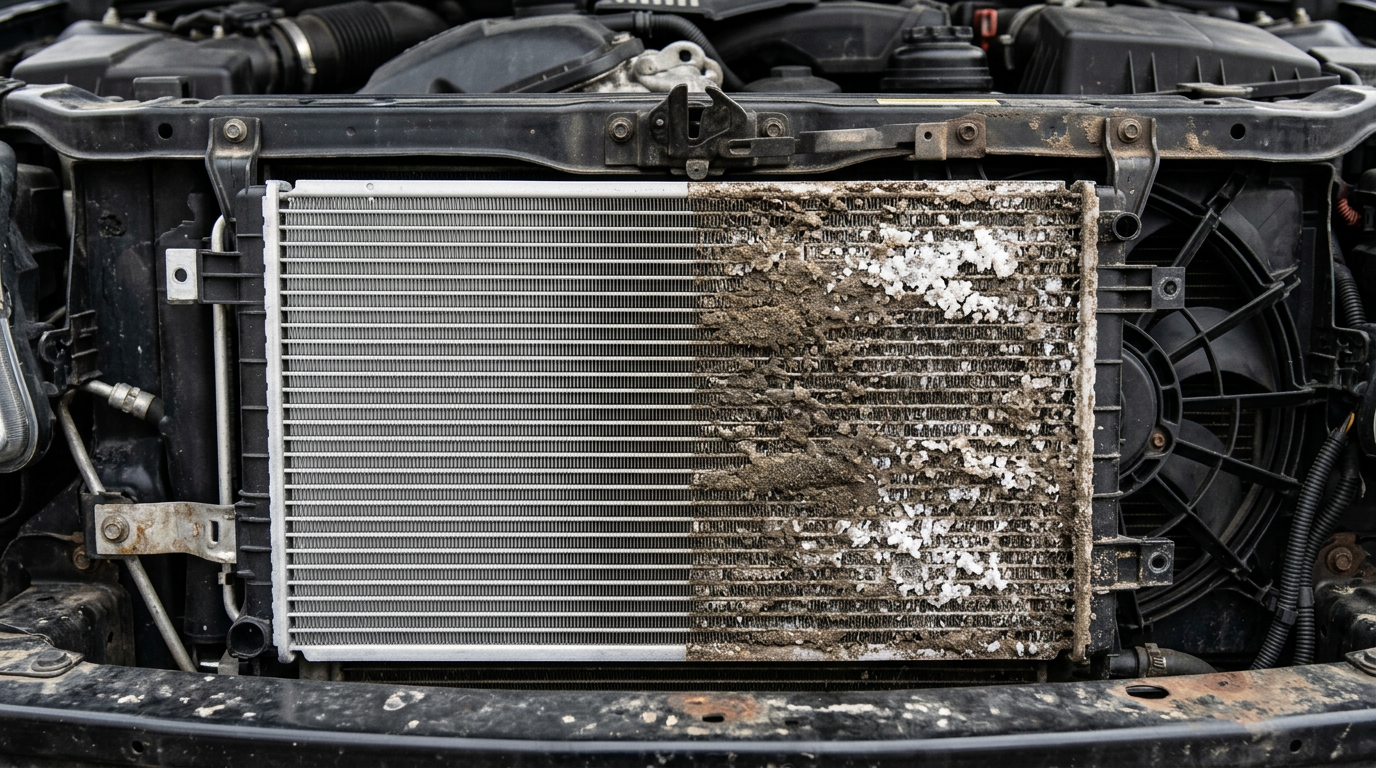
Visual inspection on a lift or with the protective cover removed: assess how clogged the honeycombs are and whether there is any mechanical damage.
Rinse thoroughly with clean water under low to medium pressure from the outside to remove loose sand and salt without bending the honeycombs.
In case of severe contamination, use specialized products for cleaning radiators and the body from salt deposits, wait according to the instructions, and then gently rinse.
Checking the fan operation and temperature - based on diagnostics or the car's behavior in traffic jams and under load.
If there are obvious areas of corrosion and loss of efficiency, evaluate the need for radiator replacement. This is where it's appropriate to look for an original part from a salvage yard instead of an expensive new unit.
What to check in the brake mechanisms
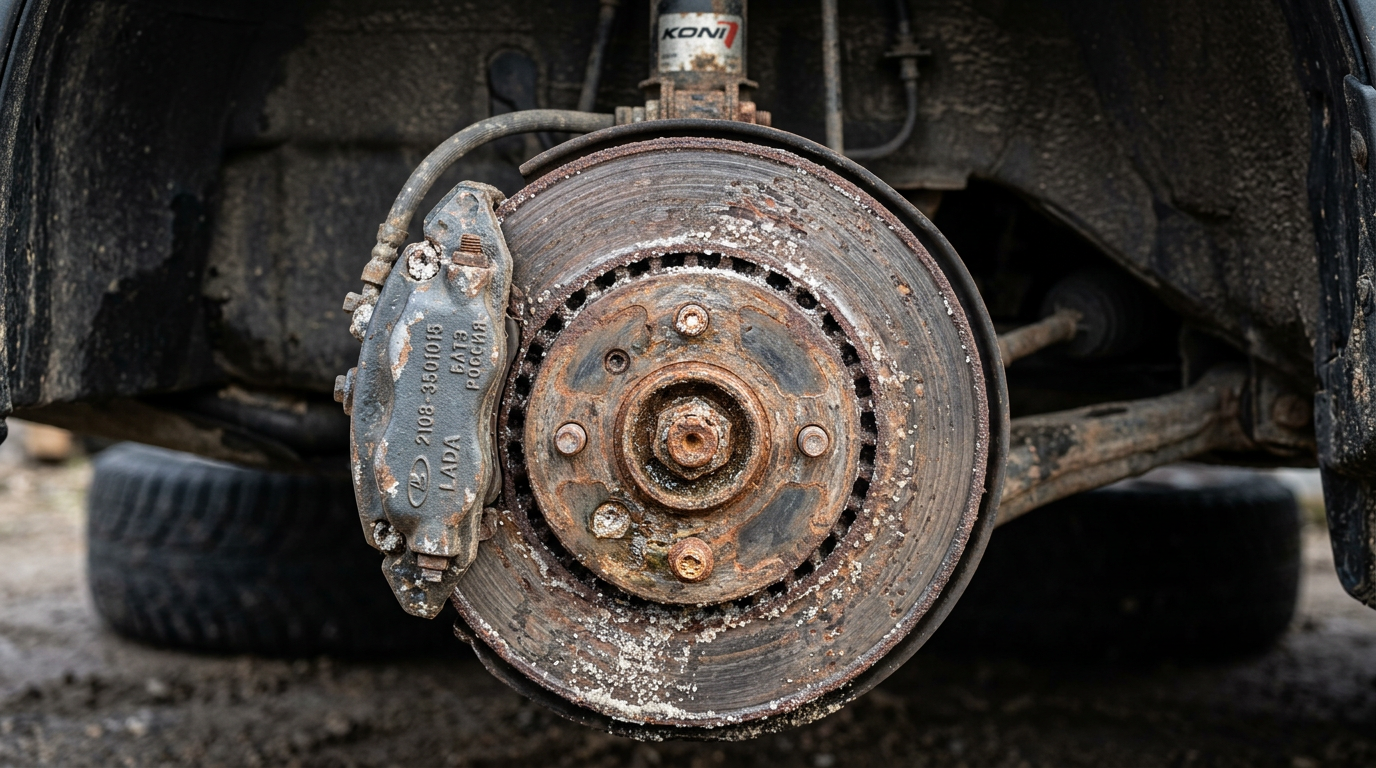
After the sea stands:
visually inspect the discs and pads, paying attention to the coating and uniformity of wear;
assess the condition of the calipers and guides, the absence of sticking during braking;
if necessary, service the calipers (clean, lubricate, replace dust boots).
If corrosion is allowed to develop on brake lines, hoses, and fasteners, it can sooner or later lead not only to repairs but also to an emergency. In such cases, brake system components should be replaced only with certified new parts, not dubious used components with no history.
How to treat chips and protect the bottom after a sea attack
Chips are a weak spot through which salt and sand can quickly penetrate the metal. After a thorough wash of the underbody and body, it's worth paying attention to the following details:
find rust spots on thresholds, arches, and the lower edge of doors;
clean off rust, use converter and anti-corrosion primer;
renew the protective coating (bitumen mastic, wax compositions for hidden cavities).
According to industry sources, a basic corrosion prevention kit after the salt season includes:
rust converter based on orthophosphoric acid (approximately 200–400 UAH per cylinder);
anti-corrosion primer - 300-700 UAH;
bitumen mastic for arches and bottom - 300-500 UAH per liter;
wax anti-corrosion for hidden cavities - 500–1,000 UAH.
In terms of money, this is equivalent to the cost of one heavy-duty car wash with anti-corrosion treatment, and in most cases, it is cheaper than replacing thresholds, floor elements, or welding the body later.
Drivers' mistakes after a trip to the sea
Mistake 1. Limiting yourself to a quick wash “in a circle” without rinsing the bottom
Why it's dangerous: salt and sand remain in cavities, drains, on side members and sills, continuing to work "quietly" while you're happy with a clean body.
The right way: choose a car wash that can clean the undercarriage and wheel arches, and at least once after returning home, put the car on a lift or overpass and assess the condition from underneath.
Mistake 2: Ignoring chips on sills and arches
What's dangerous: salt, combined with moisture, quickly penetrates the metal through the chip, and after a couple of seasons, instead of cosmetic repairs, welding and repainting will be required.
The right way: after washing, inspect the bottom of the doors, arches and sills, use a rust converter and primer in a timely manner, without putting off treatment “for later.”
Mistake 3: Not checking radiators and brakes
What's dangerous: a radiator clogged with salt and sand impairs cooling, and corrosion on the brakes and guides reduces braking efficiency and increases the risk of failure.
The right thing to do: after a trip to the sea, inspect the radiators and brake assemblies at least once, and clean them if necessary, rather than waiting until they start making noise or creaking.
Mistake 4: Buying any used part “on a whim” without checking the OEM number
What's dangerous: the part may not fit properly in terms of mountings, connectors, or specifications, especially when it comes to radiators, brake components, or body parts with different geometries.
The right way: when selecting a spare part from a dismantler, check the OEM number, look at real photos, and check the complete set and condition.
FAQ
Is it necessary to wash the bottom of the boat after a trip to the sea?
Yes, especially if you spent a week or more by the sea, parked close to the water, or drove on sand: salt and sand remain in the cavities and accelerate corrosion.
How long after a rest is it best to go to a car wash?
Ideally, do this immediately after returning home or in the next few days, while the plaque has not yet had time to dry and become fixed in the cavities.
Is sea air itself dangerous if you just keep your car near the sea?
Sea air contains salt fog, which settles on the body and underbody, especially in windy and humid conditions, so long-term parking near the sea without protection accelerates corrosion.
Is it enough to just wash the body without washing the underside?
No, the bulk of the salt and sand remains under the car and in the arches, so without washing the underbody the effect will be incomplete.
Is it possible to save on repairs after the sea by using used original spare parts?
Yes, if we're talking about body parts, radiators, and some suspension components with a clear history and verified condition, but it's better to buy new safety parts and complex electronics.
Final conclusion
After a trip to the sea, the underbody, wheel arches, radiators, and brakes are exposed to the most aggressive environment: a mixture of salt, sand, and moisture accelerates corrosion and wear more than a single winter with reagents.
Therefore, flushing the undercarriage, cleaning the radiators, and checking the brakes is the bare minimum that will save you thousands of hryvnias on future body repairs and chassis replacements.
If you treat chips in a timely manner, keep an eye on anti-corrosion treatments, and don't ignore the first rust spots, your car will easily survive both a seaside vacation and the city's salt season.
And when it comes to repairs, a smart selection of genuine used parts from a reputable auto dismantler is a good way to reduce the cost of restoration without risking the safety and lifespan of the vehicle.
When selecting a used part, it's important not only to find the desired item in the auto dismantling catalog, but also to carefully check the OEM number, components, and condition.
When dismantling, it's worth asking for actual, close-up photos of the part, confirming the presence of fasteners, connectors, and control units, and whether it can be tested before installation. This helps avoid unnecessary expenses and ensures that the original part from the dismantler will actually extend the life of your car, rather than add problems.