August, a private house outside the city, they were picking potatoes, apples, and zucchini until evening. By evening, everything was in the trunk and on the back seat—"so we don't have to make two trips." The car sank, the rear wheels almost disappearing into the wheel arches, but the driver was confident nothing bad would happen; the highway was close, and they'd drive carefully.
Everything seems fine for the first few kilometers, but the braking distance becomes longer, the steering becomes spongy, and the headlights suddenly start shining almost into the sky. One sudden maneuver or emergency braking, and a routine trip to the fields turns into a risky situation.
Overloading a car isn't just about extra pounds in the trunk. It also changes the car's handling, accelerates wear on the suspension, tires, and wheel bearings, and risks body deformation and costly repairs.
In this article, we'll explore the dangers of overload, how it affects handling, brakes, and suspension, which parts are most vulnerable, and when used, genuine auto parts from a salvage yard can actually help save money without sacrificing safety.
Why has this topic become relevant now?
Overloading a vehicle is a seasonal problem in late summer and early fall, especially during harvest season, canning, construction, and relocations. Drivers often try to cram everything into the vehicle and deliver it in one trip to save time and fuel.
At the same time, modern cars are becoming heavier, equipped with complex multi-link suspensions, adaptive headlights, and advanced driver assistance systems (ADAS), while tires and wheel bearings are operating at their design limits. While the vehicle's design is initially rated for a specific permissible weight, specified in the documentation, many drivers simply ignore this figure.
The situation in Ukraine is further exacerbated by the state of the roads and the active import of cars from the US after repair auctions: such cars already have a history of damage, and any overload accelerates metal fatigue in stressed points of the body and suspension.
As a result, overloading turns from a one-time savings on travel into a real risk factor for the owner’s safety and budget.
A real-life example: an overloaded crossover after a trip to the country
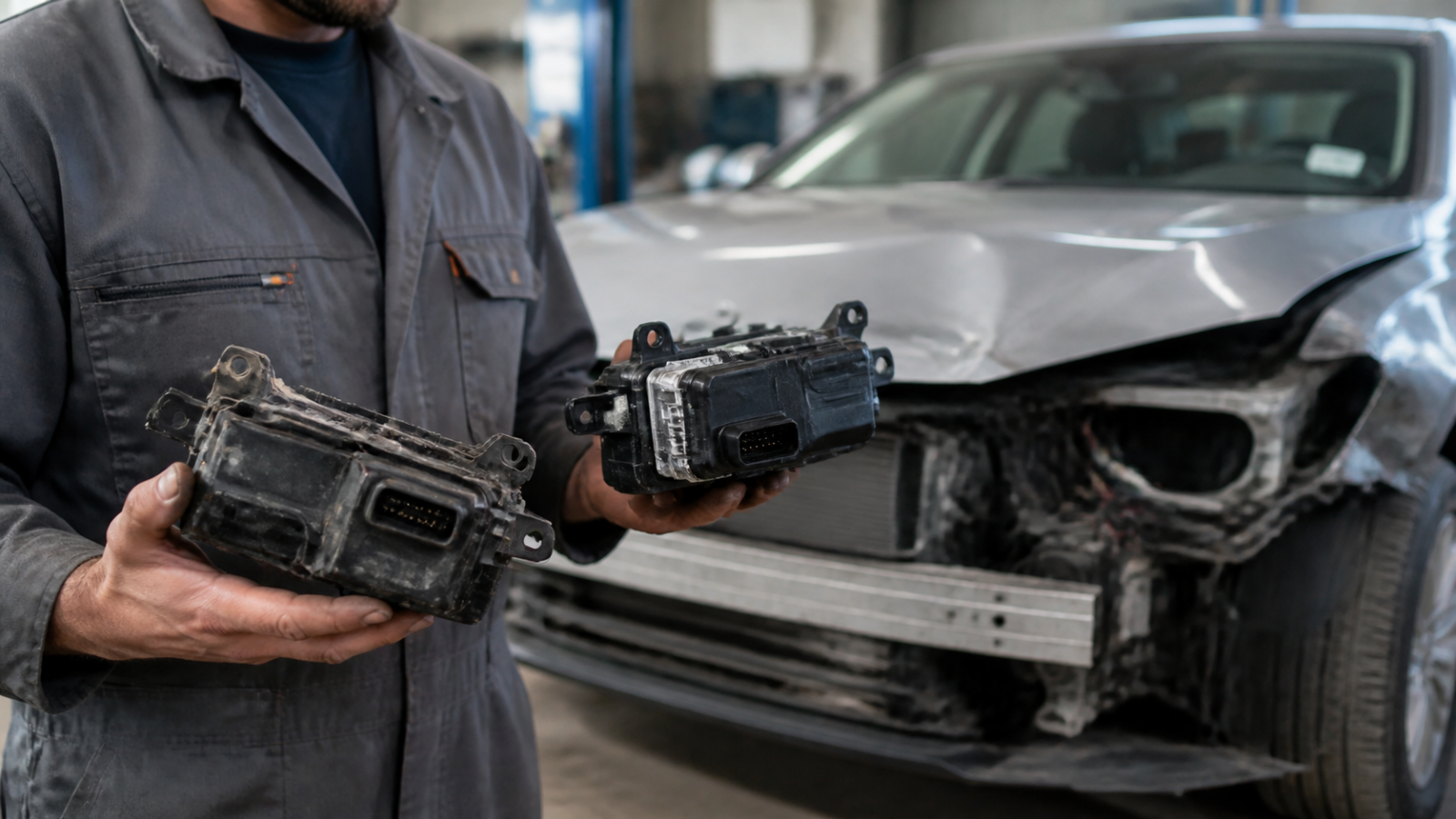
A 2015 Hyundai Santa Fe crossover arrives at the auto wrecker's. According to the owner, the vehicle was regularly used for several seasons to transport crops and building materials: the trunk was filled to capacity, and the rear seats were converted into a storage area for sacks and boxes.
After a couple of years of such use, the car became unpleasant to drive: it would swerve on bumps, the suspension would bottom out on almost every pothole, and on the highway, when braking hard, the rear would wander and go off course.
After another trip, the owner got into a minor accident - he misjudged the braking distance of an overloaded car and caught up with the car in front at low speed.
During inspection at the dismantling site it was discovered:
sagging rear springs and tired shock absorbers;
broken rear suspension silent blocks;
increased play of wheel bearings;
deformed rear bumper and reinforcement after a minor impact;
altered headlight beam angle due to constant driving on a sagging rear.
Some parts—springs, shock absorbers, bumpers , and some suspension components —could be replaced with used originals, matched to the VIN or OEM number of a similar vehicle in good condition. This saved the owner tens of percent compared to new, original parts, especially for the body and attachments.
However, wheel bearings with suspicious play, brake system components, and safety-related elements required a more careful approach: here, either new original components or carefully inspected used ones with a diagnostic guarantee are required.
It is examples like these that clearly demonstrate that overload is not a trivial matter, but a serious factor that accelerates the wear of key components and leads to clearly measurable costs.
What are the dangers of overloading a vehicle in practice?
The braking distance increases
Every vehicle is designed for a certain gross vehicle weight. When you exceed this figure, your brakes have to work harder: inertia increases, meaning longer stopping distances.
This is especially dangerous in unexpected situations: a child runs out onto the road, a car in front brakes sharply, or an obstacle appears on the road.
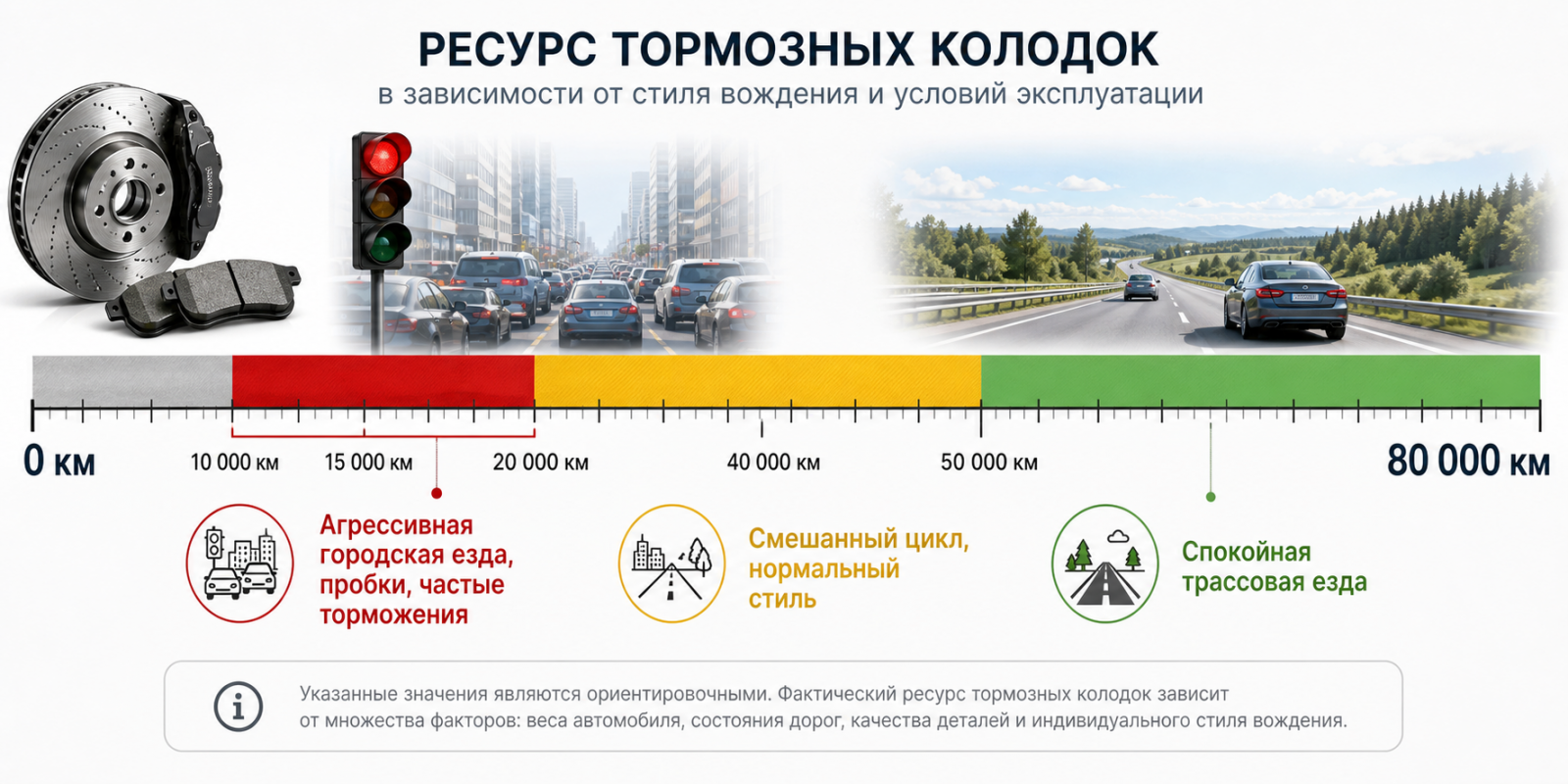
An overloaded vehicle may not be able to stop within its normal operating distance, even if the driver reacts promptly. Brake discs and pads overheat and wear out faster, and warped brake components are difficult and expensive to repair.
Controllability and stability deteriorate
When overloaded, especially if most of the weight falls on the rear axle (bags, boxes in the trunk), the balance of the car changes: the front becomes lighter, the rear becomes heavier, and the load is distributed unevenly across the axles.
In practice, this manifests itself as follows:
the car holds its trajectory worse when turning;
the risk of rear axle skidding increases;
the steering wheel becomes less controllable, and rolling reactions appear;
A sharp maneuver can cause the car to skid, especially on a wet or gravel road.
If the load is not secured properly, it can shift when turning and braking, increasing the vehicle's sway and unpredictable reactions.
The ground clearance is reduced
An overloaded vehicle noticeably sags, especially at the rear. This reduces ground clearance, causing the car to scrape against speed bumps, curbs, rocks, and high sections of dirt road.
Consequences:
impacts to the bottom, fuel tank and exhaust system;
accelerated wear of suspension elements;
risk of damage to wiring, sensors and fastenings under the body.
This is especially critical for modern cars: parking sensors, cruise control radars, and lane-keeping system components, which are expensive and sensitive to impacts, are often located under the bumpers and in the lower part of the body.

The springs and shock absorbers are overloaded
Springs and shock absorbers are designed for a specific load range. If you ride overloaded for most of the season, the springs wear out, the shock absorbers operate at their limits, and the suspension constantly bottoms out.
This leads to:
subsidence of the rear of the car;
the appearance of shocks and knocks when driving over uneven surfaces;
deterioration of comfort and controllability;
risk of cracks at the attachment points.
As a result, springs, shock absorbers, mounts, and silent blocks have to be replaced—and this is a significant repair, especially if we are talking about a multi-link suspension.
The load on tires and wheel bearings increases
When overloaded, tires operate under increased pressure and load. Ignoring the tire pressure recommendations for a full load (indicated on the door pillar or fuel filler flap) increases the risk of:
rubber overheating;
the appearance of hernias and cracks;
tire burst at speed.
Wheel bearings are also subject to excessive stress: increased pressure on the track, rising temperatures, and accelerated wear. Hub play not only causes noise and vibration, but also potentially dangerous changes in wheel performance at speed.
The direction of the headlights changes
When the rear of the car sags, the front lifts up, and the headlights begin to shine higher. This means:
you have a poorer view of the section of road directly in front of your car;
you may blind oncoming drivers;
you lose the correct geometry of the light spot.
If the headlights are constantly operating in this position, the risk of them becoming loose, damaging the mountings, and damaging the adjustment mechanisms increases. And with modern LED and adaptive headlights, any repairs quickly run into tens of thousands of hryvnias.
Which parts are most often affected by overload and how much does it cost to repair them?
For the owner, the question of cost is important: what exactly is causing the overload and what repairs can be expected as a result. Below is a typical list of components that suffer most, along with approximate prices (for a mid-size crossover):
Detail | New original, UAH | New analogue, UAH | Used original from dismantling, UAH |
Rear shock absorber (1 pc.) | 4,000–6,000 | 2,000–3,000 | 1,500–2,500 |
Rear spring (1 pc.) | 2,500–4,000 | 1,500–2,000 | 800–1,500 |
Wheel bearing | 3,000–5,000 | 1,800–3,000 | 1,500–2,500 |
Bumper assembly | 8,000–15,000 | 5,000–9,000 | 3,000–7,000 |
Headlight (original) | 12,000–25,000 | 8,000–15,000 | 6,000–14,000 |
Prices vary by brand and model, but even these rough figures show that overloading can quickly turn savings from one or two flights into significant repairs costing tens of thousands of hryvnias.
At the same time, for many body and attachment parts ( bumpers, doors, fenders , headlights, interior elements), used originals from a car dismantling site become a reasonable compromise: you get factory quality at a more affordable price.

Driver errors during reloading and repairs "after the harvest"
Mistake 1: "If you drive carefully, overloading is not a problem."
Problem: Even with careful driving, the physics remain the same—weight is increased, braking distances are longer, the suspension is pushed to its limits, and the tires are overloaded. A sudden situation may arise through no fault of your own.
The correct way: calculate the load based on the permissible weight specified in the documents and on the vehicle's plate. If you need to transport a large amount, split the load into several trips or use a trailer with the correct weight distribution.
Mistake 2: "The springs have sagged—I'll install stronger ones and keep loading."
Problem: Installing heavier springs without a comprehensive suspension assessment can shift the vehicle's balance, impair handling, and lead to harsher suspension response on uneven surfaces. This doesn't eliminate weight restrictions and sometimes even increases stress on other components.
The right way: First, diagnose the suspension, check the condition of the shock absorbers, bushings, and mountings. Discuss any enhanced solutions with a specialist, based on actual requirements (for example, constant use with a trailer).
Mistake 3: "After a reboot, I'll only change what's making the noise."
Problem: If you decide to replace only the obvious "knocking" components while ignoring other components, you risk an incomplete repair and repeated wear. For example, if new shock absorbers are installed on worn-out springs and sagging bushings, the suspension remains unevenly loaded.
The right way: conduct a comprehensive diagnostic—suspension, hubs, brakes, body mounts. For some parts, used originals are perfectly acceptable, provided they are properly selected and inspected.
Mistake 4: "I'll buy any used part—the main thing is it's cheaper."
Problem: Saving money on used parts at any cost without checking the part number and condition can lead to repeated repairs and additional costs: the part does not fit the mounting hardware, has hidden damage, or has already been repaired after a serious impact.
What is the correct way:
Error | What is dangerous? | What is the correct way? |
Buy a used part "by eye" | Does not fit fasteners or connectors | Check OEM number and compatibility |
Ignore the part history | Hidden damage, metal fatigue | Specify origin and mileage |
Do not look at the fastenings and ears | The part is not fixed firmly, play appears | Ask for large photos of the fasteners |
Buy without the possibility of verification | The risk of getting faulty electronics or mechanics | Clarify the terms of inspection and return |
When overloading, it's important not only to reduce the weight but also to monitor the effects on the suspension, tires, and bodywork promptly. If, after the harvest season, the car begins to sag more, or the headlights begin to oscillate, it's worth getting a diagnostic and choosing the right parts in advance.
At a car dismantler, it's worth asking not only the price, but also the OEM number, the condition of the fasteners, the part's history, and whether it can be inspected before installation—this helps save money without sacrificing safety or comfort.
FAQ
What are the dangers of overloading a car if I drive carefully?
Even with careful driving, braking distance increases, handling deteriorates, and the suspension, tires, and wheel bearings wear out faster.
How do I know if I've overloaded my machine?
A strong sag of the rear end, noticeable rocking, shocks of the suspension on uneven surfaces and a clearly changed light of the headlights are signs of overloading and exceeding the permissible weight limits.
What parts most often need to be replaced after prolonged overload?
Rear springs and shock absorbers, silent blocks, wheel bearings, tires, and sometimes bumper and headlight mounts due to constant subsidence and impacts.
When is it worth considering used original spare parts from a car dismantling yard?
When it comes to body and interior parts, headlights, mirrors, and other elements not directly related to critical safety, the OEM number must match and the condition must be checked.
Is it possible to buy used suspension parts after reloading?
It is possible, but only with a thorough diagnosis: the condition of the metal, the absence of cracks and deformations, the matching part number, and the ability to test on a car or test bench are important.
Conclusion and recommendations
Overloading your vehicle with harvested crops or building materials is not a harmless habit, but a direct path to increased braking distance, poor handling, rear-end sagging, and accelerated wear of the suspension, tires, and wheel bearings.
Any idea of "transporting everything in one go" can end up costing tens of thousands of hryvnias in repairs, especially if it's a modern car with expensive original components.
To avoid unnecessary expenses and risks, it's important to monitor the load weight, watch for signs of overload, and have inspections performed promptly. For body parts and many attachments, used original parts from a salvage yard are often a wise choice: they offer factory quality, proper geometry, and significant savings when properly selected and inspected.